

Ultra-Wideband UWB Technology Overview
Ultra-Wideband UWB technology is changing how our devices connect, locate, and share data. Unlike Bluetooth or Wi-Fi, Ultra-Wideband offers fast, precise, and secure communication with sub-millisecond latency.
From unlocking cars to smart home tracking, this wireless tech is setting a new standard. Many people wonder, what is ultra-wideband, and how does it work in real life?
You’ll see it in action in UWB-enabled smartphones, wireless gaming headsets, and even UWB car unlocking systems. As Ultra-Wideband continues to grow, more devices like the Galaxy S24 Ultra will include it.
In this blog, we’ll explain how UWB works, its benefits, and the exciting future of this next-gen wireless innovation.
This cutting-edge technology is more than just a trend — it’s becoming a key player in the way we experience smart devices. As adoption rises, UWB promises to deliver smarter, faster, and more reliable wireless connections across industries.
What is Ultra-Wideband UWB Technology?
In simple terms, it is a radio technology that uses very short, low-power pulses to send data over a wide frequency range.
This allows for real-time data transfer with UWB and very accurate location sensing, similar to AI-powered location tracking.
How accurate is Ultra-Wideband location? It can locate objects to within a few centimeters, which is much better than GPS or Bluetooth.
UWB has been used in military and industrial settings for years, but now it’s showing up in UWB-enabled smartphones, smart tags, and even wireless gaming headset systems. It’s fast, precise, and power-efficient.
This makes it a better choice for many things we use every day. UWB isn’t just another trendy term — it’s quietly becoming the backbone of how our devices talk to each other.
As more companies adopt this technology, everyday tasks like finding your keys, unlocking your car, or streaming high-quality audio will become quicker and more seamless.
The growing demand for smarter, more responsive devices is pushing UWB to the front of modern innovation.
How Does Ultra-Wideband Work in Everyday Devices?
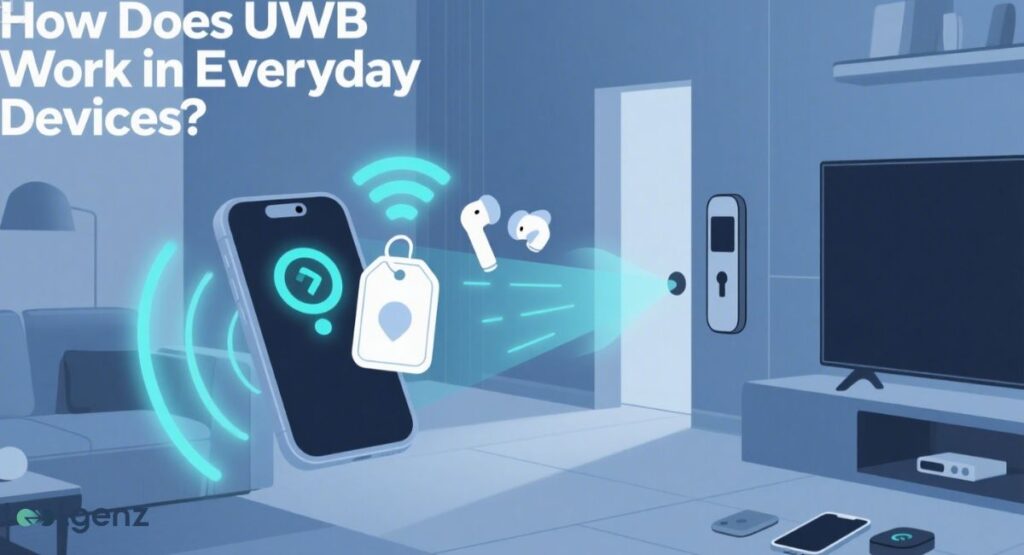
How does UWB work in phones and other gadgets? It measures how long it takes a signal to travel between devices. This is known as time-of-flight.
The result is sub-millisecond latency, meaning responses happen nearly instantly. This speed is key for hi-res audio transmission and smart home tracking.
UWB works at frequencies between 3.1 GHz and 10.6 GHz. It uses channels that are much wider than Bluetooth or Wi-Fi. This is what makes UWB faster and more accurate.
You’ll find Ultra-Wideband in phones, trackers, earbuds, and smart home devices, allowing them to communicate with incredible precision.
With each new UWB-enabled device, we’re seeing faster, more precise connections that weren’t possible just a few years ago. It allows gadgets to understand their surroundings better and respond in ways we’ve never seen before.
Which Samsung Phones and Devices Have UWB?
Which Samsung phones support UWB? Samsung started adding this feature with the Galaxy Note 20 Ultra UWB. Since then, several phones have followed.
The list includes the Galaxy Z Fold UWB support, the S21+, S21 Ultra, S22+, S22 Ultra, S23+, S23 Ultra, and Galaxy S24 Ultra features. However, only the Plus and Ultra models usually get it.
Alongside phones, Samsung also uses UWB in the Samsung SmartTag+ and Galaxy Buds Pro 2. These devices offer better location tracking technology, fast pairing, and UWB for audio streaming.
So if you’re wondering, does Galaxy S24 have UWB, the answer is yes — it’s one of the top features of Samsung’s newest phones.
As Samsung continues to invest in Ultra-Wideband, more of its products are expected to include it. In Samsung’s lineup, UWB already powers features like SmartTag+ tracking and car unlocking — and those capabilities are likely to expand.
The Role of UWB in Gaming Audio and Wireless Experiences
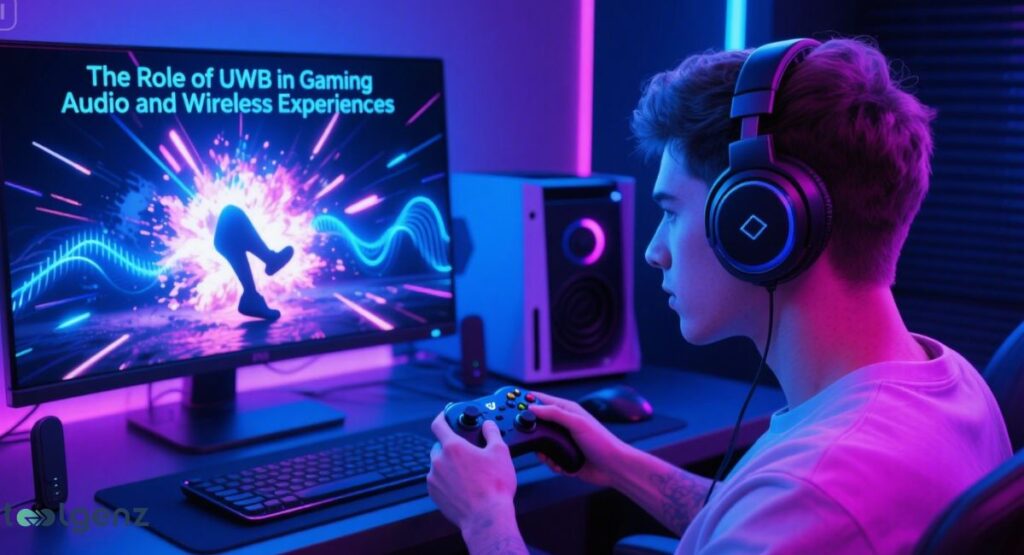
Gaming audio with UWB technology is a game-changer. It helps reduce lag, offers hi-res audio transmission, and keeps sound synced with visuals. This is vital for gamers who rely on fast reactions and clear sound.
UWB audio vs Bluetooth audio shows a clear win for UWB in terms of speed and accuracy.
A wireless gaming headset that uses UWB offers sub-millisecond latency, which means there’s no delay in sound. You hear footsteps and gunfire as they happen.
This kind of low-latency sound is nearly impossible with regular Bluetooth. That’s why UWB is starting to appear in premium gaming gear.
As UWB becomes more common, we may soon see it in mainstream consoles and PC accessories. Its ability to deliver real-time, immersive audio could raise the bar for how we experience sound in games and competitive play.
The Future of Wireless Audio with UWB
The future of wireless audio could be built on UWB. Samsung’s recent Samsung UWB patent shows a way to use both Bluetooth and Ultra-Wideband in the same device.
First, the audio device connects using Bluetooth, then switches to UWB for better quality. This hybrid method brings the best of both worlds.
Ultra-wideband for wireless headphones can mean better sound with less energy use. It also reduces signal interference.
Companies like Focal and PSB are also testing UWB in high-end speakers and headphones. As this technology grows, you can expect your earbuds and headsets to sound even better, even wirelessly.
In the coming years, we might see Ultra-Wideband become a standard in audio streaming across smartphones, TVs, and even AR/VR headsets. Its potential to enhance clarity and stability could redefine what users expect from premium wireless sound.
What’s Coming Next with UWB? (Predictions and Innovations)
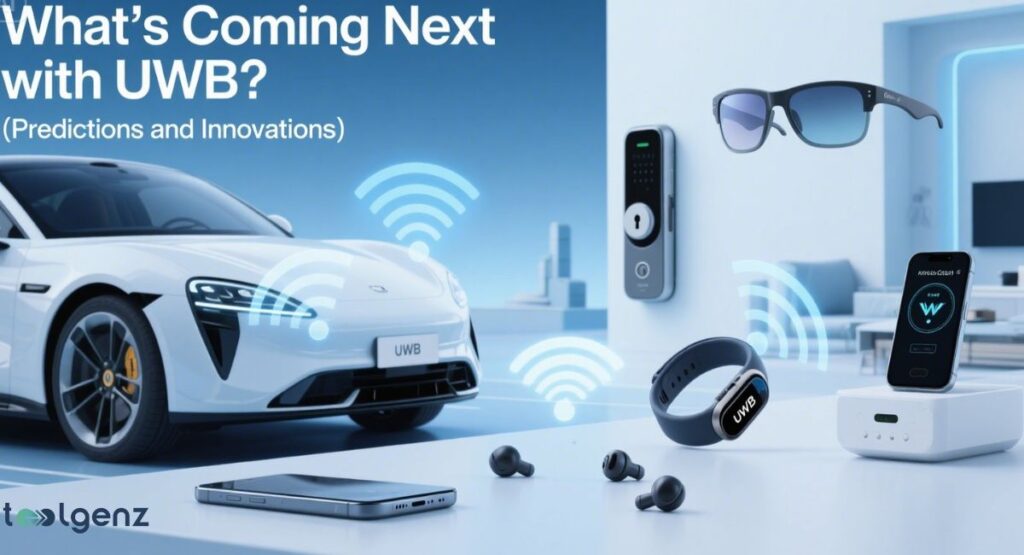
What can we expect to come from this? More UWB earbuds, smart locks, home automation tools, and even smart TVs may soon use UWB.
There’s a strong push to bring UWB use cases in smartphones to more devices, including wearables and home assistants.
Auto companies like BMW, Ford, and Audi are adding digital car key features using UWB. This makes your phone the key, letting you unlock the car by just walking up.
So if you’re asking, can I unlock my car with UWB, the answer is already yes in many new vehicles.
Engineers are already testing UWB for smart city traffic systems, drone flight paths, and AR headsets — hinting at how it could shape our tech landscape in the next few years.
As adoption increases, UWB could become as common as Wi-Fi or Bluetooth in everyday devices.
Challenges and Limitations of Ultra-Wideband
Like all tech, UWB has its issues. First, not every phone supports it. That means only people with UWB-enabled smartphones can use these features.
This limits the spread of the technology, especially in lower-cost phones. Does UWB consume more battery? Not much. It’s quite energy-efficient compared to other options.
Another problem is that UWB can struggle with walls or obstacles. Does UWB work through walls? Not well. It performs best in open spaces.
Plus, adding UWB chips increases the cost of devices. That’s why it’s mainly found in flagship phones and premium audio gear.
Still, as chip manufacturing improves and demand rises, we could see UWB become more affordable and accessible. Over time, even mid-range phones and everyday gadgets might start including this powerful feature.
UWB vs Bluetooth, Wi-Fi, and NFC: How It Stands Out
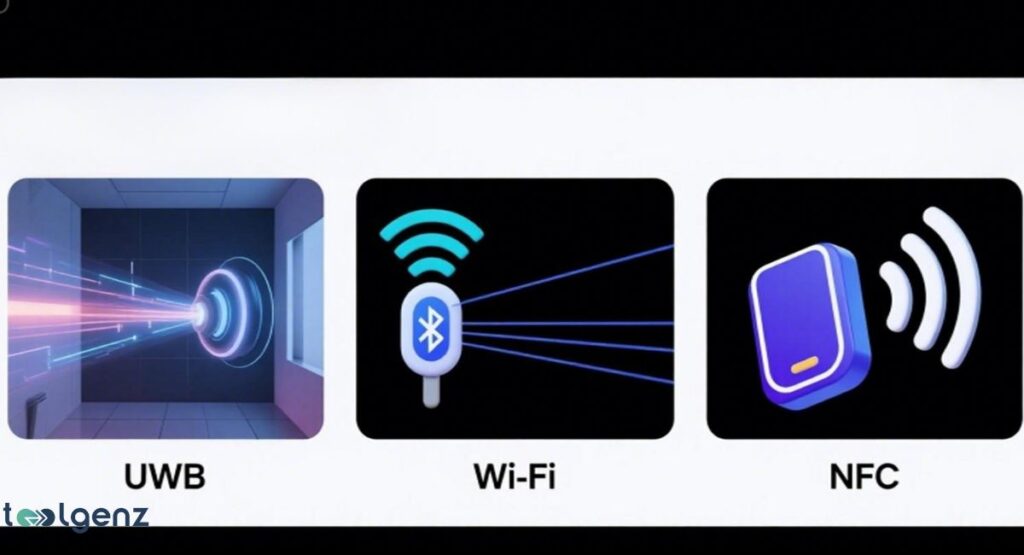
If you’re wondering about the difference between UWB and Bluetooth, here’s a quick look, or you can check the Bluetooth.com UWB overview for more technical details.
Unlike NFC, which works only when devices touch, UWB can work across rooms with pinpoint accuracy.
This makes UWB ideal for applications where speed and precision matter, like smart home automation, secure access, and immersive gaming.
As more devices adopt UWB, it could eventually complement or even replace Bluetooth in many scenarios.
Comparison Table
| Feature | UWB | Bluetooth | Wi-Fi | NFC |
| Speed | Very Fast | Moderate | Fast | Slow |
| Range | 10–30 meters | 10 meters | 50+ meters | Few centimeters |
| Accuracy | Centimeter | Meter-level | Meter-level | Touch-only |
| Battery Usage | Low | Low | High | Very Low |
| Best For | Location, Audio | Audio, data | Data, streaming | Payments |
This wireless protocol comparison shows where UWB clearly stands out.
For smart devices, Bluetooth alternatives like UWB could soon be the norm.
Do People Prefer Wired or Wireless Headphones? (Consumer Perspective)
This question often comes up: are wired or wireless headphones better? Many people still believe wired offers better sound.
But with hi-res audio transmission now possible wirelessly using UWB, that’s changing fast. For most people, the freedom to move without tangled wires has started to outweigh the small performance edge of traditional headphones.
Still, audiophiles are waiting for UWB earbuds that deliver real studio-quality sound.
UWB may finally offer a true match to wired performance, and without the mess of cables. As UWB gets better, more people may prefer wireless even for serious listening.
In the near future, we may see UWB becoming the gold standard for both casual listeners and professional audio use. Its blend of precision, clarity, and convenience could redefine how we experience sound.
About Wissen Research: Leading the Charge in UWB Innovation
How Samsung uses UWB isn’t happening by chance. Research groups like Wissen Research help drive innovation. They study patents, market trends, and upcoming tech to see where the industry is heading.
Their work helps companies plan smarter and build better devices.
Wissen recently explored the Samsung UWB patent for hybrid earbuds. Their findings show the future of wireless audio could be clearer, crisper, and more reliable than ever before.
With support from experts like these, the road ahead for UWB looks bright.
As more tech firms partner with research labs, we can expect even faster breakthroughs. From better earbuds to smarter homes, UWB is gearing up to be a key player in the tech world.
FAQs
What is UWB on Samsung?
UWB (Ultra-Wideband) on Samsung is a short-range wireless technology that enables precise location tracking and fast, secure data transmission between devices.
Should I enable Ultra-Wideband on my phone?
Yes, enabling Ultra-Wideband enhances features like SmartTag+ tracking, digital car keys, and fast device-to-device communication, especially in Samsung’s premium models.
What is UWB useful for?
UWB is useful for accurate object tracking, seamless file sharing, smart home control, and low-latency wireless audio.
What are the benefits of UWB Samsung?
It offers faster data transfer, precise spatial awareness, better security, and smoother connectivity across Samsung’s ecosystem of devices.
Is Ultra-Wideband better than Bluetooth?
Yes, Ultra-Wideband is faster, more accurate, and more power-efficient than Bluetooth, especially for location tracking and real-time communication.