
The internet is much bigger than what search engines show. Beneath the familiar websites and social media platforms lie hidden layers called the deep web and dark web.
Knowing how they differ can help you stay safe and protect your privacy online.
The private web contains password-protected websites, private databases, and subscription-based services that most of us use daily.
In contrast, the dark web thrives on anonymous browsing and often hosts illegal activities.
This guide explores their key differences, potential risks, and practical uses, helping you navigate these hidden networks safely.
While the deep web supports everyday tasks securely, the dark web demands caution and awareness.
Exploring these hidden spaces without proper knowledge can lead to security threats and legal consequences.
By understanding how each layer functions, users can protect their privacy and make informed decisions online.
For a more detailed breakdown of what the dark web really is, you can explore Kaspersky’s comprehensive guide.
What Is the Deep Web?
Many people ask, what is the deep web? The deep web is made up of content search engines like Google cannot index, such as password-protected pages, subscription services, and private databases.
Examples include company intranets, academic resources, and electronic health records.
This part of the internet is not illegal and is used every day by regular users. Why the private web is not illegal is simple: it exists to protect privacy and secure sensitive data.
Online banking, medical portals, and subscription-based services like Netflix all live in the deep web, providing value without public exposure.
Beyond these everyday uses, the private web plays a vital role in safeguarding personal information and business operations.
It allows organizations to store confidential data away from public reach and helps individuals maintain privacy in a world where online threats are constantly evolving.
What Is the Dark Web?
The dark web is the secretive part of the deep web that requires special tools like the Tor browser or I2P (Invisible Internet Project) for access.
This area uses onion routing to hide identities and .onion websites to stay unlisted. Many users seek censorship bypass or anonymous browsing here.
While the darknet can be used for whistleblowing or escaping oppressive regimes, it also hosts illegal activities on the darknet like selling stolen data, drugs, and weapons.
Transactions often use cryptocurrency payments and Bitcoin transactions to avoid detection.
The dark web’s anonymity attracts cybercrime forums and underground markets.
Authorities keep a close watch on these networks, while cybersecurity experts analyze them to spot emerging threats.
Navigating this space without preparation can expose users to serious security and legal risks.
Deep Web vs Dark Web vs Surface Web
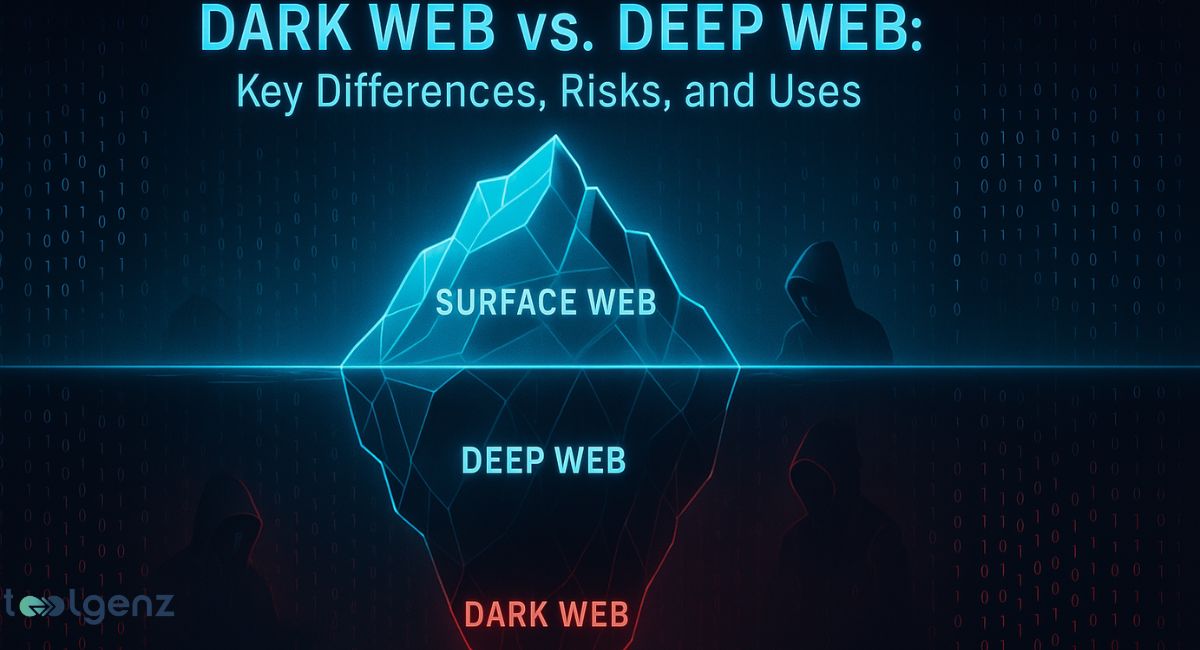
To better understand dark web vs surface web explained, imagine an iceberg. The surface web is the small part above water, easily visible to everyone.
The private web is the much larger portion below, hidden but mostly harmless. The darknet is the deepest, secret layer.
These layers show that much of the internet is invisible to standard search engines.
The surface web handles everyday browsing, the deep web keeps private information secure, and the darknet is a hidden realm that attracts both privacy-focused users and cybercriminals.
| Layer of the Web | Visibility | Content Examples | Tools Required |
| Surface Web | Public & Indexed | News, blogs, social media | Normal browsers |
| Deep Web | Private & Hidden | Email inboxes, private databases | Login credentials |
| Dark Web | Anonymous & Encrypted | Illicit marketplaces, cybercrime forums | Tor browser, VPN (Virtual Private Network) |
5 Key Differences Between the Deep Web and the Dark Web
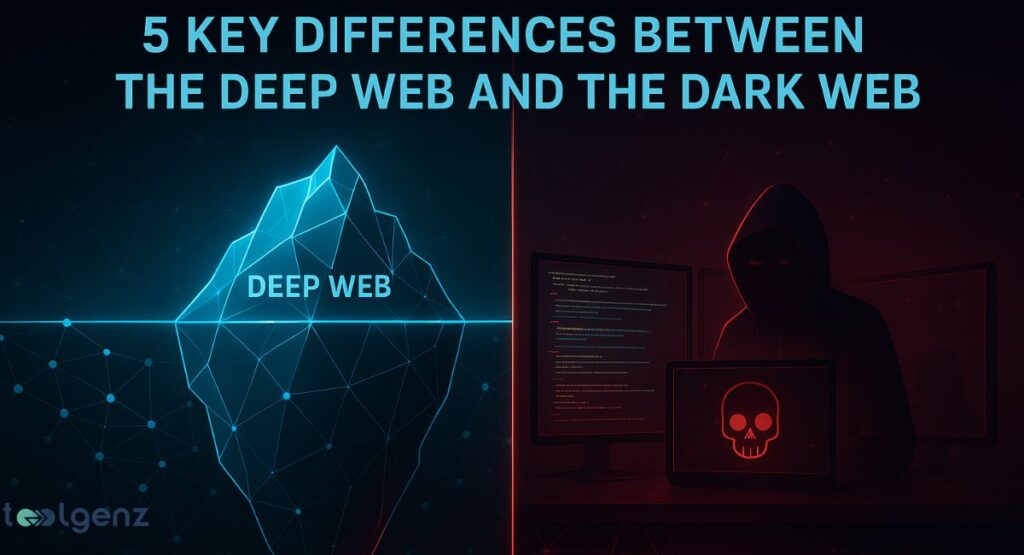
The first major difference is accessibility. The deep web only needs logins, while the darknet needs Tor browser, Tails OS, or Whonix OS to enter safely. This makes how to access the darknet safely a top concern for new users.
Another key difference is usage. The private web use cases include paywalled content and data privacy in private web browsing.
The darknet, however, is linked to cybercrime forums, illegal marketplaces, and darknet monitoring for businesses that track stolen data.
These differences highlight why the darknet is considered high-risk compared to the private web.
Understanding these contrasts helps users make informed decisions, strengthen cybersecurity hygiene, and avoid falling victim to threats that lurk in hidden corners of the internet.
Risks of Accessing the Deep and Dark Web
Exploring the deep web carries minimal risk if you follow safe browsing practices for private web users. However, failing to secure password-protected websites or using unsafe networks may lead to data breaches.
The risks of browsing the darknet are much higher. Hackers sell stolen data, run scams, and spread malware.
Impact of dark web on cybersecurity is huge because sensitive corporate data often ends up for sale on illicit marketplaces.
These threats make proactive protection essential for both individuals and businesses. Using VPNs, monitoring for leaked information, and staying alert to phishing attempts can reduce exposure.
Understanding these risks before exploring hidden networks helps prevent costly mistakes and strengthens overall online safety.
If you’re curious about the most popular underground networks, here’s a list of the top dark web marketplaces currently active.
Safely Accessing the Deep Web and Dark Web
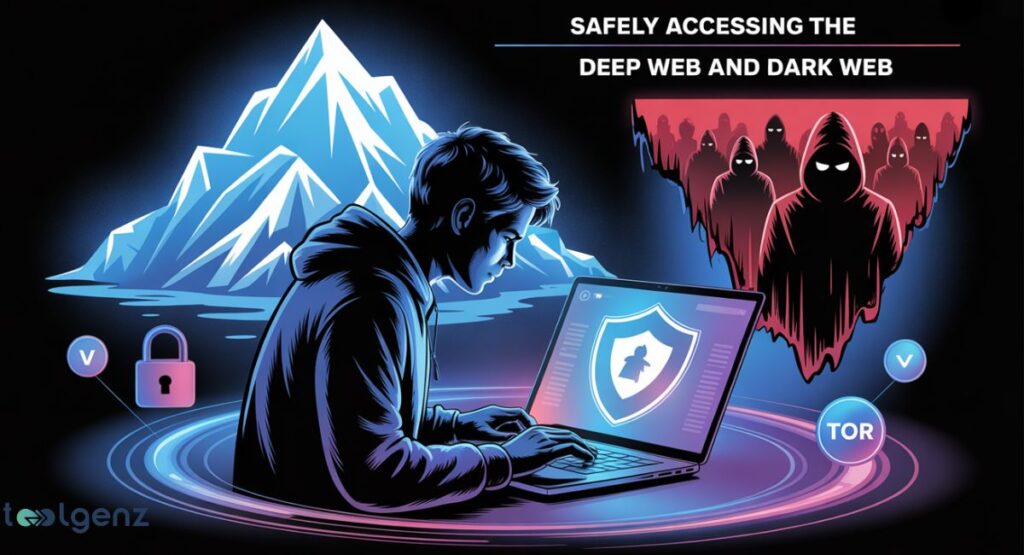
You can access the deep web safely by using strong passwords, private Wi-Fi, and cybersecurity hygiene tips like updating software regularly. Avoid logging in on public networks to protect your identity online.
To browse the darknet securely, use a VPN (Virtual Private Network) and Tor browser. Never download unknown files or visit suspicious .onion websites.
How law enforcement monitors the darknet is proof that unsafe activity can lead to arrests.
Taking extra precautions, such as enabling two-factor authentication and regularly checking for data leaks, adds another layer of defense.
Responsible browsing and awareness of potential threats are crucial to staying safe while navigating these hidden layers of the internet.
Best Browsers and Tools for the Deep and Dark Web
The best browsers for dark web access are those designed for privacy.
Tor browser is the most common, providing role of Tor browser in anonymity through onion routing. I2P, Tails OS, Whonix OS, and Subgraph OS add extra security layers.
For the deep web, normal browsers are fine, but pairing them with a VPN (Virtual Private Network) adds protection. These tools are crucial for how to protect data from cybercriminals and avoid threats.
These privacy-focused tools make it harder for attackers to track you. Regularly updating your browsers and understanding each security feature can help you avoid risks in these hidden corners of the internet.
Legal and Ethical Considerations
Browsing the deep web is legal in the USA, but engaging in illegal activities on the dark web can lead to severe penalties. Laws focus on buying or selling banned items and unauthorized access to private systems.
Ethically, the darknet has valid uses like anonymous browsing, whistleblowing, and secure communication.
Following data privacy in private web browsing rules ensures you stay within the law while protecting sensitive information.
Understanding both the legal boundaries and the ethical responsibilities of hidden web usage helps users avoid unnecessary risks.
Awareness of jurisdiction-specific laws and adopting safe online habits ensures that exploring these areas of the internet remains both productive and secure.
The Bottom Line: Staying Safe While Exploring Hidden Webs
The deep web protects privacy and supports essential online services, while the darknet is riskier but can provide anonymity and censorship freedom.
Using darknet monitoring, strong passwords, and safe browsing habits is key to online safety.
Remember, darknet vs private web security risks are real, but knowledge is your best defense. If you explore hidden webs, stay legal, use secure tools, and always protect your identity online.
By combining caution with the right cybersecurity hygiene, users can safely navigate the hidden layers of the internet.
Staying informed about threats, monitoring for data breaches, and respecting legal boundaries will ensure your online experience remains private, secure, and worry-free.
FAQS
1. What is the difference between deep and darknet?
The deep web contains private, password-protected content, while the darknet is a hidden part of it requiring special tools like Tor for anonymous access.
2. Is there anything deeper than the darknet?
No, the darknet is generally thought of as the deepest layer of the internet, lying beneath both the surface web and private web.
3. Is Netflix private web?
Yes, Netflix is part of the private web because its content is behind a login and paywall.
4. Does the private web include the darknet?
Yes, the darknet is a small subsection of the private web.
5. Who created the darknet?
The darknet was developed from U.S. Naval Research Laboratory projects to enable secure and anonymous communications.