

In 2025, mastering PostgreSQL is more than a technical skill—it’s a career catalyst. As an open-source database and advanced relational database management system, PostgreSQL powers everything from small business applications to massive enterprise solutions.
The right PostgreSQL training doesn’t just teach theory — it gives you hands-on skills in setup, configuration, and performance tuning that employers are actively looking for in today’s U.S. job market.
Whether you’re aiming to enhance PostgreSQL administration skills, dive into performance tuning, or explore advanced features, this guide will help you build a solid foundation.
By the end, you’ll understand why PostgreSQL remains a top choice for database professionals seeking growth and stability in today’s competitive tech landscape.
With the right training, you can confidently tackle real-world database challenges, improve system performance, and ensure data security.
This knowledge not only boosts your professional credibility but also positions you as a valuable asset in any data-driven organization.
PostgreSQL Overview
PostgreSQL is known for its robustness, scalability, and compliance with advanced database standards.
It supports complex queries and large datasets, with features like replication, schema creation, and advanced indexing that keep databases accurate and reliable.
This makes it a preferred choice for industries that demand accuracy and reliability.
Unlike some proprietary systems, PostgreSQL thrives as an open-source database. It evolves rapidly thanks to community contributions and global adoption.
Its compatibility with major programming languages and advanced PostgreSQL SQL language features makes it ideal for modern applications across finance, healthcare, e-commerce, and government sectors.
As technology demands grow, PostgreSQL’s adaptability ensures it can handle emerging challenges in data storage, analytics, and security.
This continuous innovation keeps it at the forefront of database technology, making it a strategic choice for businesses aiming for long-term scalability.
Why Train in PostgreSQL?
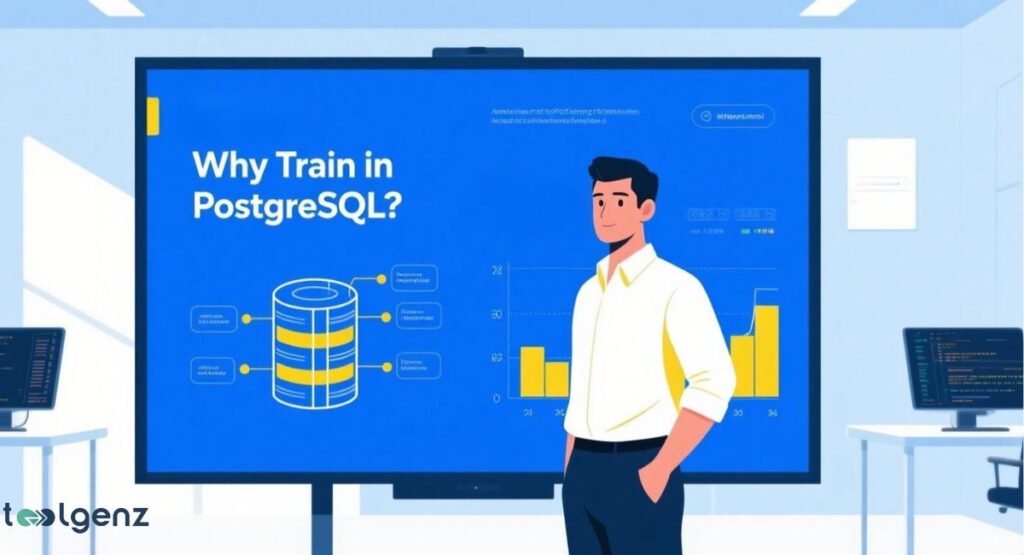
A PostgreSQL training course equips you with real-world skills that employers in the USA highly value. The database is widely used in enterprise systems, cloud services, and web applications.
By mastering PostgreSQL configuration, you can ensure databases run securely and efficiently under demanding workloads.
Training also dives into advanced areas like performance tuning, replication, and query analysis — skills that separate entry-level admins from true database experts.
These skills are essential for professionals who want to move beyond basic operations and into high-level database architecture or optimization roles.
Such expertise can also open doors to leadership positions in data engineering and DevOps teams.
With PostgreSQL’s growing adoption, having these capabilities will set you apart in a crowded job market and ensure long-term career stability.
If you’re looking to broaden your expertise, exploring Top IT Support Certifications can further complement your PostgreSQL journey.
Are You Facing Challenges with PostgreSQL?
Many beginners and even experienced developers struggle with PostgreSQL instance management and setup.
Problems like misconfigured PostgreSQL role management (users and groups), poor security policies, or inefficient queries can cause downtime and data loss. Without proper training, these mistakes can be costly.
An organized learning plan will help you avoid common pitfalls. Learning how to manage backups, WAL logs, and activity logs helps you keep your databases healthy, secure, and ready to bounce back if something goes wrong.
By developing these skills early, you not only reduce the risk of operational issues but also build the confidence to manage mission-critical databases.
This proactive approach can save organizations significant time and resources while boosting your professional reputation.
For an in-depth reference, the PostgreSQL Official Documentation is an invaluable resource.
Initializing and Executing an Instance

The process of initializing PostgreSQL instance begins after installing it on Linux or installing it on Windows.
Proper setup includes preparing the operating system for database, configuring paths, and adjusting memory parameters for performance.
Before opening your database to users, it’s critical to lock it down — from setting strong passwords and enabling SSL to fine-tuning server processes for stability. These early steps lay the foundation for stability and security.
Taking the time to set up correctly can prevent costly downtime and vulnerabilities later.
A well-initialized and secured instance not only boosts performance but also ensures that your database environment is ready to handle growth and complex workloads with confidence.
Connections and Administration Tools
Managing connections is crucial for database health. Tools like psql (SQL shell), PgAdminIII, phpPgAdmin, and Pgpool make administration tasks more efficient.
These tools help monitor sessions, grant permissions, and track database activity in real time.
Admin tools make it easier to manage users, roles, and permissions without digging into raw config files — saving time and reducing the chance of errors.
Mastering these tools can dramatically speed up daily workflows and reduce human error.
By leveraging their full capabilities, administrators can maintain tighter control over database security, ensure consistent performance, and respond quickly to any operational issues.
Data Definition and Management
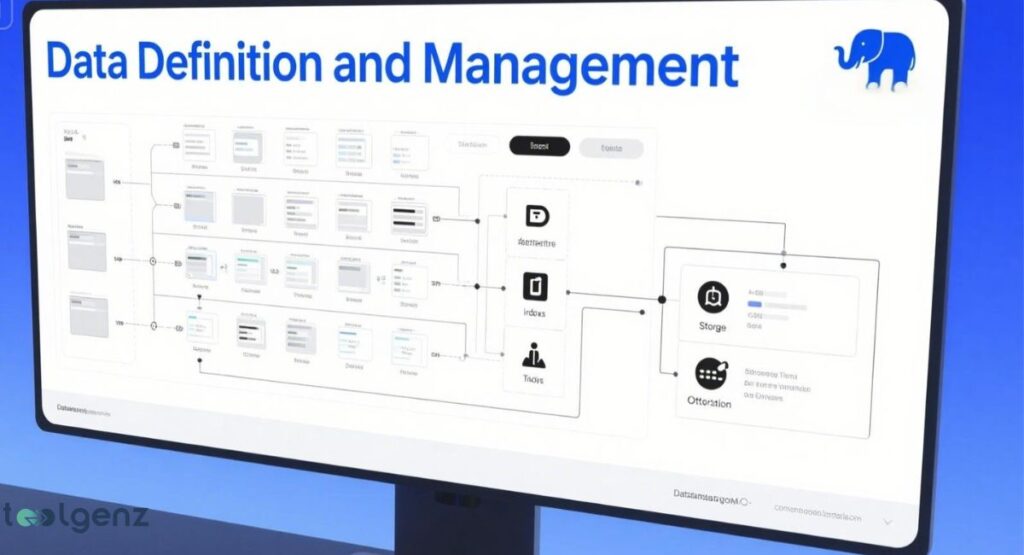
The heart of database design lies in defining structures. PostgreSQL domain and data type creation, it’s schema creation, and table relationships ensure data consistency.
Experienced admins also use tablespaces to improve how storage is organized and keep performance running smoothly.
Indexes improve query speed but require proper planning. PostgreSQL index management and partitioning strategies can reduce query time dramatically.
Paired with strong constraints, these measures keep data accurate and accessible.
When implemented correctly, these design choices not only enhance performance but also make databases easier to scale and maintain.
A well-structured schema paired with optimized indexing can be the difference between sluggish queries and lightning-fast application responses.
Daily Administration Best Practices
Routine PostgreSQL daily maintenance tasks keep databases running smoothly. Regular tasks like VACUUM, REINDEX, and query optimization keep databases fast and responsive.
Administrators monitor database statistics and VACUUM data, check logs, and apply updates as part of preventive maintenance.
Keeping an eye on the database statistics collector results can highlight performance bottlenecks early.
Consistent maintenance not only improves current performance but also extends the life of your database infrastructure.
By addressing small issues before they escalate, you create a stable environment that can handle future growth without unexpected slowdowns or failures.
Backups and Restore Procedures
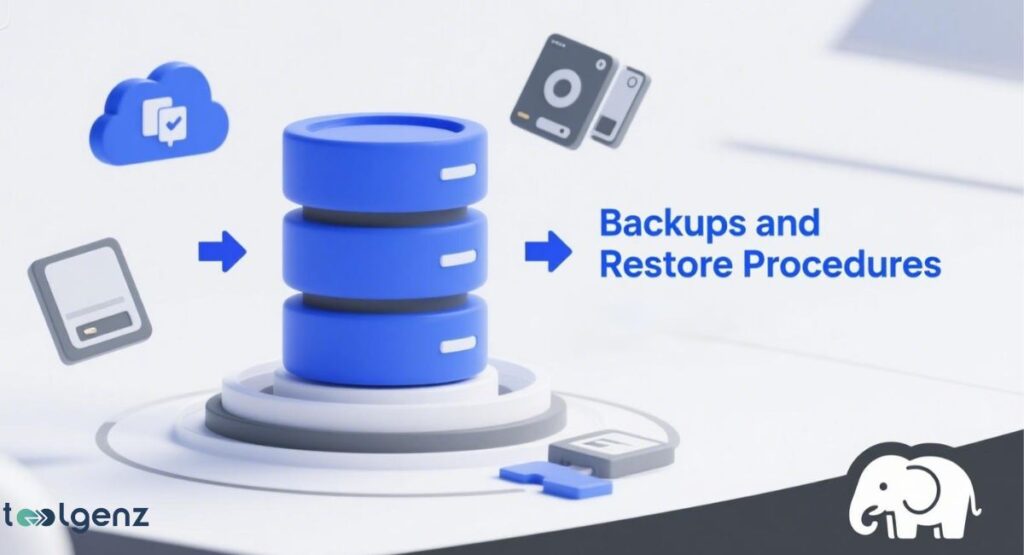
Reliable backups are essential for any business. Many admins rely on tools like pg_dump or cold backups to create reliable offline snapshots of their databases.
In high-availability systems, the database hot backup methods allow backups without stopping operations.
Restoring is just as important. Knowing restoring PostgreSQL databases with pg_restore, PostgreSQL import and export, and managing PostgreSQL hot vs cold backup differences ensures business continuity during unexpected failures.
A strong backup and recovery strategy can mean the difference between a quick recovery and catastrophic data loss.
By testing restoration processes regularly, organizations can guarantee that their PostgreSQL environment remains resilient even in worst-case scenarios.
Impact on Your Career and Salary as a PostgreSQL Expert
The demand for PostgreSQL experts in the USA is on the rise. With strong PostgreSQL career opportunities, professionals can secure roles as database administrators, architects, or backend engineers.
PostgreSQL salary potential is competitive, with senior specialists earning six figures. You’ll stand out even more if you can handle advanced work like replication or fine-tuning database caching.
As more organizations migrate to open-source solutions, these skills will remain in high demand.
Investing in advanced the tool expertise now can secure long-term career growth and make you a sought-after professional in the evolving tech industry.
The Risks of Ignoring PostgreSQL Skills
Failing to learn the database can limit your career progression.
With many companies migrating to open-source database solutions, those without database training prerequisites may fall behind peers who have completed a training course of it.
Ignoring this skill means missing out on high-paying opportunities and roles that require advanced database administration and strong security practices.
In a competitive market, this can be the difference between career growth and stagnation.
Over time, the gap between skilled PostgreSQL professionals and those without experience will only widen.
By acting now, you can future-proof your career and position yourself as an indispensable resource in any data-driven organization.
FAQs
Is PostgreSQL harder than SQL?
The database isn’t more difficult than SQL itself — it just adds advanced features that can feel overwhelming at first for beginners.
Does NASA use PostgreSQL?
Yes, NASA has used it in various projects due to its reliability, open-source nature, and ability to handle large datasets securely.
How to structure a Postgres database?
Structure a PostgreSQL database by defining schemas, creating tables with appropriate data types, setting relationships, and adding indexes for performance.
How to create a form in PostgreSQL?
It doesn’t directly create forms; you use a front-end tool or application framework connected to the database to build and submit forms.
What are the disadvantages of PostgreSQL?
The database can have a steeper learning curve, slower write performance for some workloads, and fewer third-party tools compared to more popular commercial databases.