
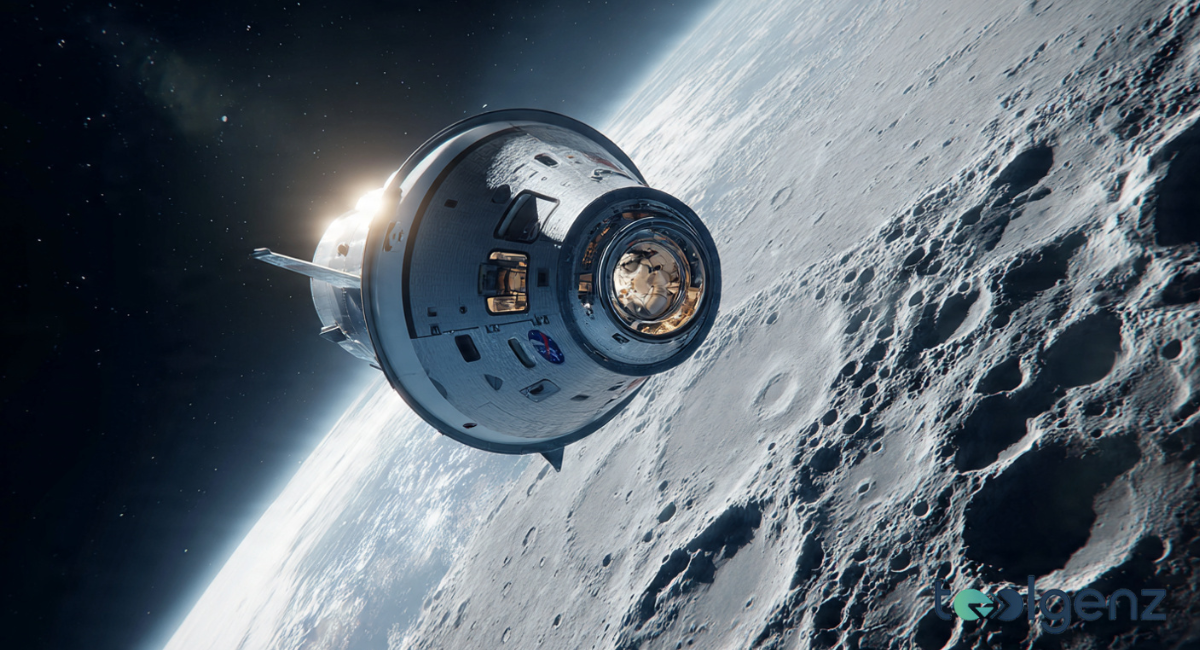
Artemis II marks a thrilling milestone in America’s journey back to deep space. As NASA’s first crewed mission in the Artemis program, it will take astronauts on an unprecedented trip around the Moon and safely back to Earth. Building on the success of Artemis I, this mission will put human systems to the test in the challenging environment of lunar space.
The crew will rely on the Orion spacecraft, powered by the European Service Module, to test life support, navigation, and other critical systems. Riding atop NASA’s powerful Space Launch System (SLS), Artemis II showcases America’s readiness to lead the next chapter of human space exploration.
What Is the Artemis II Mission?
At its core, Artemis II is a crewed lunar mission that sends four astronauts on a journey around the Moon and back to Earth. It follows the Artemis I test flight, which flew without astronauts. This mission confirms that the spacecraft, crew systems, and mission operations work together under real conditions.
This journey is more than a brief orbit around the Moon. Artemis II will test how humans perform in deep space and lay the groundwork for future lunar landings. By sending astronauts through lunar space, NASA can identify potential risks early, turning the Artemis program from a bold vision into a practical roadmap for exploration.
Artemis II Launch Date and Opportunities
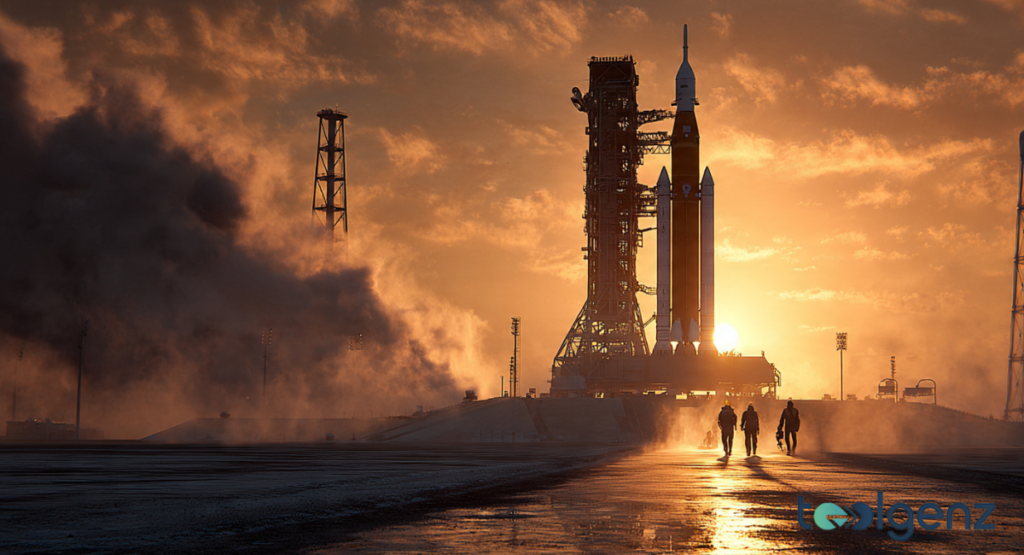
NASA currently targets a launch no earlier than 2026 from the Kennedy Space Center launch facilities in Florida. The exact date depends on final safety checks and system readiness. Launch windows matter because orbital mechanics must align perfectly for a safe lunar flyby.
Delays are common in human spaceflight, as engineers take extra time to thoroughly inspect both hardware and software. These careful preparations are crucial for keeping the crew safe during every stage of the mission.
When Artemis II finally lifts off, it will ride the powerful Space Launch System (SLS), the most capable rocket NASA has ever built.
Artemis II Crew Members
The Artemis II crew includes NASA astronauts Reid Wiseman, Victor Glover, and Christina Koch, along with Canadian astronaut Jeremy Hansen. Together, the crew brings a wealth of experience from space station missions and military aviation to cutting edge scientific research. This diverse expertise will be vital for making smart decisions during key moments of the mission.
This mission also highlights Canadian Space Agency astronaut participation, showing how space exploration connects nations. Every astronaut has a unique role, from managing flight operations to testing systems and practicing manual controls. Their efforts help ensure humans can perform reliably in the demanding environment of deep space.
Artemis II Mission Objectives
One key goal of Artemis II is testing life support systems with humans onboard. These systems provide air, water, temperature control, and waste management. Engineers need to ensure that all systems function flawlessly over extended periods far from Earth.
Another major objective involves verifying spacecraft performance during real flight. Astronauts will help test navigation, power, and emergency procedures. Artemis II is designed to test spacecraft systems that will support longer, more complex missions in the future.
Artemis II Flight Path and Trajectory
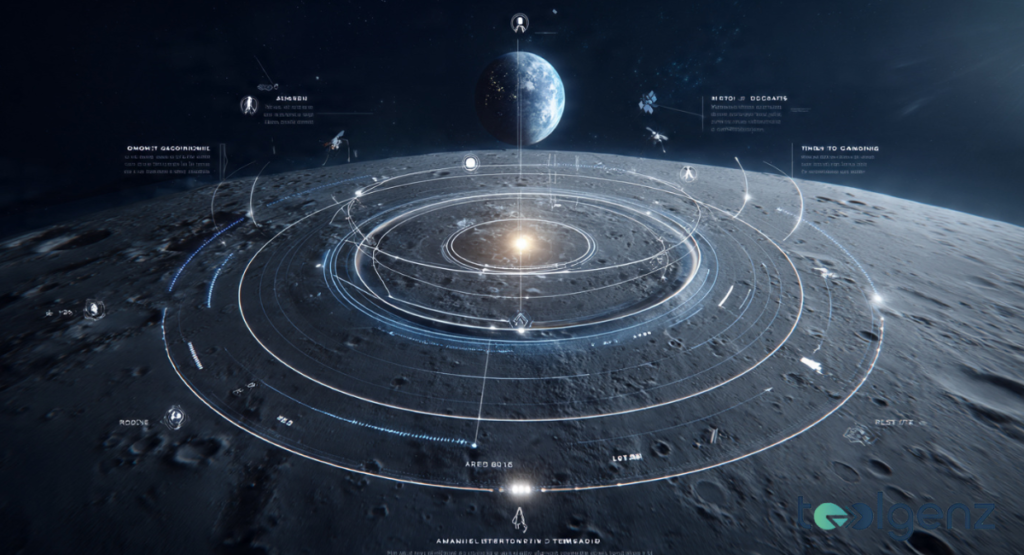
The Orion spacecraft flight path begins with astronauts orbiting Earth several times. This phase allows crews to confirm system health and practice operations. Once ready, Orion begins a four-day journey to the Moon, leaving Earth’s gravity behind.
Artemis II will follow a free-return trajectory, allowing Orion to loop around the Moon and head back to Earth with minimal engine adjustments. This approach lowers risk while giving astronauts the chance to travel thousands of miles beyond the Moon and return safely.
Spacecraft and Technical Details
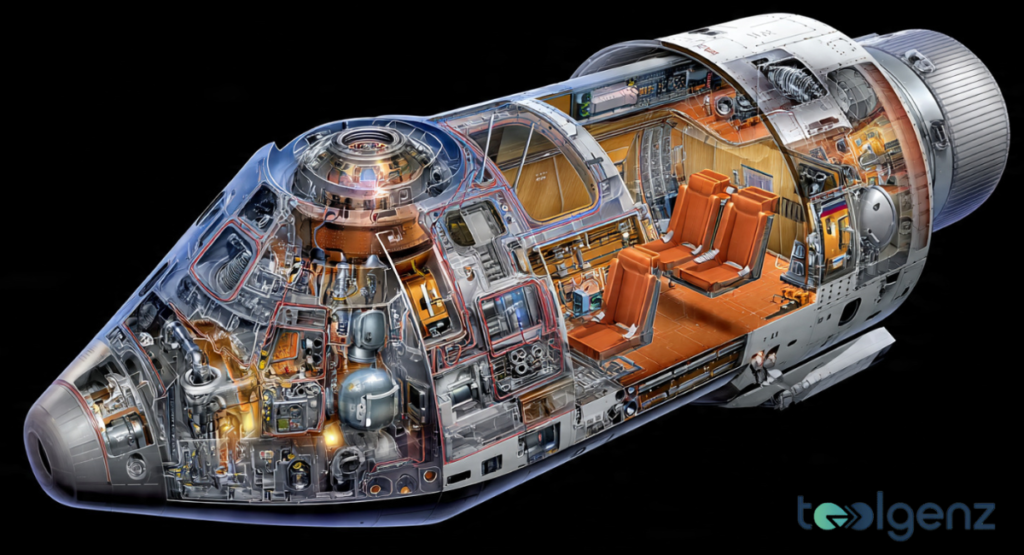
The Orion spacecraft sits atop the Space Launch System (SLS) rocket. Orion includes a crew module for astronauts and a European Service Module that handles propulsion, power, and thermal control. Combined, these systems make it possible for humans to travel safely beyond low Earth orbit.
The European Service Module provides power and propulsion, as well as water and oxygen. It is built through ESA human exploration programs. Orion also carries advanced computers, heat shields, and navigation sensors. These advanced technologies protect astronauts during launch, throughout deep space travel, and during the intense reentry back to Earth.
Component | Purpose | Provider
Orion Crew Module | Houses astronauts | NASA
European Service Module | Power, propulsion, life support | ESA
Space Launch System | Launch vehicle | NASA
Communications and Navigation During Artemis II
During flight, NASA relies on its Deep Space Network to track Orion’s position. These antennas allow constant communication, even when the spacecraft travels far from Earth. Maintaining reliable communication is essential for both crew safety and mission control coordination.
Navigation also benefits from international collaboration with ESA and NASA. The service module engines support course corrections and manual control proximity operations demonstration tests. These demonstrations help prepare crews for future missions involving the Gateway space station.
How to Watch the Artemis II Launch

People across the United States can watch Artemis II live through NASA’s official streams. Coverage includes pre-launch briefings, liftoff, and onboard views.
For those near Florida, public viewing areas around Kennedy Space Center offer an unforgettable experience. Seeing the Orion spacecraft lift off offers spectators a direct connection to a historic moment in space exploration. Millions more will follow mission updates as astronauts orbit Earth and head toward the Moon.
International Collaboration and ESA’s Role
Artemis II shows how global cooperation strengthens exploration. The European Space Agency (ESA) built the European Service Module, a vital part of Orion. This contribution reflects decades of shared research and trust.
ESA’s work also supports future goals like the Gateway lunar station and the Lunar I-Hab module. These projects expand human presence around the Moon. By sharing costs and expertise, international partners help NASA move faster and safer.
Why Artemis II Matters for the Future of Human Spaceflight

The success of Artemis II directly supports future lunar landings under Artemis III. It proves that astronauts can survive and work in deep space again. This mission also strengthens the Moon-to-Mars strategy by testing systems needed for long missions.
Artemis II is about more than technology it inspires the next generation, showing how exploration fuels innovation, learning, and global collaboration. As NASA, ESA, and partners push forward, Artemis II becomes a bridge between past achievements and humanity’s future among the stars.
FAQs
What is Artemis II?
Artemis II is NASA’s first crewed mission of the Artemis program, sending astronauts around the Moon and back to Earth to test human deep-space systems.
When will Artemis II launch?
NASA plans to launch Artemis II no earlier than 2026, with the exact date depending on final safety checks and system readiness.
Who are the astronauts on Artemis II?
The crew includes NASA astronauts Reid Wiseman, Victor Glover, and Christina Koch, along with Canadian astronaut Jeremy Hansen.
Will Artemis II land on the Moon?
No, Artemis II will not land on the Moon; it will perform a lunar flyby to test spacecraft and crew performance.
Why is Artemis II important?
Artemis II validates crewed deep-space travel and prepares NASA for future lunar landings and long-term missions to Mars.