
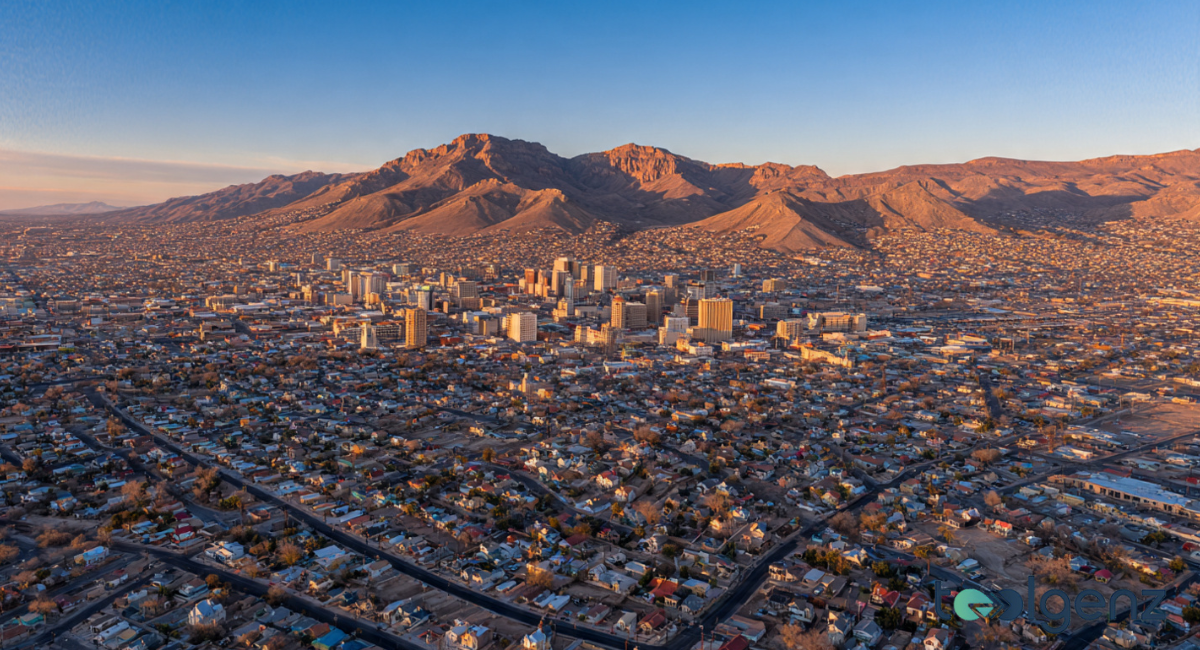
El Paso blends culture, trade, and history in a way few American cities can. Located along the U.S.–Mexico border, the city combines desert scenery with dramatic views of the Franklin Mountains. with mountain views from the Franklin Mountains.
Known for its strong Hispanic heritage and welcoming spirit, El Paso offers more than sunny skies and scenic trails. It serves as a vital hub for cross-border trade, military presence, and higher education. Even as the economy grows, the city remains deeply connected to its traditions and strong sense of community. identity and community pride.
History of El Paso
Long before modern highways, the land of El Paso carried deep human roots. Archaeologists found evidence of early farmers and hunter groups in the area now called Hueco Tanks. Native groups such as the Manso, Suma, Jumano tribes and the Mescalero Apache lived in this region for centuries. Spanish explorers arrived in the late 1500s and built a Spanish colonial settlement that became a resting point along the Rio Grande. The area played a key role during the Pueblo Revolt (1680) when Spanish officials temporarily moved south.
Major political changes after the Texas Revolution and the Mexican American War reshaped the city’s future. The signing of the Treaty of Guadalupe Hidalgo in 1848 fixed the border and placed El Paso firmly in Texas. Railroads followed. Trade increased. The old Franklin settlement grew into a strong frontier town with classic adobe architecture. Over time, this border outpost became the vibrant El Paso metropolitan area known today. You can still see this history in local missions, street names, and long-standing cross-border traditions.
Geography and Climate
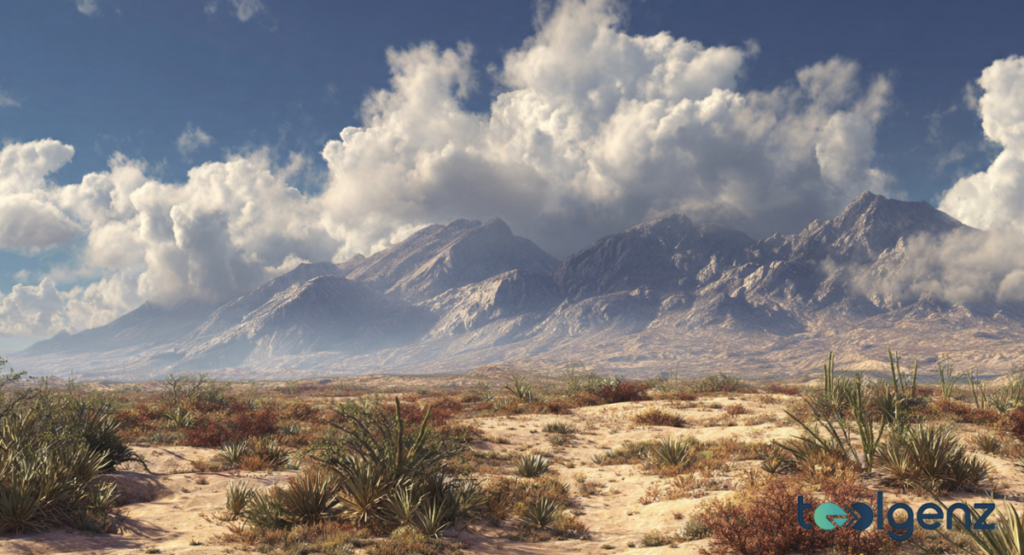
One of the first things people notice about the city is its unusual geography. This Rio Grande border city sits in the heart of the Paso del Norte region, which also forms the broader Borderplex region. The Franklin Mountains cut through the city and create dramatic desert views. Unlike most cities, El Paso surrounds a mountain range rather than avoiding it. The elevation stands near 3,888 feet, which gives the city cooler evenings despite its desert heat.
The climate is dry and bright. El Paso enjoys more than 300 sunny days each year. Summers feel hot yet low humidity keeps the air crisp. Winters stay mild with rare snow. The desert landscape blends with river valleys near the Rio Grande. Outdoor life thrives here because the weather supports hiking, cycling, and climbing year-round. Residents enjoy clear skies and sunshine most of the year.
| Geographic Feature | Detail |
|---|---|
| Elevation | 3,888 feet |
| Region | West Texas city |
| Border Location | U.S.–Mexico border |
| Nearby Cities | Ciudad Juárez, Las Cruces |
| Mountain Range | Franklin Mountains |
Demographics and Community
A strong sense of community plays a major role in daily life here. It is known as a Hispanic majority city with an absolute-majority-Hispanic population that has shaped its language, food, music, and values.
Many families speak both English and Spanish daily, creating a strong bilingual workforce. The city forms part of a binational metropolitan area that connects deeply with Mexico. Residents proudly call themselves an El Pasoan (demonym).
Population growth continues steadily across the Combined statistical area (CSA). Urban growth has raised urban population density, yet neighborhoods remain family centered.
Churches, schools, and community centers support social life. Cross-border ties remain common. Many people work or study on both sides of the river. Culture isn’t just talked about here it’s part of everyday routines, celebrations, and family life.
Economy, Tax & Budget
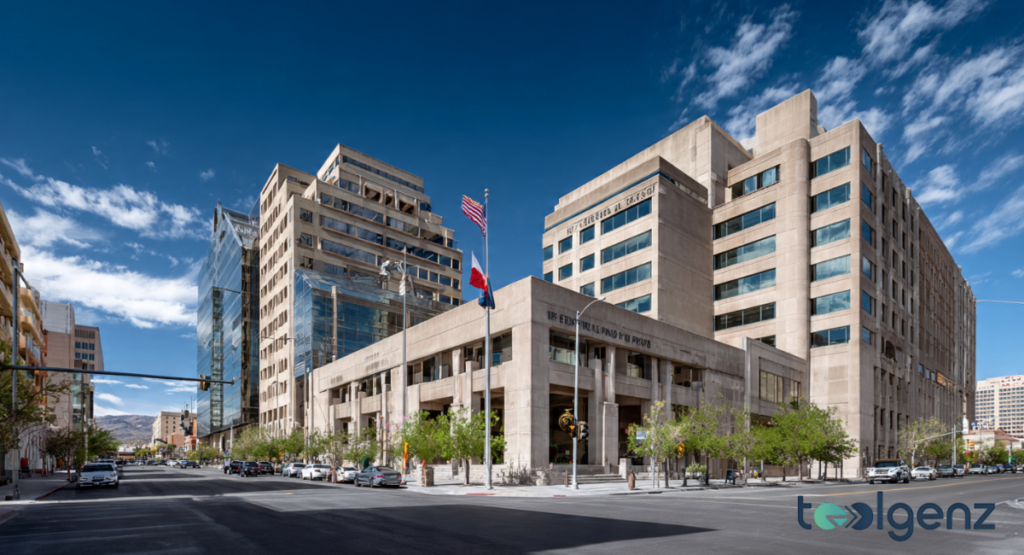
Trade, military activity, and healthcare form the backbone of the local economy. Its cross-border trade economy moves billions in goods each year through bridges and rail lines.
The GDP of El Paso metro continues to expand thanks to logistics, manufacturing, and medical research. Several publicly traded companies operate here. The Medical Center of the Americas drives innovation and research across West Texas.
Military strength also fuels growth. The presence of Fort Bliss military base, Biggs Army Airfield, and other facilities creates jobs and stability. The military presence also boosts local housing markets, retail businesses, and service industries.
City leaders carefully manage tax revenue under a Council–manager government model. Smart budgeting funds roads, safety programs, and infrastructure upgrades.
| Economic Driver | Impact |
|---|---|
| Cross-border trade economy | Billions in annual commerce |
| Fort Bliss | Major employer |
| Medical Center of the Americas | Healthcare innovation |
| Transportation infrastructure | Connects U.S. and Mexico |
Government, Transparency & Public Safety
El Paso operates under a Council–manager government structure. The city serves as the El Paso County seat and is led by Mayor Renard Johnson alongside elected City council members.
Day-to-day operations are guided by City manager Dionne Mack. For federal identification, the city carries FIPS code 48-24000 and a unique GNIS feature ID. City officials and residents often highlight the area’s safety record. For years, rankings placed El Paso among the Safest large cities in the U.S. according to a Congressional Quarterly ranking.
Strong coordination exists between local police and federal agencies such as the United States Border Patrol El Paso Sector, Drug Enforcement Administration Division 7, and the El Paso Intelligence Center. Advanced technology supports modern border security operations. Transparency portals allow residents to review budgets and decisions openly.
Education, Healthcare & Veteran Resources
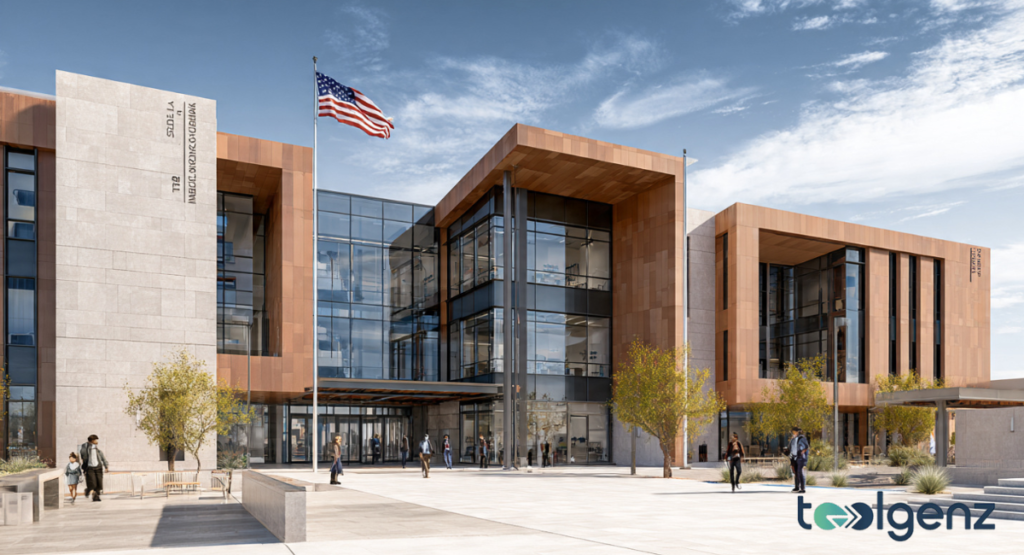
Education plays a central role in the city’s long-term growth. The University of Texas at El Paso (UTEP) stands as a research leader and community anchor. Students from across the country study engineering, health sciences, and business here. Public school districts focus on bilingual learning to match the city’s identity. Higher education supports workforce growth across the Borderplex region.
Healthcare access continues to expand. The William Beaumont Army Medical Center provides advanced treatment for soldiers and civilians. Veterans connected to Fort Bliss receive support services, training, and counseling. The Medical Center of the Americas links hospitals, research labs, and clinics. Together, these facilities allow residents to access advanced healthcare close to home.
Arts, Culture & Media
Cultural influence is visible throughout the city, from festivals to local art spaces. Local museums showcase border history and indigenous heritage. Downtown theaters host music, ballet, and touring performances. Annual events celebrate Hispanic roots and frontier spirit. The city also hosts the historic Sun Bowl college football game, one of the oldest bowl games in America.
Media outlets operate in both English and Spanish, reflecting the city’s bilingual voice. Radio, television, and online platforms share news across the El Paso metropolitan area. Artists draw inspiration from desert landscapes and cross-border life. Local artists often draw inspiration from the desert landscape and border life.
Parks, Recreation & Sports
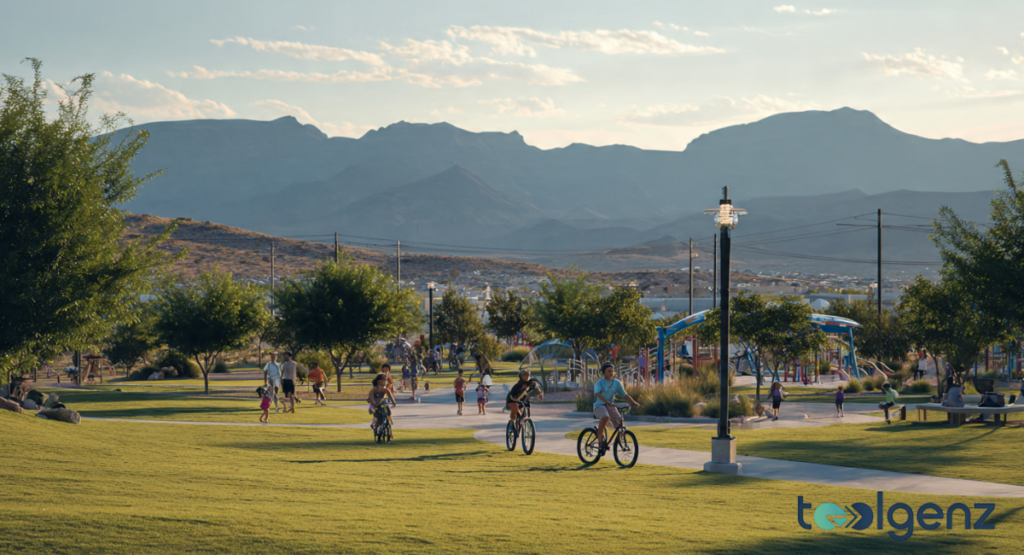
Outdoor life thrives in El Paso thanks to the Franklin Mountains and nearby Hueco Tanks. Hiking trails stretch across desert ridges. Climbers visit world-famous rock formations. Families gather in city parks for sports and festivals. The desert setting creates a playground unlike any other in Texas.
Sports energize the city. College football at the Sun Bowl brings national attention. Youth leagues and community programs keep neighborhoods active. Clean air and sunshine encourage movement year-round. Outdoor activities are simply part of everyday life for many residents.
Infrastructure, Sister Cities & Latest Updates
A strong transportation network connects the city to both the U.S. and Mexico. Major highways link the city to Las Cruces and beyond. International bridges move goods and people daily between El Paso and Ciudad Juárez. Modern transportation infrastructure supports rail freight, cargo traffic, and border commerce. The local area code 915 has become a symbol of city pride.
Sister city relationships strengthen diplomacy and trade. Continuous development projects modernize water systems and roads. Leaders publish updates through city websites and open data platforms. As part of the growing Combined statistical area (CSA), El Paso plans carefully for sustainable expansion. Its future blends innovation with tradition.
Why El Paso Matters in America Today
The city shows how a border community can succeed while preserving its identity. It combines history, economic strength, and cultural diversity in a way that feels steady and grounded. From the legacy of the Treaty of Guadalupe Hidalgo to the daily work of the United States Border Patrol, this city lives at the intersection of nations. It remains a proud West Texas city shaped by resilience.
If you visit El Paso, you will notice something different. The skyline hugs mountains. The language shifts between English and Spanish. The community feels tight yet welcoming. In a country filled with large urban centers, El Paso holds a unique voice. More than a border city, it connects cultures and economies on a daily basis.
FAQs
What is El Paso, Texas famous for?
El Paso is famous for its location on the U.S.–Mexico border, strong Hispanic heritage, the Franklin Mountains, Fort Bliss, and the historic Sun Bowl college football game.
Why was El Paso shut down?
El Paso was not permanently shut down, but temporary restrictions occurred during COVID-19 and specific border security operations to manage public health and migration surges.
What percent of El Paso is Mexican?
About 81–83% of El Paso’s population is Hispanic or Latino, with a large portion being of Mexican descent.
Is El Paso Democrat or Republican?
El Paso traditionally leans Democratic in local, state, and national elections.
What is El Paso’s culture like?
El Paso’s culture blends Mexican and American traditions, creating a bilingual, family-oriented, food-rich, and community-driven border identity.