
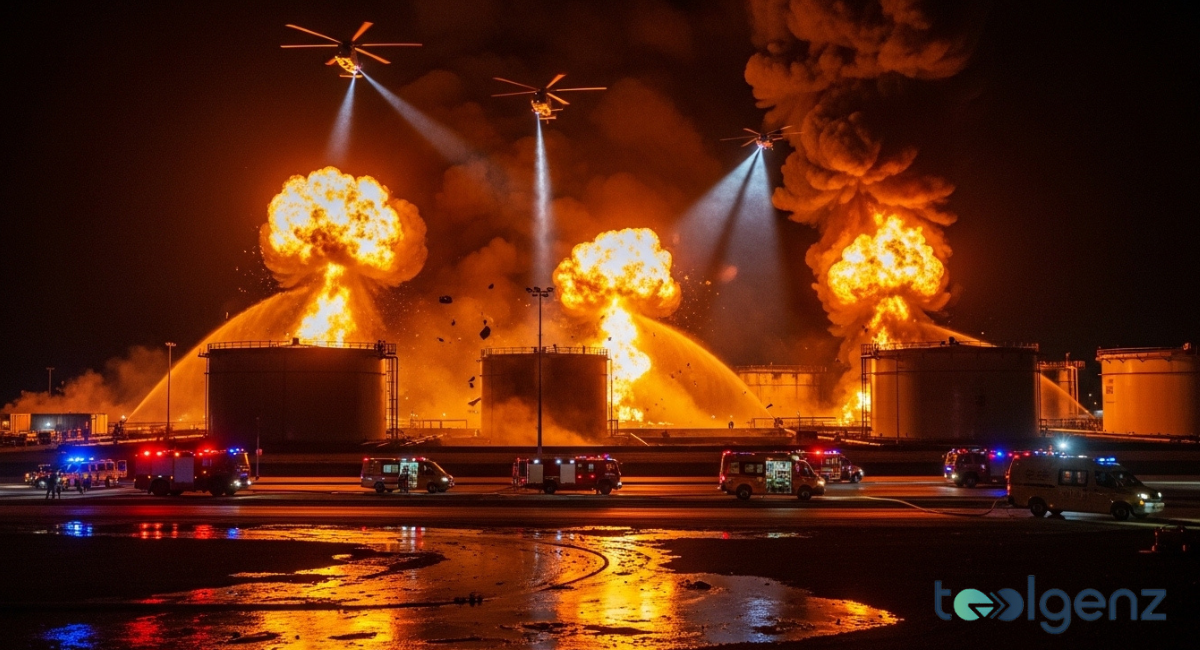
Kharg Island, a small yet strategically vital island in the Persian Gulf, has recently drawn global attention. Home to Iran’s primary oil terminal, it plays a central role in international oil trade. Recent tensions, including a U.S. strike on Iranian military targets, have brought the island into the headlines.
At the same time, a fire at a UAE oil hub and threats of retaliation from Iran have raised concerns about a wider regional conflict. With millions of barrels of crude passing through nearby routes like the Strait of Hormuz, any disruption could quickly affect oil prices, shipping operations, and global energy markets.
What Happened at the UAE Oil Hub?
The crisis began when smoke was spotted along the Fujairah coastline in the UAE. Officials reported a suspected drone strike targeting energy facilities near the Fujairah oil export terminal, forcing ships to halt operations temporarily.
The incident sparked fears of a broader attack on UAE energy infrastructure. Security officials in Dubai, Abu Dhabi, and key ports including Jebel Ali and Khalifa heightened alerts. Intelligence reports suggest the event may be linked to rising tensions in the Gulf following the U.S. strike near Kharg Island.
| Key Event | Location | Impact |
|---|---|---|
| Fire reported near port | Fujairah | Oil shipments delayed |
| Drone interception | UAE airspace | Increased defense alerts |
| Oil export pause | Fujairah terminal | Energy supply concerns |
| Security warning | Dubai & Abu Dhabi | Port operations tightened |
Why the U.S. Targeted Iran’s Kharg Island
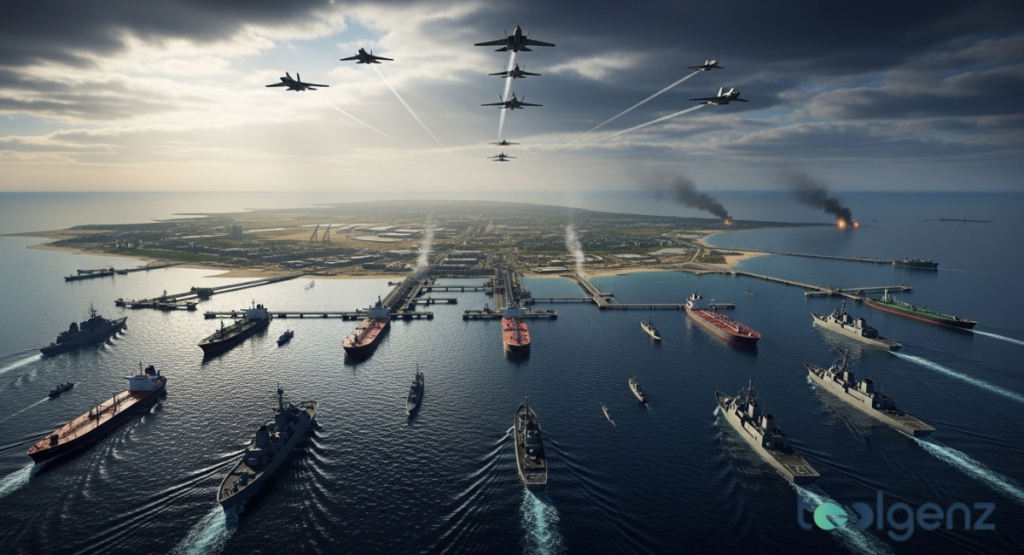
Experts say the rationale is clear: Kharg Island sits at the heart of Iran’s oil exports. Roughly 90% of Iran’s crude oil passes through its terminal, making the island a critical energy hub.
Handling millions of barrels daily, Kharg Island is also a focal point in global energy politics. Analysts from RBC Capital Markets suggest that targeting nearby military infrastructure could reduce threats to tanker routes while safeguarding international trade. U.S. officials have emphasized that the operation was aimed at securing shipping lanes and protecting vessels passing through the region.
| Kharg Island Facts | Details |
|---|---|
| Location | Persian Gulf near Iran |
| Export role | Handles over 90% of Iran’s oil |
| Storage capacity | ~28 million barrels |
| Key function | Major oil export terminal |
Analysts warn that a full disruption at Kharg Island could quickly ripple through global markets, affecting oil prices and trade worldwide.
Iran’s Response and Threats Against Gulf Nations
Iran responded strongly after the U.S. strike. Officials from the Iranian Revolutionary Guards (IRGC) warned that Gulf ports cooperating with the U.S. could become targets. Leaders, including Mojtaba Khamenei and Abbas Araqchi, hinted that attacks on energy infrastructure were possible if Iranian assets were threatened.
Analysts note that Tehran has several tools it could use:
| Potential Response | Method |
|---|---|
| Missile attacks | Ballistic missile strikes on infrastructure |
| Drone operations | Coordinated drone attacks |
| Maritime action | Disrupting tanker shipping routes |
| Cyber warfare | Targeting financial networks |
These warnings underscore the vulnerability of the energy network surrounding Kharg Island.
Impact on Global Oil Supply and the Strait of Hormuz
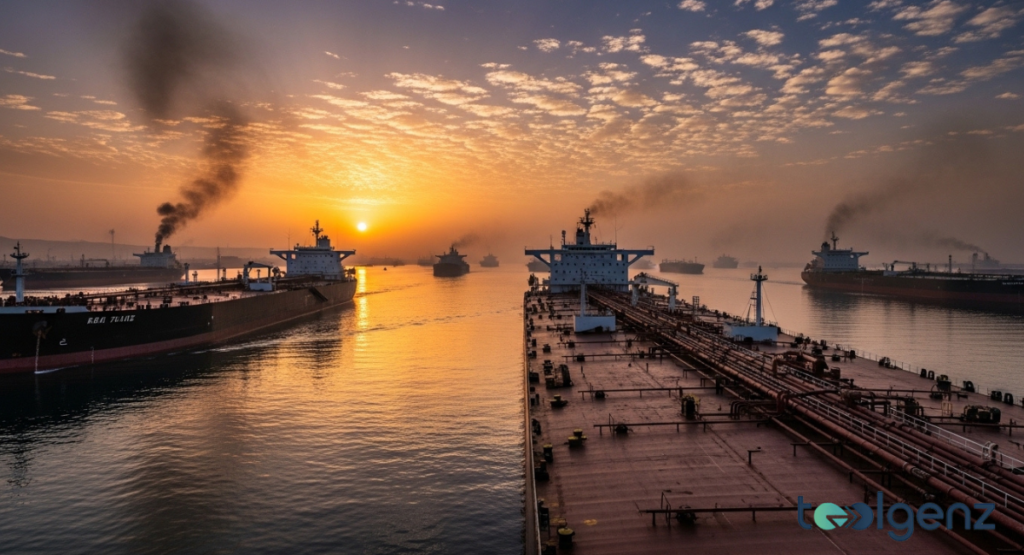
The Strait of Hormuz remains one of the world’s most critical energy corridors, with roughly 20% of global oil passing through it. Any instability near Kharg Island can immediately affect tanker movements. Heightened alerts often slow shipping, increase insurance costs, and force tankers to reroute or wait offshore.
| Strategic Waterway | Importance |
|---|---|
| Strait of Hormuz | Carries about one-fifth of world oil |
| Tanker traffic | Major route for Gulf exports |
| Risk factors | Military conflict and blockades |
Even minor disruptions in this area can trigger widespread effects on the global oil market.
Rising Oil Prices and Global Energy Market Reactions
As tensions escalated, oil markets reacted swiftly. Traders began pricing in the risk of a global energy security crisis, causing crude futures to spike.
Energy strategist Helima Croft warned that sustained attacks on regional energy infrastructure could send prices soaring. The U.S. government closely monitored the situation, aware that global crude trends often affect domestic gasoline prices.
| Market Reaction | Result |
|---|---|
| Oil futures spike | Traders fear shortages |
| Shipping insurance rises | Tanker companies face higher costs |
| Energy stocks fluctuate | Market uncertainty increases |
For consumers in the U.S. and elsewhere, instability around Kharg Island could translate into higher gas prices in the coming weeks.
Military Escalation Across the Middle East

The crisis extends beyond Kharg Island. Drone strikes, missile launches, and increased naval patrols across the Persian Gulf have heightened regional tensions. U.S. Central Command confirmed operations targeting Iranian military infrastructure linked to maritime threats. Meanwhile, conflicts involving Israel and Lebanon have intensified fears that the crisis could spread beyond the Gulf.
| Region | Activity |
|---|---|
| Persian Gulf | Increased naval patrols |
| Israel-Lebanon border | Cross-border tensions |
| Gulf states | Enhanced energy infrastructure security |
These developments highlight the risk that the Kharg Island crisis could escalate into a broader regional conflict.
International Reactions and Diplomatic Calls for De-escalation
Global leaders quickly urged restraint. Diplomats from Washington, Europe, and Asia emphasized the risk of destabilizing energy supplies if attacks near Kharg Island continue. Regional leaders, including Anwar Gargash, called for dialogue to prevent escalation.
International organizations also stressed that strikes on oil facilities could have serious economic consequences. Global energy institutions are closely monitoring supply flows to assess the impact of rising tensions.
Safety Concerns for Residents and Foreign Nationals in the Gulf

After the drone incident, UAE authorities issued security alerts. Residents near major ports were advised to stay vigilant, while military forces monitored potential threats linked to Iranian retaliation.
Embassies, including the U.S., reminded citizens to avoid crowded areas near energy infrastructure. Ports in Dubai, Abu Dhabi, and Fujairah strengthened patrols and tightened access controls.
| Safety Measure | Purpose |
|---|---|
| Port security checks | Prevent sabotage |
| Military patrols | Protect shipping |
| Embassy alerts | Inform foreign nationals |
These precautions aim to minimize risk while tensions around Kharg Island remain high.
What Happens Next in the U.S.–Iran Conflict
The coming weeks may determine whether the crisis remains a short-term confrontation or evolves into a prolonged geopolitical struggle affecting global energy security. Continued attacks could prompt stronger naval deployments and tighter control over tanker traffic. Some governments are already considering sending warships to the Strait of Hormuz to safeguard shipping lanes.
Economists warn that a prolonged conflict could worsen the global energy security crisis. Even minor disruptions at the Kharg Island terminal can influence global oil prices, making the situation critical for traders, governments, and consumers alike.
FAQS
What is Kharg Island and why is it important?
Kharg Island is Iran’s main oil export hub, handling over 90% of its crude exports. Its strategic position makes it vital for global energy security.
Why did the U.S. strike military sites near Kharg Island?
The U.S. strike targeted Iranian military sites to prevent threats to shipping and safeguard the Strait of Hormuz.
How has the Kharg Island conflict affected oil prices?
Disruptions near Kharg Island have triggered higher crude and gasoline prices worldwide.
What threats has Iran issued in response to Kharg Island strikes?
Iran has warned of potential attacks on Gulf energy infrastructure, including UAE ports, in retaliation.
What is the risk to global shipping and energy supply?
Tensions around Kharg Island and the Strait of Hormuz can disrupt maritime traffic, affecting international oil shipments and global markets.