
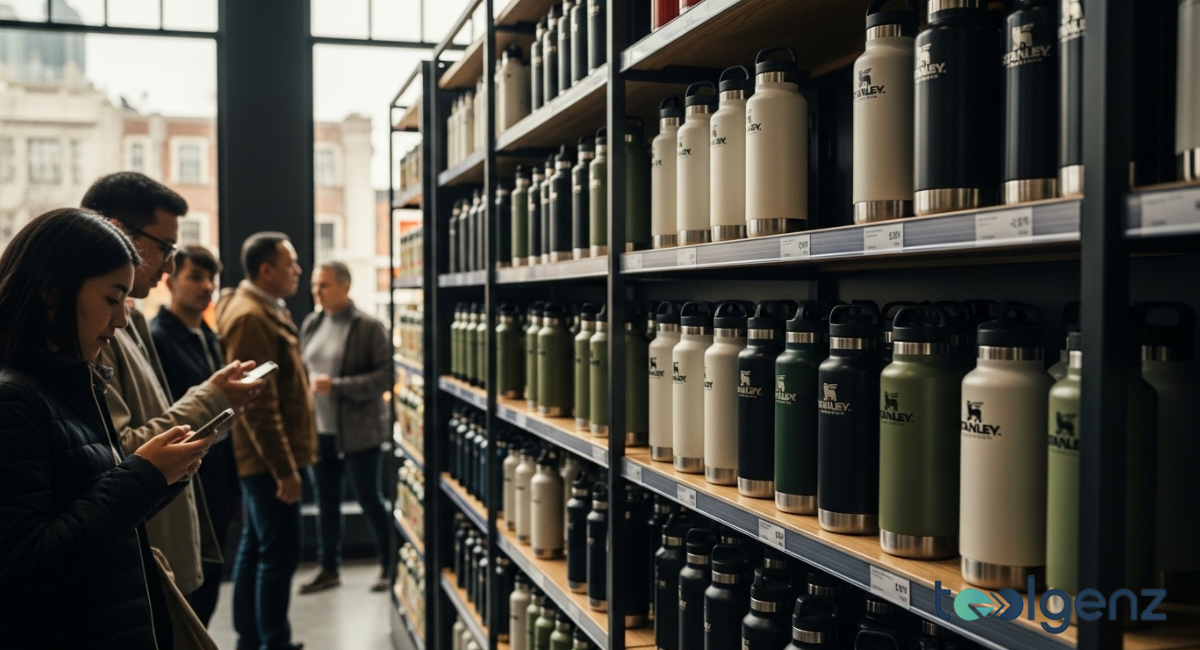
The story of Stanley goes beyond a passing fad. It shows how everyday products can quickly become cultural icons. During the height of the water bottle craze, the brand wasn’t just about utility it became a symbol of style and status.
The Quencher water bottle trend fueled conversations across the reusable drinkware market and social media. Yet, as interest cooled, questions arose about its long-term relevance. Today, evolving consumer preferences and growing competition in reusable bottles are reshaping the landscape. Understanding Stanley’s current position and future direction is key to seeing how the brand can continue to thrive.
The Rise of the Stanley Quencher Frenzy
Stanley’s trajectory changed dramatically when the Quencher water bottle trend exploded. The once rugged outdoor brand became one of the most talked-about viral water bottle names almost overnight. This shift highlighted a new era in the reusable drinkware market, where style mattered as much as function.
At the heart of this surge was the Quencher tumbler and Stanley’s rich 1913 brand heritage. Supported by PMI WW Brands combined decades of trust with modern design. This mix drove the Quencher’s popularity and accelerated Stanley’s growth in 2023, turning a simple bottle into a cultural icon.
How the Quencher Became a Viral Sensation
The Quencher’s rise wasn’t accidental. TikTok users showcased color-matched bottles and accessories, creating trends that spread quickly. Buying a Stanley bottle became a way to express personal identity, not just stay hydrated. This emotional connection drove social media buzz and pushed Stanley into mainstream culture.
Lifestyle branding amplified the effect. The Quencher looked great in photos, making it highly shareable. Its visibility fueled hydration trends and positioned ahead of other premium water bottle brands. It felt fresh, fashionable, and familiar all at once.
Role of TikTok, Influencers, and Scarcity Marketing
The TikTok-driven water bottle trend had a massive ripple effect on the reusable drinkware market. Influencers created urgency, and limited stock heightened anticipation. Consumers rushed to buy before items sold out, generating a rare cultural phenomenon.
Scarcity played a crucial role. By controlling supply, Stanley turned everyday bottles into collectible items. This aligned perfectly with a market where emotions often influence purchasing decisions. As a result, Stanley’s sales surged, leaving competitors scrambling to keep up.
Why the Stanley Craze Started Slowing Down
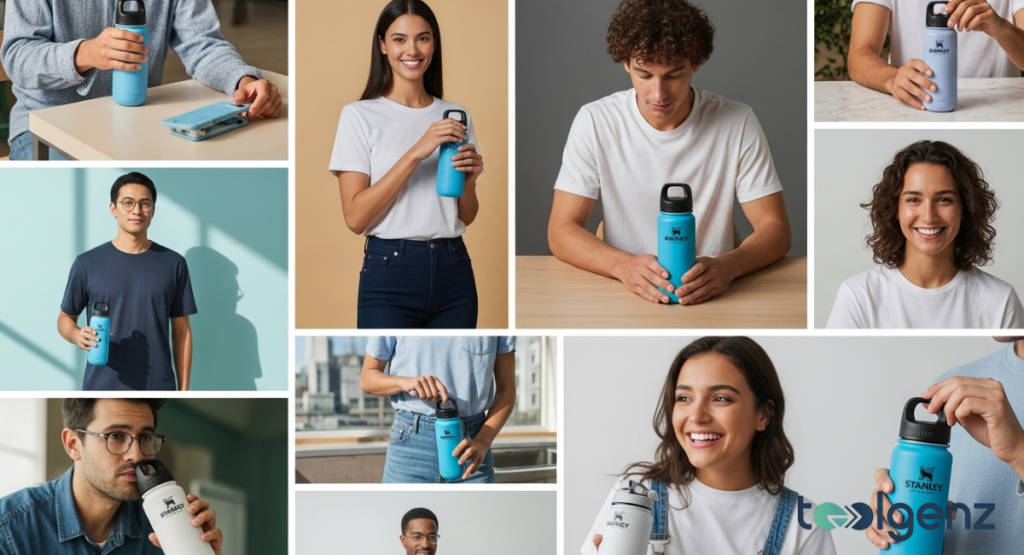
Smiles, tables, and neutral backdrops keep the focus on personal use.
All trends eventually peak, and Stanley was no exception. Soon after reaching its height, the insulated bottle market showed signs of cooling. Factors that once fueled growth began working against the brand, and overexposure reduced excitement.
Research from Circana highlighted patterns linked to a slowdown in the hydration category, with 2025 drinkware industry trends confirming the shift. Growth stabilized, and the frenzy gradually faded, leaving consumers more cautious.
Market Saturation and Overexposure
The biggest challenge became market saturation. Shelves filled with similar designs, making the once-unique Quencher feel repetitive. The emotional pull that had driven Stanley’s success started to weaken.
At the same time, declining sales of insulated containers indicated a broader market slowdown. Even loyal buyers paused purchases as excitement waned.
Changing Consumer Trends and Competition
Shifts in consumer behavior also contributed. Buyers became more practical, questioning whether they truly needed another bottle. This mindset reduced impulse buying and opened space for competitors.
New brands entered the market quickly, studying Stanley’s playbook and introducing improvements. This heightened competition forced to innovate and adapt to maintain relevance.
Consumer Behavior After the Hype Cycle
Once the hype faded, buyers became selective, prioritizing function over style. This shift required brands like to focus more on retention than viral spikes.
Are Buyers Still Loyal or Moving On?
Some customers remained loyal because of trust in the brand, while others moved on quickly. This split reflects a common challenge for post-viral products: converting short-term attention into long-term loyalty. The female consumer segment that initially boosted growth underscores the need for deeper engagement to maintain lasting appeal.
Shift Toward Functionality vs. Trend-Driven Purchases
Modern consumers now prioritize durability, usability, and value. Eco-friendly hydration solutions have also become a key consideration. Brands must innovate responsibly to meet these evolving expectations.
Stanley’s Current Market Position in 2026

Printed handouts and laptops echo the dashboard shown on the main screen.
In 2026, Stanley still holds a strong position despite the slowdown. Its legacy and recognition continue to support sales, but the market is no longer easy.
Leadership voices like Matt Navarro, CEO, emphasize the need for continuous innovation, while insights from Graham Nearn highlight long-term strategic adaptation. must evolve beyond its viral peak to stay relevant.
Brand Strength After the Hype
Even after the decline, Stanley’s growth in 2023 left a lasting impact. The company maintains a strong presence in stores and online. Growth is steadier now, requiring more strategic planning.
Comparison with Emerging Reusable Bottle Brands
| Factor | Stanley | Emerging Brands |
|---|---|---|
| Brand Trust | High | Medium |
| Innovation Speed | Moderate | Fast |
| Price Range | Premium | Mixed |
| Trend Appeal | Declining | Rising |
Competitors are moving faster in innovation and trend adoption, highlighting the need for Stanley to respond proactively.
Product Innovation: What Stanley Needs Next
Innovation is central to Stanley’s future. The brand must go beyond aesthetics and develop products that address real consumer needs. Diversification is key to sustaining growth.
New Designs, Features, and Sustainability Efforts
Consumers expect smarter, more sustainable products. Eco-friendly hydration solutions are no longer optional they are essential. Innovation should focus on usability and problem-solving to stay relevant.
Expanding Beyond the Quencher Line
Recent launches, such as Stanley tote bags and backpacks, signal expansion into lifestyle categories. This move reduces reliance on a single product and supports long-term brand evolution.
Retail Strategy and Distribution Changes

High shelves hold labeled boxes while pallets of metal containers roll by.
Distribution is crucial for maintaining visibility. must balance exclusivity with accessibility, adapting to modern sporting goods retail trends while preserving brand value.
Limited Drops vs. Mass Availability
Limited drops generate excitement, while mass availability ensures reach. Finding the right balance is essential to sustaining the Quencher’s popularity.
Partnerships with Major Retailers and Online Platforms
Strong retail partnerships and online distribution expand access and support long-term stability. This aligns with evolving consumer buying trends in the U.S. drinkware market.
Competition Heating Up in the Drinkware Market
The reusable bottle market has become increasingly competitive. Brands innovate quickly and target specific niches, forcing Stanley to continually adapt.
Key Competitors Gaining Attention
Emerging brands attract younger audiences through design, pricing, and innovation. They understand the new rules of engagement, reshaping the reusable drinkware landscape.
How Rivals Are Capitalizing on Stanley’s Slowdown
Competitors respond faster to trends, launching new products and maintaining agility. This speed allows them to gain market share during Stanley’s post-viral phase.
Can Stanley Maintain Long-Term Brand Loyalty?

Friends and coworkers pause with their drinkware during conversation.
Loyalty will determine whether Stanley thrives beyond the viral trend.
Community Building and Brand Storytelling
Engaging stories and strong communities create emotional bonds that transform customers into brand advocates. Social media engagement becomes more meaningful when grounded in authenticity.
Retention vs. One-Time Viral Customers
Sustained loyalty requires consistent value and trust. Brands must focus on long-term relationships rather than one-off viral spikes to maintain relevance.
Future Trends in Reusable Drinkware
The reusable drinkware market continues to evolve rapidly. Brands must anticipate trends or risk falling behind.
Sustainability and Eco-Conscious Buying
Sustainability is now expected, not optional. Eco-friendly solutions are increasingly influencing purchasing decisions, and responsible brands are rewarded.
Smart Bottles, Personalization, and Premiumization
Technology and personalization will define the next wave of hydration products. Customization adds emotional value, fostering stronger consumer connections.
Final Outlook: What’s Next for Stanley?
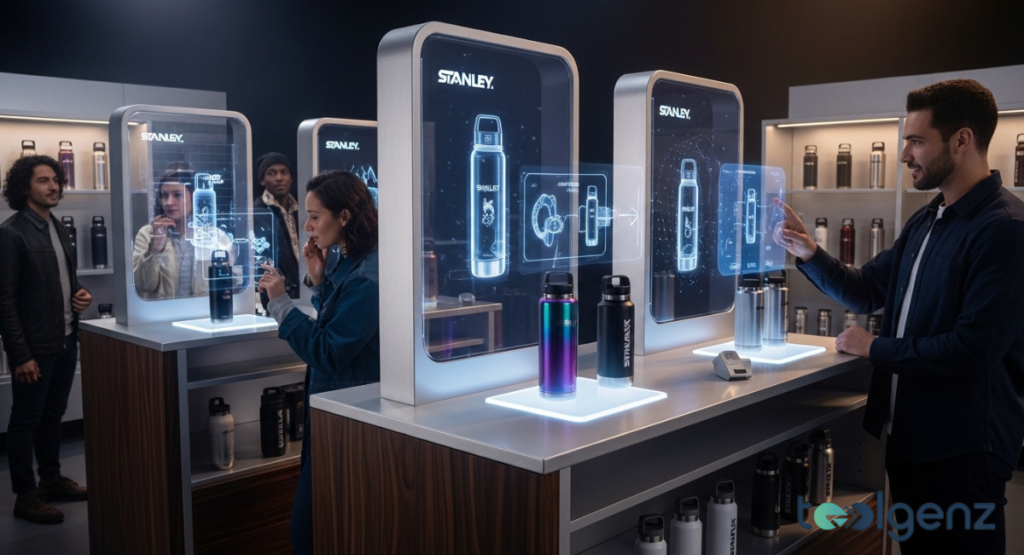
Customers gesture at virtual breakdowns while real containers glow on pedestals.
Stanley’s future depends on its ability to adapt. The brand must evolve beyond past viral success to remain relevant.
Challenges Ahead in a Post-Viral World
The main challenge is maintaining relevance in a crowded, competitive market. Without innovation, the brand risks stagnation.
Opportunities for Growth and Reinvention
Despite obstacles, has opportunities to grow through product expansion and thoughtful innovation. Executed effectively, these strategies could help the brand transition from trend-driven success to lasting legacy.
FAQS
What caused the Stanley water bottle craze?
The craze was fueled by TikTok virality, influencer promotions, and the popularity of the Quencher design.
Is the Stanley Quencher still popular in 2026?
While its popularity has slowed, the Stanley Quencher still enjoys strong recognition and loyal customers.
Why is the Stanley trend declining?
The trend has tapered due to market saturation and a shift in consumer focus toward newer products.
What is Stanley doing after the hype?
Stanley is expanding into lifestyle products like bags and accessories, beyond drinkware.
Are there competitors to Stanley in the market?
Yes, new reusable bottle brands are gaining traction with innovative designs and competitive pricing.