
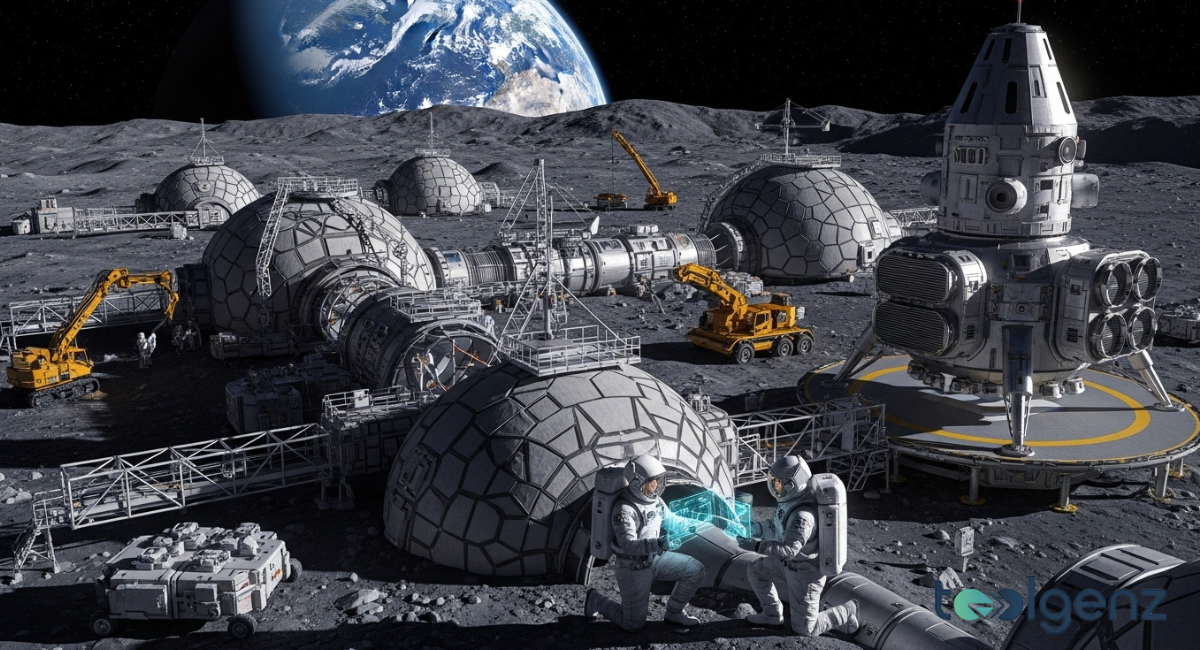
The NASA $20 Billion Moon Base marks a major shift in humanity’s approach to space exploration. Instead of brief missions, NASA now plans to establish a lasting presence on the Moon. This ambitious project combines scientific research, survival strategies, and long-term planning into a cohesive vision.
As the NASA $20 Billion Moon Base takes shape, experts see it as a foundation for deeper space exploration. The project not only supports lunar surface development but also connects with NASA’s Artemis program and sets the stage for eventual missions to Mars, offering a sustainable path for humans to live and work beyond Earth.
NASA Announces $20 Billion Plan for a Moon Base
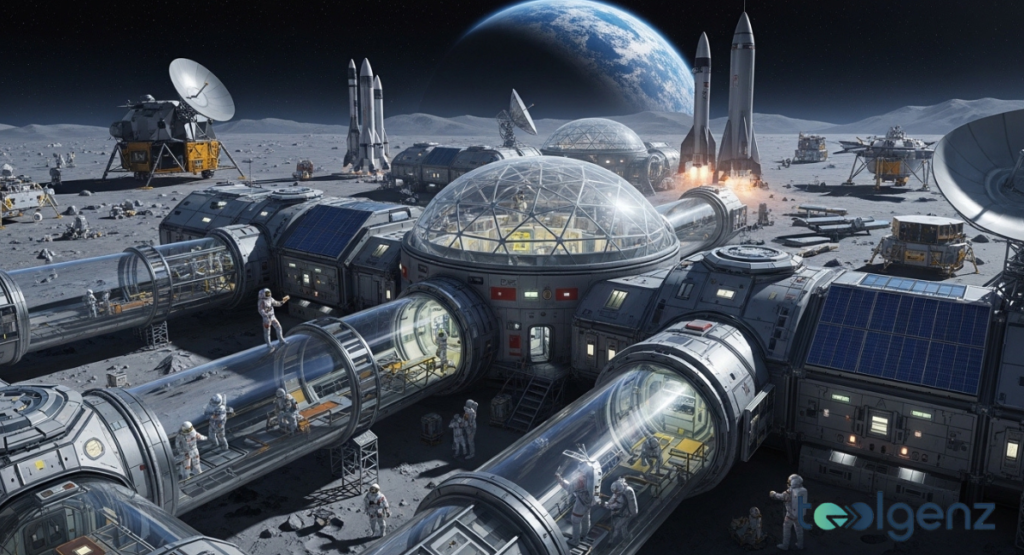
Crew work both inside the habitat and on the gray regolith outside.
The NASA $20 Billion Moon Base is designed to create a permanent human outpost on the Moon, far beyond short-term visits. Funding is allocated to develop life support systems, energy infrastructure, and transportation solutions. NASA aims to have astronauts return to the lunar surface around 2028, marking the first phase of long-term operations.
The project aligns closely with the Artemis program, blending science, strategy, and international collaboration into a bold effort that reflects both national pride and a forward-looking approach to space exploration.
Overview of Funding, Goals, and Timeline
Funding comes from federal budgets and private partnerships. Industry leaders like Jared Isaacman are driving rapid progress. The NASA $20 Billion Moon Base will test technologies crucial for Mars missions and establish sustainable lunar infrastructure for future generations.
Artemis Program Overhaul and Strategic Shifts
The NASA $20 Billion Moon Base has significantly reshaped the Artemis program. NASA is now prioritizing lunar surface operations over orbiting stations, simplifying logistics and accelerating progress. The cancellation of the Lunar Gateway shifted focus toward building directly on the Moon, allowing for better resource management and more efficient use of engineering capabilities.
Partnerships with Northrop Grumman, the European Space Agency, and other global collaborators strengthen international cooperation and enhance the success of NASA’s lunar initiatives.
Changes in Priorities and Mission Structure
NASA’s current approach emphasizes flexibility. Teams are adapting quickly to new technical challenges while collaborating with private and international partners. This structure supports long-term sustainability for the NASA $20 Billion Moon Base and ensures that development can keep pace with ambitious exploration goals.
Lunar South Pole Base – Why This Location Matters
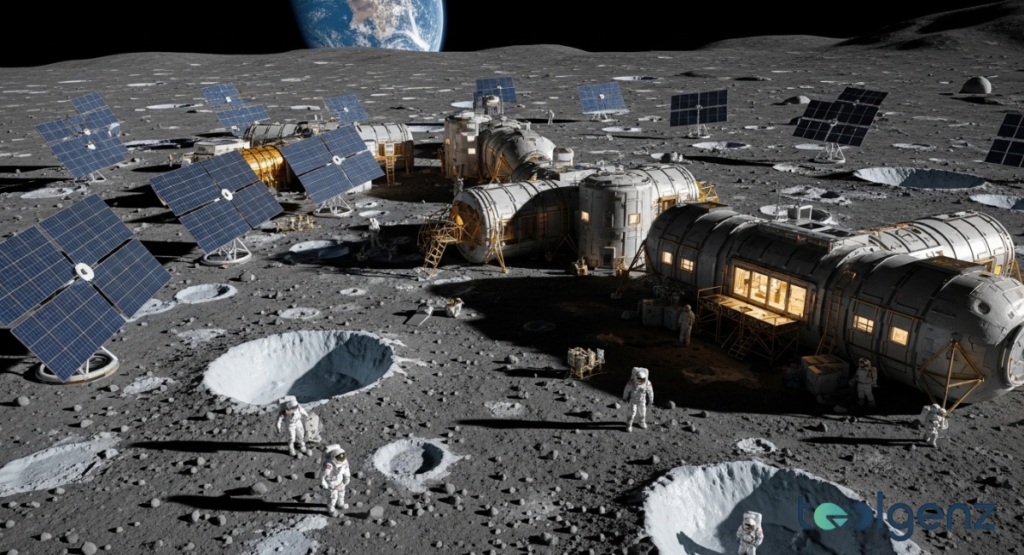
The layout emphasizes energy generation and surface mobility.
The lunar south pole has been selected for the NASA $20 Billion Moon Base because of its unique advantages. Water ice deposits in the region can be converted into fuel, oxygen, and drinking water, providing essential resources for long-term missions. Parts of the south pole receive near-constant sunlight, offering a reliable source of solar energy. These features make it an ideal location for establishing a permanent human presence on the Moon.
Resources, Water Ice, and Long-Term Sustainability
Water ice can be split into hydrogen and oxygen, enabling fuel production for rockets and supporting life on the Moon. This capability positions the Moon as a critical refueling station and a key stepping stone for future Mars exploration. The NASA $20 Billion Moon Base will leverage these resources to sustain long-term human activity and enable more ambitious deep-space missions.
Nuclear-Powered Mars Mission Plans
NASA intends to use the Moon base as a testing ground for nuclear-powered spacecraft. The NASA $20 Billion Moon Base will play a pivotal role in developing advanced propulsion technologies needed for Mars exploration.
How Nuclear Propulsion Supports Deep Space Travel
Traditional rockets are slow and limited in efficiency. Nuclear propulsion can reduce travel time and enhance mission safety. By testing these systems at the NASA $20 Billion Moon Base, NASA aims to prepare for longer-duration deep-space missions and ensure safer, faster journeys to Mars and beyond.
| Feature | Chemical Rockets | Nuclear Propulsion |
|---|---|---|
| Speed | Moderate | High |
| Fuel Efficiency | Low | High |
| Travel Time | Long | Short |
Lunar Lander Projects Facing Delays
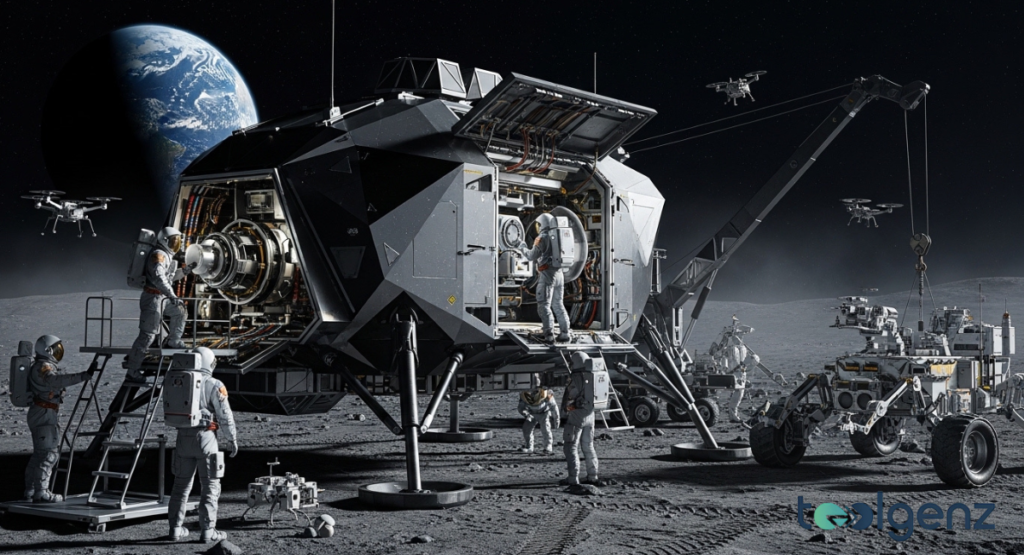
Flying drones survey the worksite beside a heavy utility rover.
Even with advanced planning, the NASA $20 Billion Moon Base faces challenges. Lunar landers are critical to the mission, but development delays are impacting timelines. Companies like SpaceX and Blue Origin are tackling complex engineering problems that must be resolved for successful landings. These hurdles demonstrate the difficulty of establishing a permanent lunar presence, even with significant investment and technological expertise.
Technical Issues, Contractors, and Timeline Risks
Systems for docking and landing require precision engineering. Delays in these projects affect overall mission schedules, but ongoing collaboration between NASA and private companies is helping to mitigate risks and maintain progress toward the 2028 target for lunar operations.
The New Space Race and Global Competition
The NASA $20 Billion Moon Base is not only a scientific endeavor but also a strategic initiative. The United States aims to maintain leadership in space exploration, while China’s planned 2030 lunar missions push forward rapidly. Private companies are also playing increasingly important roles, adding innovation and speed to the modern space race.
Role of Private Companies and International Rivals
NASA continues to work closely with global partners, including ESA Director Josef Aschbacher. International collaboration is balanced with competitive pressures, fostering faster technological development and driving ambitious goals for the NASA $20 Billion Moon Base.
Challenges in Space Exploration and Safety Concerns
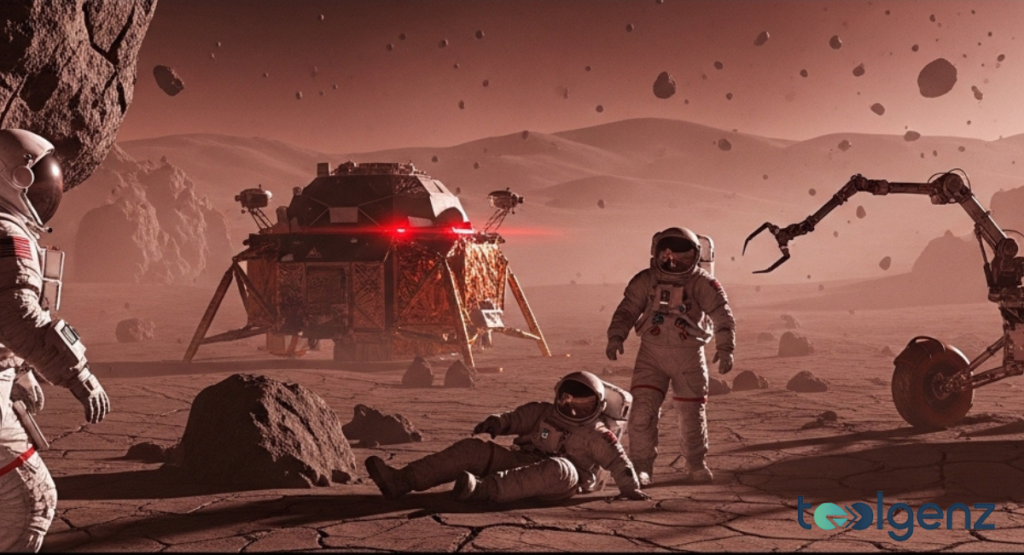
The atmosphere feels tense, hinting at a hazard or emergency drill.
Space is inherently dangerous, and the NASA $20 Billion Moon Base must address significant risks. Radiation, isolation, and space debris pose serious threats to missions. Long-duration stays can also impact astronaut health, both physically and mentally, requiring careful planning and support systems.
Space Debris, Astronaut Health, and Mission Risks
High-speed debris can damage equipment, and engineers are developing protective systems to safeguard both astronauts and technology. These measures are crucial for ensuring the safety and sustainability of the NASA $20 Billion Moon Base.
Key Innovations and Future Technologies
Technological innovation drives the success of the NASA $20 Billion Moon Base. Robots construct infrastructure, and AI systems support mission planning and operations, reducing risk for human crews. NASA is also exploring advanced concepts such as space-based mirrors to reflect sunlight and sophisticated drones for planetary exploration.
Robotics, Mirrors in Space, and Advanced Spacecraft
The use of robotic landers, drones, and other cutting-edge technology improves efficiency and expands what is possible for long-term lunar habitation. These innovations ensure that the NASA $20 Billion Moon Base remains at the forefront of space exploration.
Leadership, Policy, and NASA’s Future Direction

The setting suggests strategy, funding, and mission planning.
Leadership and policy play a critical role in the NASA $20 Billion Moon Base. Political and strategic support has guided funding decisions and international collaborations, helping maintain momentum despite changing priorities. NASA continues to balance ambition with resources, working with allies worldwide to advance its lunar vision.
What This Means for the Future of Space Exploration
The NASA $20 Billion Moon Base represents a transformative step for human spaceflight. It provides a platform for sustainable presence on the Moon, serves as a testbed for Mars exploration, and builds a foundation for humanity’s long-term expansion into space. By leveraging the lessons of past programs and incorporating cutting-edge technology, the project aims to make permanent lunar habitation a reality, reshaping the future of exploration.
FAQs
1. What is the NASA $20 Billion Moon Base plan?
The NASA $20 Billion Moon Base is a long-term project to build a sustainable human base on the Moon, supporting future space missions.
2. When will the NASA $20 Billion Moon Base be completed?
Major operations are expected to begin by 2028, with full development continuing into the next decade.
3. Why is NASA building a moon base at the lunar south pole?
The south pole provides water ice and near-constant sunlight, making it ideal for energy generation and long-term survival.
4. How does the NASA $20 Billion Moon Base help Mars missions?
It serves as a testing ground for technologies needed for deep-space travel and Mars exploration.
5. Which companies are involved in the NASA $20 Billion Moon Base?
SpaceX and Blue Origin are among the private companies working with NASA to develop landers and critical technologies.