

Rec Room was once a standout in the world of social gaming, where creativity met connection across multiple devices. Millions of users joined this vibrant universe, but the platform is now coming to an unexpected end.
Its story reflects broader challenges in virtual reality social apps and the struggle for profitability in online gaming. Despite rapid growth, the company couldn’t find a sustainable way to monetize user-generated content. Rec Room’s journey shows how even popular platforms can falter, offering lessons about what makes digital communities thrive or quietly disappear.
Rec Room Shutdown Announcement and Key Dates
The announcement of Rec Room’s closure came as a surprise to many users. The company set June 1 as the official shutdown date and immediately canceled the platform Plus memberships.
For loyal players, the end arrived suddenly, closing a vibrant online community almost overnight. Early token sales had already stopped, and creator payouts ended shortly after, signaling the platform’s struggles. This was more than a shutdown—it was a carefully managed exit from an increasingly challenging market.
Why Rec Room Is Shutting Down Despite 150 Million Users
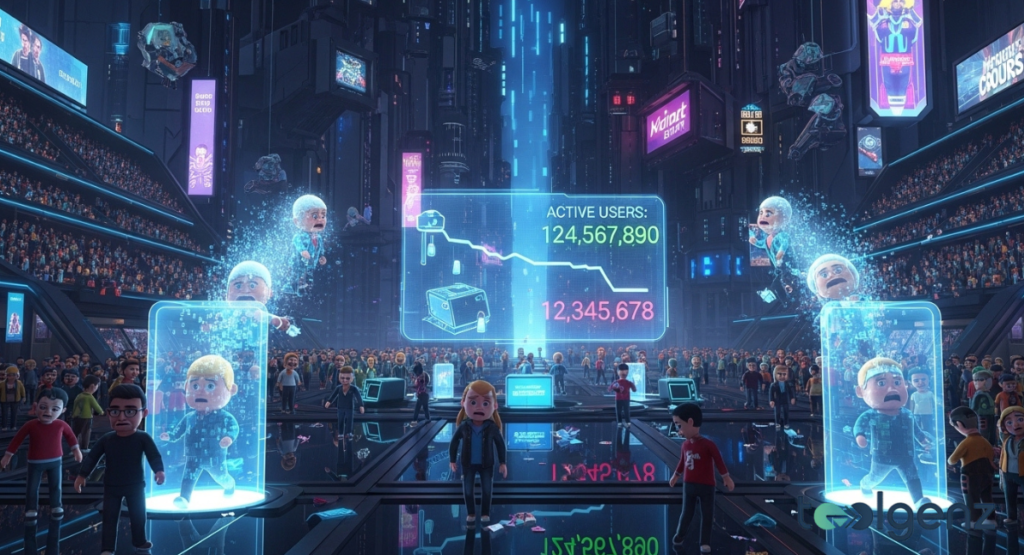
The visualization captures mass churn and community disappointment.
It’s easy to assume that a large user base guarantees success, but the platform proves otherwise. Even with millions of users, the platform struggled to generate steady revenue.
Interest in virtual reality social apps slowed after the pandemic, and the overall gaming market cooled, making it difficult to turn popularity into profits. Simply put, scale alone couldn’t overcome the challenges of sustaining a social gaming platform.
From Startup Success to $3.5B Unicorn Valuation
Rec Room began as a startup called Against Gravity, founded by Nick Fajt with a vision of a shared digital world. The idea quickly gained traction, attracting attention from investors.
Major funding came from firms like Sequoia Capital, Index Ventures, Madrona Venture Group, and Coatue Management. The Series F funding round in 2021 pushed its valuation to $3.5 billion, turning the platform into a symbol of startup success in Seattle’s tech scene.
The Failure of Unit Economics in Social Gaming

The visual of breaking coins mirrors profits crumbling under pressure.
Behind the rapid growth, the platform’s financials told a different story. the platform relied heavily on monetizing user-generated content, but the revenue share was unbalanced:
| Revenue Source | Platform Share | Creator Share |
|---|---|---|
| User Content | ~30% | ~70% |
| First-party Content | ~70% | ~30% |
This structure left the platform with very slim profit margins. While creators benefited, Rec Room struggled to maintain sustainable revenue, highlighting how weak unit economics can undermine even the most popular social gaming platforms.
Silent Deals, Restrictions, and Platform Changes
As financial pressures mounted, the platform quietly implemented new restrictions. New account creation was paused, and monetization features were temporarily halted, signaling internal struggles.
There were also reports that Snap Inc. might acquire some assets, adding to the uncertainty. Gradual changes hinted at deeper issues, but most users didn’t expect a complete shutdown so soon.
Impact on Creators, Memberships, and Earnings

Now the glowing interfaces hint at fragile, diminishing returns.
Creators were hit hardest by the closure, losing their main income stream overnight. Many relied on the platform as part of the broader creator economy.
The cancellation of Rec Room Plus memberships also affected users, diminishing the value of digital goods and showing just how fragile virtual economies can be when platforms shut down abruptly.
The High Cost of Innovation and Scaling Challenges
Innovation isn’t cheap, and Rec Room invested heavily in AI tools to simplify game creation. Features like Maker AI and the AI companion Roomie aimed to help users create and interact more easily.
However, these advancements also increased operating costs. As the platform scaled, expenses outpaced revenue, illustrating how high infrastructure costs and a weak subscription model can undermine even a popular social gaming platform.
Rec Room vs Roblox: What Went Wrong
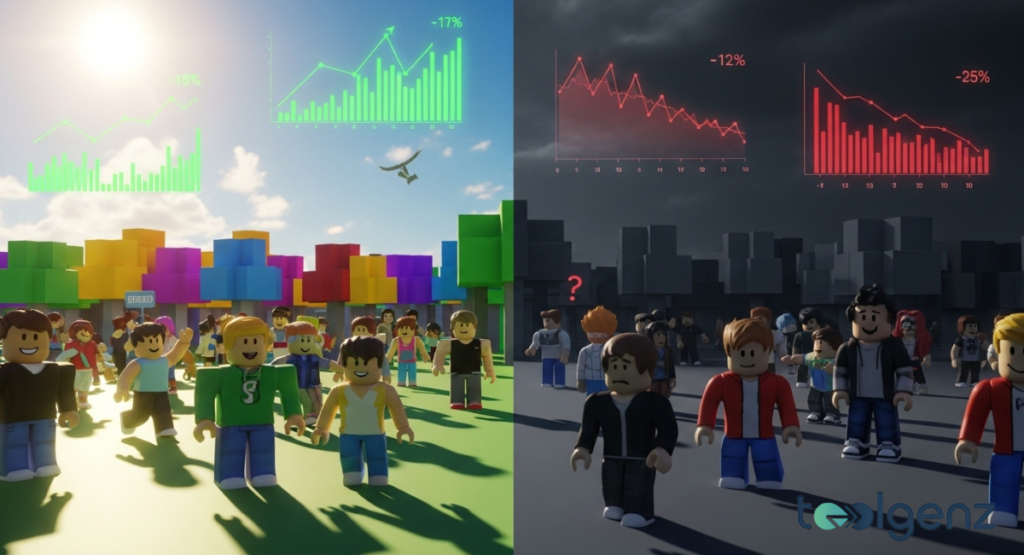
Bright growth contrasts with shadowed decline in engagement and revenue metrics.
Comparing Rec Room to Roblox offers valuable insights. Both platforms emphasized user creativity, but their outcomes were very different.
| Feature | Rec Room | Roblox |
|---|---|---|
| Monetization | Weak margins | Strong ecosystem |
| User Growth | High | High |
| Profitability | Low | Sustainable |
Rec Room struggled to turn its user base into consistent revenue, whereas Roblox optimized its monetization strategies. This difference in execution ultimately determined which platform survived and which could not.
Lessons for Startups in the Metaverse and Gaming Industry
The fall of Rec Room offers several important lessons. First, growth without profitability is risky. Second, relying too heavily on creators can squeeze margins.
Startups in the gaming and metaverse space need to remain adaptable, as market trends—especially in VR—can shift quickly. Building a balanced model that prioritizes both user engagement and revenue is essential for long-term survival.
What’s Next for Users and the Future of Social Gaming
Yet the high-tech sheen masks questions about long-term user retention.
For users, the end of Rec Room means starting over on other platforms. Many will migrate to different virtual reality social apps, leaving a gap in the social gaming space.
Moving forward, developers will likely focus on better monetization strategies and sustainable business models. While Rec Room’s ideas may live on in other forms, its closure is a reminder that even highly popular platforms can disappear when revenue fails to match ambition.
Final Thoughts
Rec Room’s story is both inspiring and cautionary. It shows how a Seattle-based tech company can rise quickly but still face unforeseen challenges.
Despite strong investor backing and innovative features, the platform could not overcome economic realities. Its shutdown reflects broader shifts in the gaming industry. The key takeaway for developers and startups is clear: attracting users matters, but building a sustainable, profitable business matters even more.
FAQs
Is Rec Room appropriate for kids?
Yes, Rec Room can be suitable for kids if supervised. However, some user-generated content and chats may not always be appropriate, so parental guidance is recommended.
Why is Rec Room shutting down?
Rec Room is closing because it couldn’t generate sustainable profits, despite having millions of users and high operating costs.
What is Rec Room?
Rec Room is a social gaming platform where users can create, play, and share games and virtual experiences across multiple devices.
Is Rec Room like Roblox?
Yes, both focus on user-generated content, but they differ in design, audience, and monetization approaches.
What is inappropriate content in Rec Room?
Inappropriate content includes offensive language, unsafe interactions, or user-created experiences that may not be suitable for younger players.