

IRS Staffing Shortage and Workforce Reduction Plans
The Internal Revenue Service is at the heart of America’s tax system, but it is facing growing challenges. Staffing shortages and ongoing federal workforce cuts have created strain, especially during busy filing seasons. Many taxpayers now experience delays in processing returns and longer wait times on IRS phone lines, eroding public confidence. These challenges are compounded by increasing demands for accurate tax guidance, rising digital service expectations, and the need to adapt quickly to evolving federal tax policies, making the agency’s task even more complex.
At the same time, the agency is investing in modernization efforts to improve efficiency with digital tools. Still, balancing fewer employees with higher service expectations is no small task. This situation raises important questions about how the Internal Revenue Service can maintain performance while keeping up with policy changes and growing taxpayer demand across the country.
Impact of GOP Tax Cut Campaign on IRS Operations
Recent GOP tax cut initiatives have reshaped how the Internal Revenue Service operates. While these cuts aim to provide relief to taxpayers, they often reduce funding for enforcement and staffing. This creates tension between delivering benefits and implementing complex tax policies with limited resources.
New deductions for tips and overtime income, for example, require clear guidance. Yet, ongoing service challenges make it harder for taxpayers to claim these benefits efficiently. As a result, the Internal Revenue Service must work hard to meet policy goals while managing operational limits during the 2026 filing season.
Technology and Modernization in IRS Strategy

The scene captures a push toward faster, tech-driven decision making.
To keep pace, the Internal Revenue Service is investing heavily in digital tools and modernization efforts. Online tax transactions are growing, reducing manual workloads and helping offset workforce reductions. Automation now handles routine filings and basic data checks.
However, technology is not a cure-all. While upgrades speed up processing, complex cases still rely on human judgment. Additionally, delays in employee training and system transitions can slow progress. Modern tools are valuable, but they require time, funding, and skilled staff to work effectively.
Challenges in Maintaining IRS Performance with Reduced Staff
Pressure on the Internal Revenue Service continues to rise. Phone wait times are increasing, and service level goals are declining. These changes directly impact taxpayers seeking timely help during filing season.
A simple comparison illustrates the trend:
| Metric | 2025 | 2026 |
|---|---|---|
| Phone Wait Time | 4 minutes | 8 minutes |
| Service Level | 85% | 70% |
| Hiring Completion | High | Low |
The data shows that service performance is slipping. With fewer staff, even routine tasks take longer, which can gradually reduce public trust in the Internal Revenue Service.
Employee Concerns and Program Failures

Inside the agency, morale has been affected by internal program issues. Over 1,000 employees were impacted by challenges such as the failure of a student loan repayment initiative. Combined with delays in employee training, these problems make hiring and retention more difficult.
When staff feel uncertain or unsupported, recruitment suffers, deepening the Internal Revenue Service’s ongoing staffing shortfall. Addressing these concerns is critical to maintaining a motivated and capable workforce.
Federal Budget Constraints and Policy Decisions
Funding remains a central challenge for the Internal Revenue Service. Federal budget limits linked to tax policy changes restrict hiring and slow modernization efforts. This has direct consequences for daily operations.
A closer look at budget pressures shows:
| Area | Impact |
|---|---|
| Staffing | Reduced hiring capacity |
| Technology | Slower upgrades |
| Customer Service | Increased delays |
These constraints hinder operational efficiency and limit the IRS’s ability to meet growing demand. Over time, these pressures may worsen taxpayer service issues.
Political Landscape: Washington and State-Level Influence
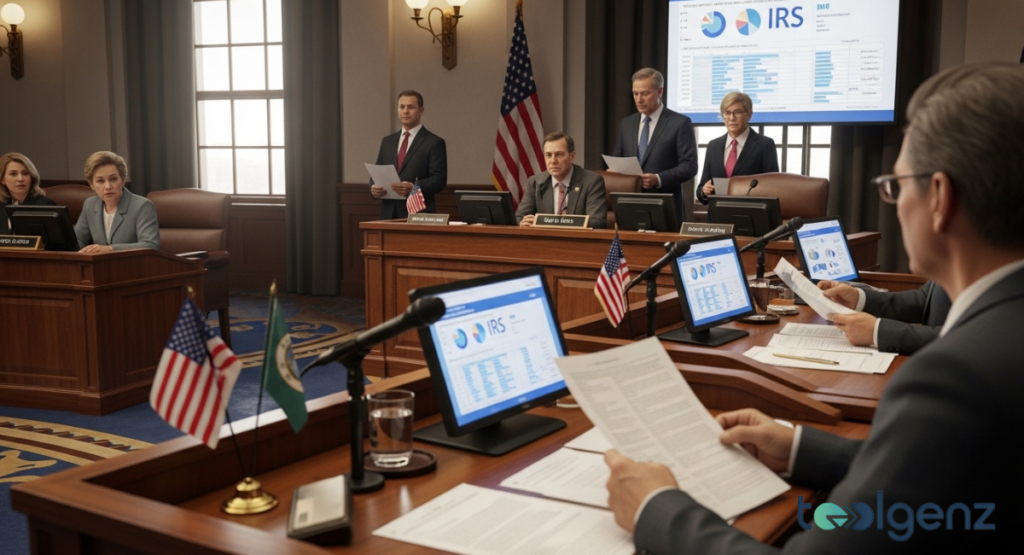
The hearing setting underscores accountability and policy debate at the state and federal level.
Politics plays a significant role in shaping the Internal Revenue Service. Funding, staffing, and policy decisions are influenced by committees such as the House Ways and Means Committee and the Senate Finance Committee.
State-level tax systems add further complexity. Responses from leaders like Frank Bisignano, Elizabeth Warren, and Mike Crapo illustrate how divided opinions can slow reform efforts. These debates affect how quickly the Internal Revenue Service can implement meaningful improvements.
Global and Economic Policy Implications
The performance of the Internal Revenue Service extends beyond domestic taxes. Global investors monitor U.S. tax administration closely, and inefficiencies or backlogs can signal instability.
Slow processing and unclear guidance can also affect economic confidence. Businesses may hesitate to invest if IRS delays make planning difficult. Strengthening service goals is therefore essential, not just domestically but in shaping how the U.S. economy is viewed internationally.
Media Coverage, Commentary, and Public Perception

Screens, cameras, and laptops shape how developments are framed for the public.
Public perception of the Internal Revenue Service is heavily influenced by media reporting. Findings from the Treasury Inspector General for Tax Administration (TIGTA) highlight ongoing staffing and performance challenges.
Experts warn that repeated service issues could erode trust in the IRS over time. Digital platforms amplify delays and service gaps, making them more visible and increasing public scrutiny.
Future Outlook: IRS Reform, Policy Changes, and Accountability
The future of the Internal Revenue Service depends on effective reform. Policymakers must address workforce reductions while improving efficiency. Without action, operational challenges may continue to grow.
However, there is room for optimism. Stronger oversight, better funding, and smarter use of modernization tools could rebuild public trust. If implemented carefully, these changes could make the Internal Revenue Service more reliable and simplify tax processes for all Americans.
FAQs
Is the IRS giving out $1400 stimulus checks?
No, the Internal Revenue Service is not currently issuing new $1,400 stimulus checks. Some eligible taxpayers may still claim missed payments as a Recovery Rebate Credit.
Is SSDI taxable income?
Social Security Disability Insurance (SSDI) may be taxable if your total income exceeds certain thresholds, but many recipients pay no tax on it.
Is 800-829-0922 an IRS phone number?
Yes, 800-829-0922 is a legitimate number used by the Internal Revenue Service for automated collection inquiries.
How much tax do you pay on $100,000 in the USA?
It depends on filing status and deductions. Federal tax on $100,000 typically ranges from about 15% to 24% effective rate.
How can I check to see if I get the $1400 stimulus check?
You can check your status through your IRS account or by reviewing your tax return filed with the Internal Revenue Service for the Recovery Rebate Credit.