
The New Technology in Electronics is transforming how people live, work, and interact with devices in 2026. From AI-powered processors to intelligent robotics, innovation is accelerating at an incredible pace across the global tech landscape. Today’s electronics are no longer just tools they are becoming smarter, more responsive, and deeply integrated into everyday life.
Events like CES 2026 highlight just how quickly things are evolving. Major brands are competing to push boundaries, introducing systems that combine intelligence, automation, and real-world usability. At the same time, developments in robotics and advanced AI are making machines more capable of interacting with humans naturally. Clearly, the New Technology in Electronics is shifting from simple gadgets to complete ecosystems that can learn, adapt, and improve over time.
CES 2026 Technology Showcase Overview and Key Highlights
CES 2026 stands at the center of innovation, bringing together global leaders to present the future of technology. It has become a key platform where the New Technology in Electronics is unveiled and experienced firsthand.
From AI platforms to humanoid robots, the focus this year is on intelligent automation. Companies are showcasing devices that don’t just perform tasks but also understand and respond to user needs. The event also highlights major progress in computing power and machine learning, making it clear that smarter systems are the future.
Las Vegas once again serves as the perfect stage for these breakthroughs. The event acts as a real-world testing ground where ideas turn into practical solutions. As industry trends continue to evolve, the New Technology in Electronics is clearly moving toward more connected and adaptive ecosystems.
A Look at the New Technology Announced on Day 1 of CES 2026
Day 1 of CES 2026 delivered a wave of exciting announcements. The New Technology in Electronics showcased includes next-generation processors, AI-driven platforms, and autonomous systems designed for real-world use.
Major players like Nvidia, AMD, and Intel dominated the spotlight with powerful innovations. These announcements reveal how AI is becoming a core feature across nearly all electronic devices. Whether it’s laptops, vehicles, or smart home systems, intelligence is now built into the foundation.
Here is a quick overview:
| Company | Announcement |
|---|---|
| Nvidia | Physical AI platforms |
| AMD | Ryzen AI processors |
| Intel | Panther Lake AI chips |
One clear takeaway from Day 1 is that the New Technology in Electronics is no longer optional it is essential. AI-driven functionality is now the standard, not a luxury.
Electronics Industry Trends and Innovations to Watch in 2026
The electronics industry is rapidly evolving, and the New Technology in Electronics is leading the way toward automation and adaptability. Devices are no longer limited to fixed functions—they can now learn from user behavior and improve over time.
Key trends emerging from CES 2026 include AI integration, energy efficiency, and real-time processing. Companies are focusing on building systems that can make faster decisions while consuming less power.
Another major shift is the move from cloud computing to edge computing. Instead of relying on remote servers, devices now process data locally, improving speed and privacy. This transition is shaping the next generation of the New Technology in Electronics, making devices more efficient and responsive.
Top Technology Trends in Hardware and Embedded Electronics
Hardware remains a critical driver of innovation. The New Technology in Electronics relies heavily on advancements in embedded systems, where sensors, processors, and software work seamlessly together.
Modern devices are becoming smaller, faster, and more powerful. These improvements are not just limited to consumer gadgets but also extend to industrial machines and healthcare systems.
Embedded electronics now allow devices to make real-time decisions, which is essential in environments like traffic systems or medical monitoring. As a result, the New Technology in Electronics is becoming more practical and impactful across various industries.
Artificial Intelligence and Machine Learning in Modern Devices
Artificial intelligence is at the heart of modern innovation. The New Technology in Electronics is increasingly powered by AI systems that can analyze data, recognize patterns, and adapt instantly.
Devices today can learn from user behavior and adjust their performance accordingly. This makes them more efficient and personalized. Machine learning, in particular, allows systems to improve without requiring constant manual updates.
Companies like Nvidia are leading this transformation by developing platforms that train AI models in simulated environments before deploying them in real-world scenarios. This approach is helping the New Technology in Electronics reach new levels of intelligence and reliability.
AI-Integrated Processors, Chips, and Next-Gen Computing Power
Chip technology is advancing rapidly, shaping the future of the New Technology in Electronics. New processors are designed specifically for AI workloads, enabling faster and more efficient data processing.
AMD’s Ryzen AI processors and Intel’s Panther Lake chips demonstrate significant performance improvements. Meanwhile, Nvidia’s advanced AI chips are built to handle complex tasks in real time.
Here is a comparison:
| Chip | Focus |
|---|---|
| AMD Ryzen AI | Consumer AI computing |
| Intel Panther Lake | Laptop AI performance |
| Nvidia Vera Rubin | Advanced AI systems |
These innovations are powering everything from gaming systems to autonomous machines, further strengthening the role of the New Technology in Electronics in everyday life.
Robotics, Automation, and Autonomous Device Systems
Robotics is playing a major role in shaping the future. The New Technology in Electronics is enabling machines to perform complex physical tasks with high precision and adaptability.
Autonomous vehicles, for example, are becoming more advanced, using AI systems to navigate cities safely. Partnerships in the industry are pushing this technology forward, making self-driving solutions more practical.
Humanoid robots are also gaining attention. These machines are designed to interact with humans and assist in both homes and workplaces. As robotics continues to evolve, the New Technology in Electronics is redefining how humans and machines collaborate.
Flexible Electronics, Wearable Tech, and Smart Consumer Devices
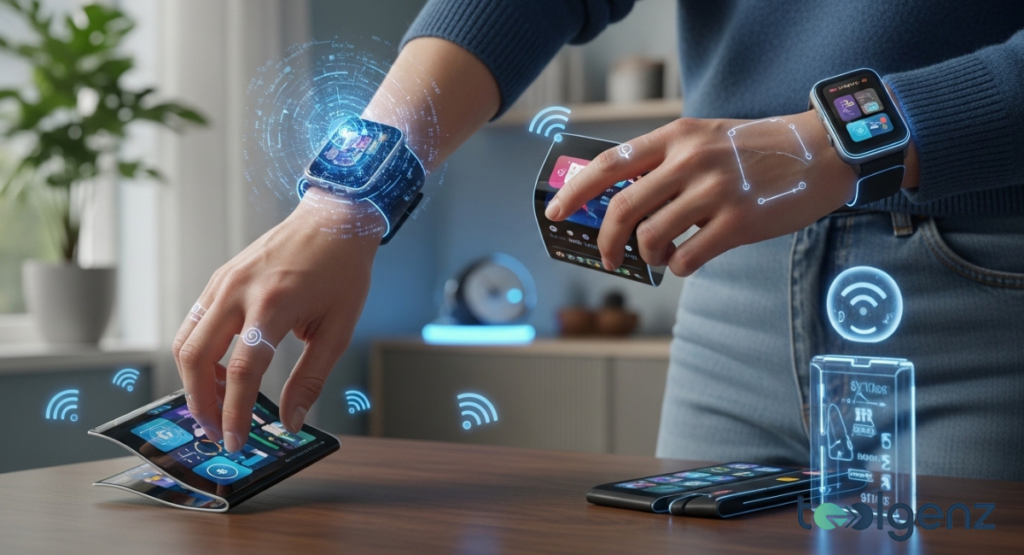
Wearable technology and flexible electronics are changing how people interact with devices. The New Technology in Electronics is making gadgets more comfortable, portable, and user-friendly.
Smartwatches, health trackers, and foldable screens are becoming part of everyday life. These devices are designed to fit seamlessly into daily routines, offering convenience and functionality.
At the same time, smart home technologies are becoming more advanced. Devices can now automate tasks like cleaning, security, and energy management. This shift shows how the New Technology in Electronics is moving toward creating more intuitive living environments.
Brain Chip Implants, 3D Printing, and Extended Reality Evolution
Some of the most exciting developments are pushing the boundaries of what technology can achieve. The New Technology in Electronics now includes innovations like brain-computer interfaces, which aim to connect human thoughts directly with machines.
3D printing is also revolutionizing manufacturing, allowing for customized electronic components at scale. Meanwhile, extended reality is creating immersive digital experiences for both work and entertainment.
Robotics advancements continue to impress, with machines becoming more agile and capable. Even entertainment platforms are integrating interactive technologies, showing how the New Technology in Electronics is blending digital and physical experiences.
Final Thoughts

The New Technology in Electronics showcased at CES 2026 makes one thing clear: the future is intelligent, connected, and rapidly evolving. From AI-powered chips to advanced robotics, every innovation is designed to enhance efficiency and improve user experiences.
As these technologies continue to develop, they are becoming more integrated into daily life. The New Technology in Electronics is no longer limited to specific industries—it is influencing everything from healthcare to transportation.
Looking ahead, the pace of innovation shows no signs of slowing down. The New Technology in Electronics will continue to shape how we live and work, blurring the line between digital systems and human interaction in ways we are only beginning to understand.
FAQS
What is New Technology in Electronics?
It refers to advanced innovations like AI chips, robotics, and smart devices that make electronics more intelligent and automated.
What are the latest trends in New Technology in Electronics?
Key trends include AI integration, autonomous systems, wearable technology, and next-generation semiconductor chips.
How does AI impact New Technology in Electronics?
AI enables devices to learn, adapt, and make decisions in real time, improving efficiency and user experience.
What are examples of New Technology in Electronics from CES 2026?
Examples include AI-powered robots, smart processors, autonomous vehicles, and extended reality systems.
Why is New Technology in Electronics important?
It enhances daily life by improving automation, connectivity, and performance across both consumer and industrial applications.