

Asteroids may look like distant rocks drifting through space, yet they carry real consequences for life on Earth. These ancient remnants from the solar system’s formation orbit quietly, sometimes crossing our planet’s path. Scientists closely monitor near-Earth objects (NEOs) to reduce the risk of a sudden, catastrophic impact. Although detection systems have improved early warning capabilities, important gaps still remain.
A single City-killer asteroid could devastate a metropolitan area within minutes. That’s why experts are working to improve deflection methods and strengthen global response plans. Understanding asteroids isn’t just about space science. It’s about protecting communities, infrastructure, and future generations from unpredictable cosmic threats.
What Are ‘City-Killer’ Asteroids and Why Are They So Dangerous?
A City-killer asteroid is typically between 50 and 300 meters wide. That size may sound small compared to dinosaur-killing space rocks. It is not small for a city. Scientists classify these objects under Near-Earth objects (NEOs) when their orbits cross Earth’s path. If one enters on an Asteroid collision course, the destruction would be regional, not global.
To understand the danger, compare energy release. The Hiroshima bomb released about 15 kilotons of energy. A 150-meter asteroid could release hundreds of megatons. That means flattened buildings, shattered infrastructure, and massive casualties. Unlike extinction-level asteroids, these hit more often. These are high-consequence events that require careful risk assessment and rapid response planning.
| Asteroid Type | Size Range | Damage Level | Frequency Estimate |
|---|---|---|---|
| City-Killer | 50–300 m | Regional devastation | Every few thousand years |
| Extinction-Level | 10 km+ | Global collapse | Tens of millions of years |
The Shocking Discovery Inside the Bennu Asteroid
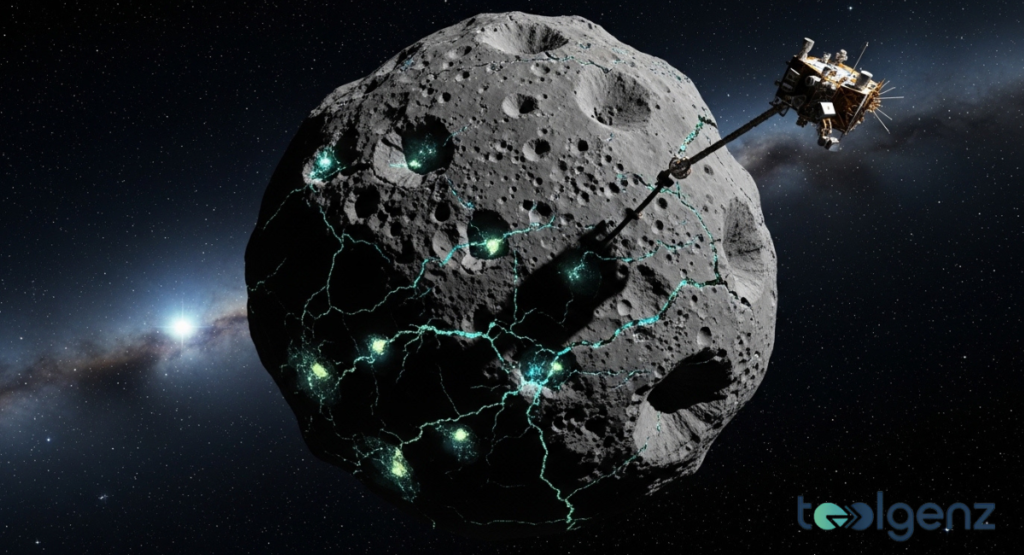
When NASA’s OSIRIS-REx mission returned samples from Bennu, scientists found more than dust. They discovered carbon-rich material and complex organic compounds. That discovery reshaped how researchers study asteroid size and composition. Bennu is fragile. It behaves like a rubble pile. That matters when planning Asteroid deflection technology.
Why is this discovery game-changing? Because structure determines outcome. If you strike a solid rock, it reacts differently than a loose cluster. Breaking it apart could actually make the situation more dangerous by creating multiple impact threats. Scientists are now refining models to better predict an asteroid’s path. Bennu also remains on monitoring lists for long-term Impact probability assessment.
How Often Do City-Killer Asteroids Strike Earth?
History provides warnings. In 1908, the Tunguska event flattened 800 square miles of Siberian forest. In 2013, the Chelyabinsk asteroid injured over 1,000 people. Both were smaller than many tracked Hazardous space objects. Yet they proved Earth is not immune.
Modern models combine telescope data and statistical forecasting. Researchers track thousands of Near-Earth objects (NEOs) using global Space surveillance networks. Still, some Dark and fast-moving asteroids evade detection. Estimates suggest we have cataloged most large asteroids, yet many mid-sized threats remain unseen.
| Event | Estimated Size | Impact Type | Lessons Learned |
|---|---|---|---|
| Tunguska | 50–60 m | Airburst | Massive forest damage |
| Chelyabinsk | 20 m | Shockwave | Urban injuries |
Stronger Detection Systems But Critical Gaps Remain

NASA operates advanced Asteroid detection systems under its planetary defense office. These include infrared surveys and powerful Space monitoring telescopes. This data is shared across international tracking networks. Improvements have increased warning time for many threats. That progress is real.
However, the sunward blind spot remains troubling. An asteroid approaching from the direction of the Sun may remain invisible until late. That creates short Lead time before impact. Funding limitations slow expansion of new space-based sensors. Experts warn that even with improved tools, blind spots in detection still exist.
Why the U.S. Currently Lacks Adequate Asteroid Defense
Budget constraints shape readiness. Compared to defense spending, Compared to other defense priorities, funding for planetary defense remains relatively small. Scaling Asteroid deflection technology requires serious funds and sustained focus. Officials describe this as a long game requiring Long-term financing commitments.
Technology also limits readiness. Building an interceptor quickly is complex. It requires tested spacecraft designs and reliable launch systems ready to deploy. Meanwhile, International planetary defense coordination remains uneven. Data sharing improves yearly, yet operational response plans still need tighter Closer coordination between agencies.
Asteroid Deflection Technology Does It Really Work?
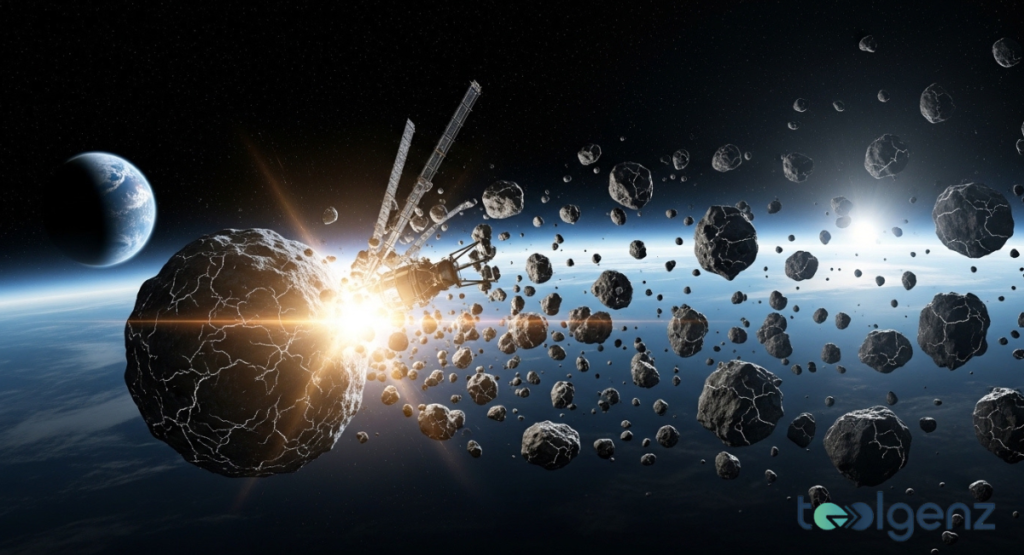
Scientists have tested the Kinetic impactor mission concept. In simple terms, a spacecraft slams into an asteroid to nudge its orbit. It works best with years of warning. The Gravity tractor method uses steady gravitational pull over time. That method is slow but controlled.
Some experts debate nuclear options for extreme scenarios. The concern is Explosive asteroid fragmentation risk. Breaking a large object into pieces may worsen a Catastrophic asteroid impact. No current method guarantees success if warning time is short. That reality shapes today’s cautious tone.
Lessons from the DART Mission and Future Space Missions
The DART mission proved humans can change an asteroid’s path. It validated the physics behind Asteroid deflection technology. For the first time, we altered an orbit intentionally. That was historic.
Still, questions remain. Internal composition affects outcomes. Future missions will expand Early warning systems and improve Orbital trajectory calculation. Engineers propose rapid-launch interceptors and stronger Impact mitigation efforts. These upgrades aim to turn theory into a dependable real-world defense system.
What Scientists and Officials Say Needs to Happen Next

Experts argue for three urgent priorities. Expand detection reach. Increase funding. Conduct real-world exercises. Building a lasting defense plan means practicing response scenarios before a real emergency occurs.
Communities must strengthen Emergency response planning for asteroid impact. This includes evacuation routes and clear communication plans. Strong civil preparedness can significantly reduce panic and confusion during a crisis. Leaders emphasize that asteroid risk belongs in broader Broader national emergency planning systems.
Could Bennu or Similar Asteroids Pose a Future Threat?
Bennu has a small chance of impacting Earth late next century. That probability remains low. Still, it justifies continuous monitoring. Scientists track Bennu’s orbit using advanced modeling and radar observations.
Other asteroids also sit on watch lists. Analysts evaluate Impact probability assessment data regularly. Improved modeling reduces uncertainty. Yet even a slight shift in orbit could change outcomes. That is why ongoing tracking and upgraded Space surveillance networks remain critical.
The Future of Planetary Defense Are We Prepared?
Are we ready for the next asteroid emergency? Not fully. Progress exists, yet experts acknowledge lingering vulnerability. A strong defense plan requires better international cooperation and launch systems that can scale quickly.
Preparedness also means public awareness. Clear drills support Emergency evacuation planning. Transparent data builds trust. The United States must address funding shortfalls and improve its ability to detect incoming threats. Only then can we move from warning to confidence.
Asteroids are not myths. They are measurable risks. Science gives us tools. Policy determines how well we use them. The challenge now is simple to state yet hard to execute. Build a reliable shield before the next asteroid appears in our sky.
FAQs
What are asteroids?
Asteroids are rocky objects that orbit the Sun, mostly found between Mars and Jupiter, though some travel near Earth.
What is a city-killer asteroid?
A city-killer asteroid is a space rock large enough, usually 50–300 meters wide, to destroy a major city if it impacts Earth.
How often do asteroids hit Earth?
Small asteroids enter Earth’s atmosphere often, but large, dangerous impacts are rare and may occur once every few thousand years.
Can NASA stop an asteroid from hitting Earth?
NASA has tested asteroid deflection methods, but a fully operational system to stop a large asteroid on short notice does not yet exist.
Are there any asteroids currently threatening Earth?
Scientists constantly monitor near-Earth asteroids, and at this time no known large asteroid poses an immediate impact threat.