

In 2025, gaming trends are shifting faster than ever, fueled by breakthroughs in cloud gaming, the metaverse, and AI-driven game design.
With more than half of U.S. households identifying as gamers, and global gaming market growth reaching record highs, the industry’s momentum shows no signs of slowing.
The future of games is becoming more immersive, social, and cross-platform, thanks in part to rapid advances in wearable technology trends that blur the lines between digital and physical play.
Gamers want experiences tailored to them, playable anywhere, and developers are answering with sharper tools, faster tech, and fresh content ideas.
From subscription gaming services to blockchain-based assets, this year marks a pivotal shift in how games are made, played, and monetized.
In this article, we’ll explore the top gaming trends 2025 has to offer, revealing what lies ahead for games, gamers, and the technology shaping tomorrow’s play.
Whether you’re a casual mobile gamer or a hardcore esports competitor, 2025 brings opportunities like never before.
Tech giants, indie studios, and even entertainment platforms like Netflix are transforming how games reach players.
Let’s dive into the future of gaming and see how it’s leveling up.
Top 15 Gaming Trends in 2025 – A Quick Overview
This year is shaping up to be one of the most innovative yet for gaming.
The biggest ones include augmented reality gaming, metaverse gaming, and subscription gaming services like Xbox Game Pass Ultimate and Netflix Games.
On mobile, hyper-casual and idle titles are topping charts, offering quick bursts of fun for players on the go.
More developers are using generative AI in gaming and Inworld AI to build smarter NPCs.
Free-to-play models and live-service games like Fortnite and Pokémon GO are keeping players engaged longer.
There’s also a big indie game boom, as smaller developers create fresh, fun ideas. AAA game development is still strong, with big titles like Grand Theft Auto VI (GTA VI) coming soon.
Mobile gaming revenue continues to rise, and new platforms like the Steam Deck and Lenovo Legion console are making high-quality gaming more accessible.
Social gaming platforms such as Twitch and Discord are also changing how players connect, share, and build communities around their favorite titles.
The Five Gaming Trends Expected to Grow or Take Off
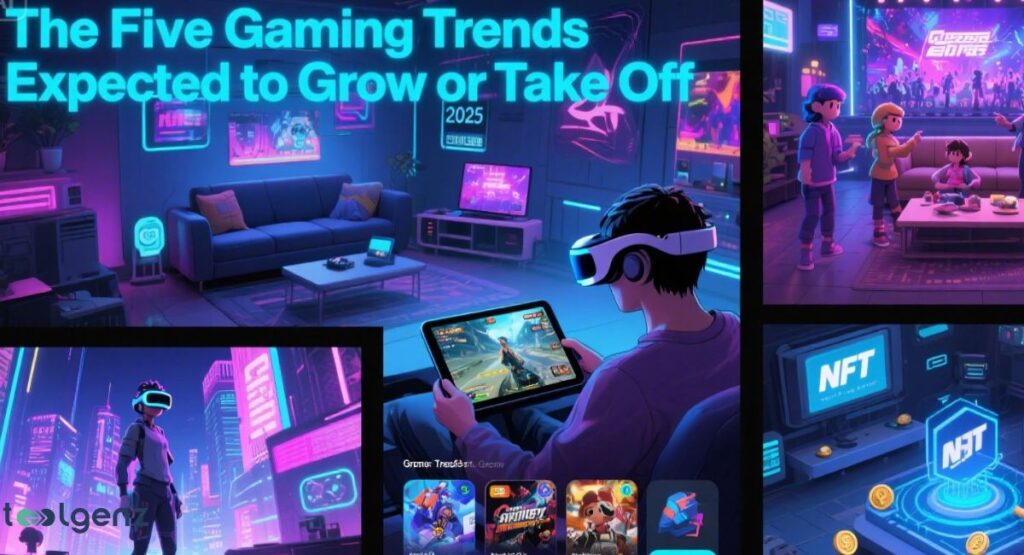
One of the hottest gaming trends is cloud gaming services.
Many gamers now play without downloads, using tools like NVIDIA GeForce Now or Xbox Cloud Gaming.
This lets people play high-end games on low-end devices. It makes gaming more affordable and accessible.
Blockchain in gaming is also rising. Players own items as NFT-based assets and earn through play-to-earn mechanics.
Another strong trend is generative AI tools in development, making smarter and more realistic characters.
Metaverse gaming is growing fast, especially with VR/AR hardware like Meta Quest 3. Lastly, subscription gaming services are helping people try more games at lower cost.
As these gaming trends expand, cross-platform play and cross-platform progression are becoming standard, allowing gamers to switch between devices with ease.
Game development costs may rise, but the focus remains on delivering unique, engaging experiences that match player expectations.
Technology Trends in Gaming
The pace of gaming tech innovation in 2025 is nothing short of remarkable.
Developers use generative AI in gaming to build more content quickly. Tools like Inworld AI help create life-like NPCs.
Better cloud infrastructure now means even players with slower connections can jump into games faster and with smoother performance.
The use of VR/AR hardware is also growing. Games like Half-Life: Alyx and devices like Meta Quest 3 are improving the virtual reality headset experience.
New AI-powered personalization systems also help games adjust to your style, making them more fun and personal.
As more studios invest in advanced technology, we’ll also see better game streaming technology and smarter development pipelines, pushing the boundaries of creativity and player immersion.
Player Behavior and Community Gaming Trends
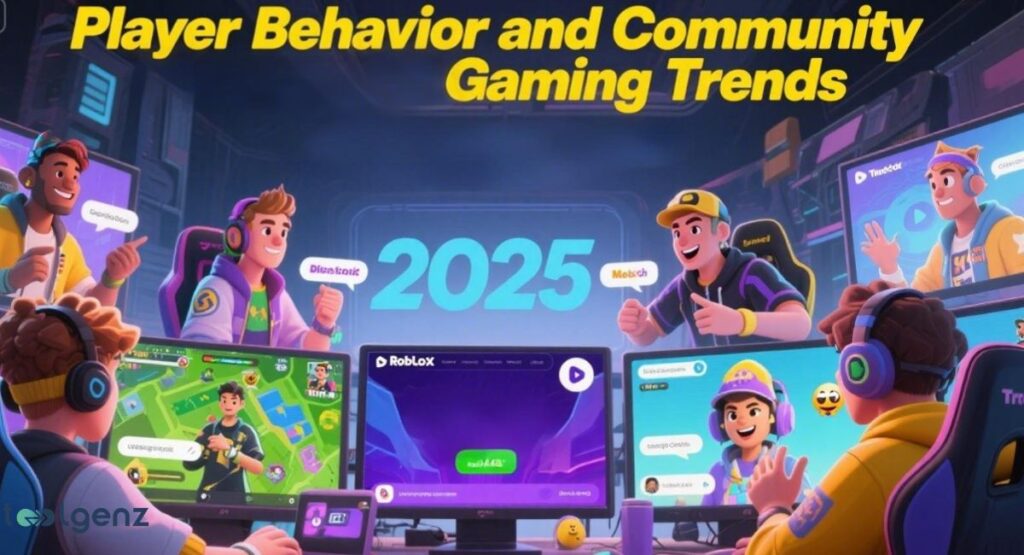
Gamers in 2025 are more connected than ever.
They use social gaming platforms like Discord, Twitch streaming, and the Kick platform to chat and play together.
Games like Roblox and Fortnite are big because they let players create and share content.
Community-driven content is more common now. Players give ideas, build maps, or vote on game features.
Player self-expression is important too, with skins, emotes, and avatars letting gamers show who they are.
This rise in social play is also boosting esports tournaments and events, where fans watch, cheer, and compete globally.
These trends help create deeper engagement and stronger gaming communities across platforms.
Shifting Monetization Models in 2025
Game monetization in 2025 looks very different from just a few years ago.
The free-to-play model with microtransactions and season passes is now common. Players can start for free but buy extras if they want. This keeps games affordable and fun.
Another new method is subscription gaming services. Platforms like Xbox Game Pass Ultimate offer hundreds of games for a monthly fee.
Some games use blockchain in gaming for NFT-based assets, letting players own and trade in-game items.
This mix of monetization models gives players more choices and helps developers earn in new ways.
It’s also fueling the growth of play-to-earn mechanics, turning gaming into a real source of income for some.
Indie vs. AAA Gaming: Who’s Leading Innovation?

Indie studios are growing fast.
The indie game boom is filled with creative games that take risks.
Many popular mobile and PC games in 2025 are made by small teams. Indie developers are quick, flexible, and listen to players.
But AAA game development is still big. Games like GTA VI have huge budgets and amazing graphics.
These studios often lead with high-quality releases, but now they face pressure to innovate and match indie creativity.
As more players support indie titles, big publishers are even partnering with smaller teams or copying indie ideas.
Together, these shifts are creating a healthier mix of creativity and big-budget polish in the gaming world.
Developer and Publisher Outlook for 2025
Game makers face new challenges.
Game development costs are rising, so publishers must make smarter choices. Many are using generative AI tools to save time and money.
They also focus more on player engagement and social features.
Studios are shifting to live-service games to keep players for longer.
These games get updates, events, and new content over time. Remote teams are more common now, letting studios hire the best talent from anywhere.
As competition grows, studios also need to balance innovation with stability.
Meeting player expectations while staying profitable has become one of the biggest goals for developers in 2025.
Other Notable Gaming Trends to Watch
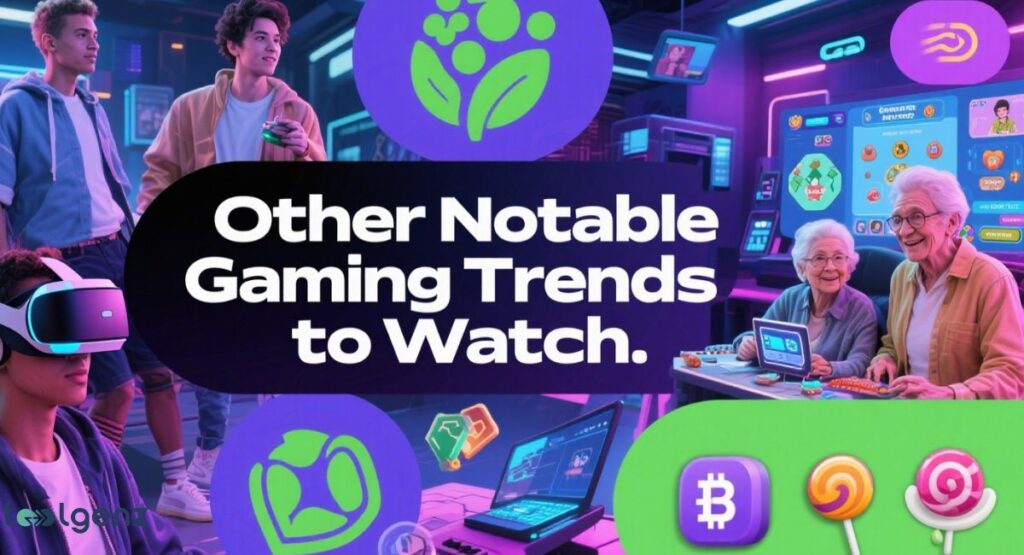
Environmental gaming initiatives are growing.
Studios aim to cut energy use and lower their carbon footprint. Game streaming technology also reduces waste by removing the need for physical discs.
Education games and social-network games like Candy Crush are still popular, especially among older gamers.
Parents are also getting better tools to monitor kids’ playtime and spending. Regulations are rising, especially around microtransactions and loot boxes.
This push for responsible gaming shows that the industry is not just focusing on fun but also on safety, health, and the environment.
In 2025, developers are thinking about the long-term impact of gaming on both people and the planet.
So What Does the Future Hold?
Looking forward, metaverse gaming may become the norm.
People might use games for work, school, and fun. With new devices like the Nintendo Switch 2 and more cross-platform progression, gaming will be even more connected.
Esports growth will continue, with more esports tournaments offering big prize money.
Gamers will also demand better stories, fair monetization, and more power over their gaming worlds.
We’re only scratching the surface of what’s possible for games, players, and the tech driving them.
As we head into this exciting new chapter, expect even more innovation, community involvement, and boundary-breaking experiences that blur the lines between reality and play.
FAQS
1. What are the Big 3 in gaming?
The “Big 3” in gaming typically refers to Sony (PlayStation), Microsoft (Xbox), and Nintendo, the leading console manufacturers.
2. What’s the next big thing in gaming?
The next big thing in gaming includes metaverse experiences, generative AI for NPCs, and immersive AR/VR gameplay.
3. How to find gaming trends?
Track gaming trends by following industry reports (like Newzoo), gaming news sites, social media platforms, and developer blogs.
4. What does AAA mean in a game?
A AAA game is a high-budget, high-profile title developed by major studios with significant marketing and production resources.
5. What are the 4 categories of gamers?
The four common categories are casual, hardcore, professional (esports), and social/community-driven gamers.