
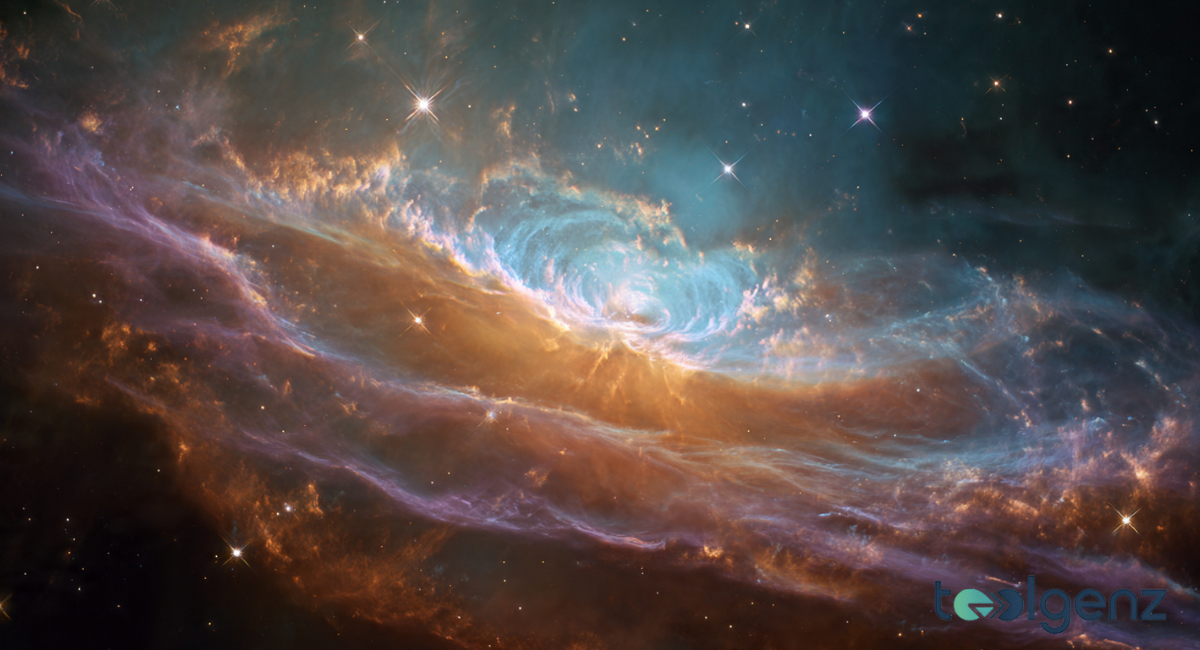
Astronomers and space enthusiasts across the U.S. are buzzing over the latest Hubble Egg Nebula Image. Released by the NASA/ESA Hubble Space Telescope, this breathtaking view reveals the fragile beauty of a pre-planetary nebula caught in a rare moment of change.
Located in the constellation Cygnus, about 1,000 light-years away, the Egg Nebula shows a fading, dying star wrapped in glowing dust. What makes this image so powerful is the clarity. You can see delicate arcs, scattered light, and twin beams piercing thick cosmic clouds. More than a photograph, it offers a glimpse into the process of stellar evolution as it happens.
What Is the Egg Nebula?
The Egg Nebula is a rare pre-planetary nebula, also called a protoplanetary nebula, located in the constellation Cygnus.It sits about 1,000 light-years away from Earth. While 1,000 light-years sounds immense, in the scale of the universe, it’s relatively close. Astronomers sometimes call it the Cygnus Egg because of its oval glow and smooth symmetry.
At its heart lies a central star obscured by dust. Thick clouds hide it from direct view. The object spans about 0.4 light-years. It shines in a reflective nebula phase, meaning we see scattered light rather than strong gas emission. This short transitional stellar phase bridges the gap between a red giant and full planetary nebula formation.
Why This New Hubble Image Is So Important
This latest Hubble view is remarkable for its sharpness and detail. The NASA/ESA Hubble Space Telescope captured intricate layers of cosmic dust shaped by stellar winds. We can now see faint concentric arcs rippling outward like rings in water. These arcs act as time stamps of past eruptions.
Thanks to improved imaging and sensitive instruments, astronomers can now see fine structures in the dusty disk and subtle color changes from early ionization deep within the nebula. According to astronomer Bruce Balick of the University of Washington, the structure is too orderly for a blast event. Instead, it reflects controlled stellar mass shedding.
Feature Observed | What It Reveals | Why It Matters
- Concentric arcs | Past mass-loss cycles | Shows star’s rhythm
- Polar lobes | Directed outflows | Suggests shaping forces
- Dust disk | Hidden dynamics | Hints at companions
The Dying Star at the Center: How Nebulae Are Formed
Sun-like stars follow a predictable life cycle: they burn hydrogen, eventually exhaust helium, their cores shrink, and their outer layers expand. During this stage of Sun-like stars evolution, the star becomes unstable. It enters late-stage stellar evolution.
Eventually, intense heat triggers stellar core heating. Powerful stellar winds drive a massive dust ejection process. Material flows outward and forms glowing shells. These shells later become ionized gas shells. The Egg Nebula is still in its delicate pre-planetary phase, making this detailed Hubble view particularly valuable for astronomers.
What the New Image Reveals About Stellar Death
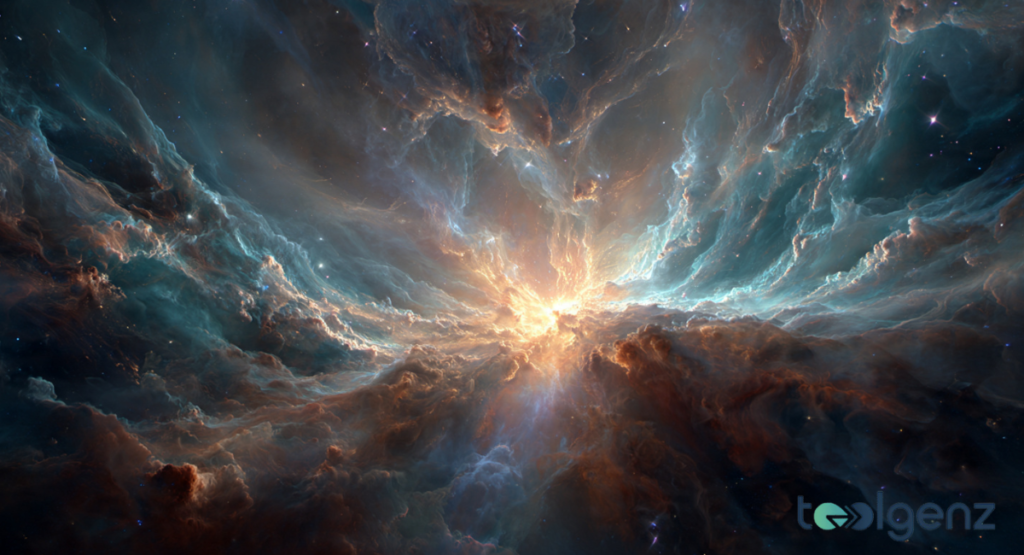
Look carefully at the hubble egg nebula image and you will see twin beams of light piercing outward. These beams pass through a polar eye structure carved into a thick disk of stardust. The light scatters across layers of cosmic dust, creating the nebula’s soft glow.
The image also reveals dramatic fast-moving outflows forming striking polar lobes. Scientists suspect gravitational interactions with hidden companion stars buried deep within the dust. Such interactions could form the nebula’s symmetric arcs as material is gently ejected from its carbon-rich core. This structure clearly differs from a supernova comparison, where chaos dominates.
Why Astronomers Are Excited About This Discovery
The nebula provides a rare look at the early stages of planetary nebula formation—a fleeting moment in the universe’s timeline. The new hubble egg nebula image gives researchers a clean laboratory.
Astrophysicist Enrico de Lazaro described it as a living fossil of stellar ejecta dynamics. By analyzing this bipolar nebula, scientists refine models of late-stage stellar evolution. The data will guide comparisons with objects like the Helix Nebula comparison, Stingray Nebula, and Butterfly Nebula.
How Hubble Captured the Image
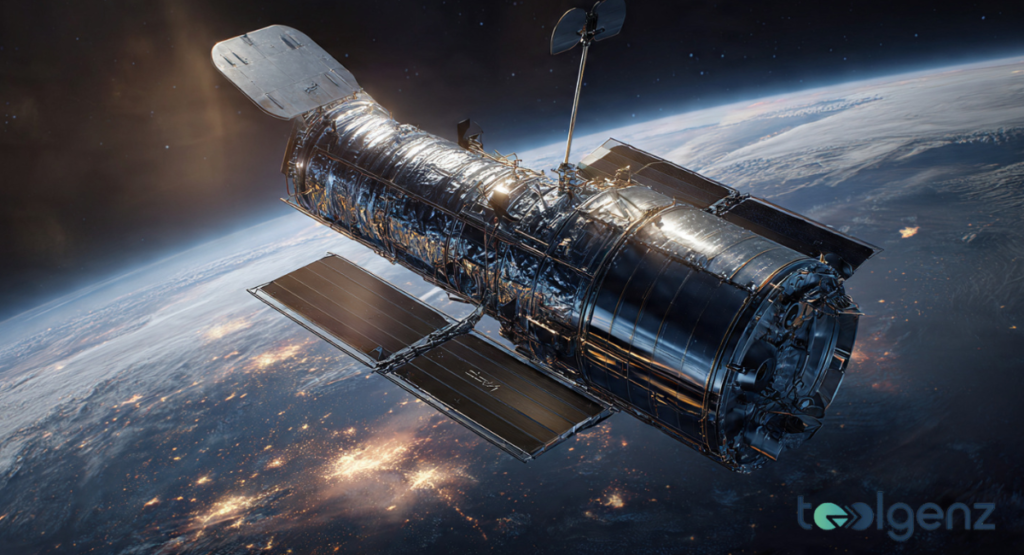
The NASA/ESA Hubble Space Telescope used high-resolution optical instruments sensitive to faint light. Multiple exposures were layered together. This stacking process reduced noise and increased depth. The result is the sharpest hubble egg nebula image ever released.
Multi-wavelength filters helped isolate dust reflection and early emission signals. These techniques allow astronomers to study subtle shifts in the ionization process and map evolving regions inside the nebula. Such methods transform light into data, and data into insight.
How the Egg Nebula Compares to Other Famous Nebulae
Unlike the Orion Nebula, which forms new stars, the Egg Nebula marks stellar decline. The Helix Nebula comparison shows a more advanced phase where full ionized gas shells glow brightly. The Egg remains cooler and dust-heavy.
The Stingray Nebula evolved rapidly in recent decades. The Butterfly Nebula displays dramatic lobes. Yet none match the delicacy of this protoplanetary nebula. Its compact shape and balanced polar lobes make the hubble egg nebula image unique among transitional nebulae.
Hubble’s Legacy in Observing Dying Stars
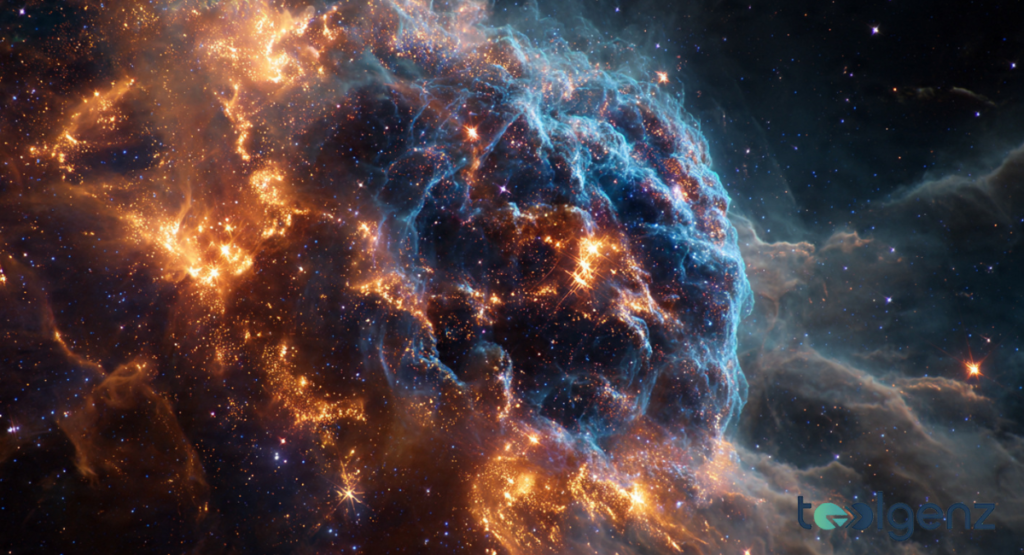
Since 1990, the NASA/ESA Hubble Space Telescope has reshaped astronomy. Over 30 years, it revealed black holes, exoplanets, and countless nebulae. Its observations of stellar mass loss helped us understand stellar ejecta dynamics.
Before the James Webb Space Telescope, Hubble dominated optical astronomy. Even today, it remains essential. Webb excels in infrared. Hubble captures visible precision. Together they decode the story of cosmic dust seeding star systems.
What’s Next? Future Observations with Webb and Beyond
The James Webb telescope will likely peer deeper into the dusty disk. Infrared light can penetrate dense dust and reveal hidden companion stars. Future missions may track chemical markers linked to formation of rocky planets.
Understanding this nebula helps us trace Solar System formation. Long ago, similar dust clouds gave birth to our world. Earth formed 4.5 billion years ago from such material. The hubble egg nebula image reminds us that endings in space often spark new beginnings.
The Bigger Cosmic Picture Behind the Hubble Egg Nebula Image
The Egg Nebula also illustrates how stars recycle their material. Stellar winds push dust outward, while gravity gathers it to form new cosmic structures. That cycle drives cosmic dust seeding star systems across galaxies.
When you look at the hubble egg nebula image, you are witnessing transformation. A fading star shapes its legacy. From this dust, new structures can emerge. Even in endings, the universe continually transforms.
FAQs
What is the Hubble Egg Nebula Image?
The Hubble Egg Nebula Image is a high-resolution photo captured by the NASA/ESA Hubble Space Telescope showing a rare pre-planetary nebula in the constellation Cygnus.
How far away is the Egg Nebula from Earth?
The Egg Nebula is located about 1,000 light-years away from Earth, making it relatively close in cosmic terms.
Why is the Hubble Egg Nebula Image important?
It gives scientists an unprecedented look at a dying star as it transitions, offering clues about the final stages of stellar evolution.
Is the Egg Nebula a planetary nebula?
No, it is a pre-planetary nebula, meaning it is in a short transitional stage before becoming a full planetary nebula.
What causes the unique shape seen in the Hubble Egg Nebula Image?
The nebula’s bipolar shape is created by stellar winds, dust ejection, and possible gravitational interactions with hidden companion stars.