
Definition and Meaning of Lunar New Year
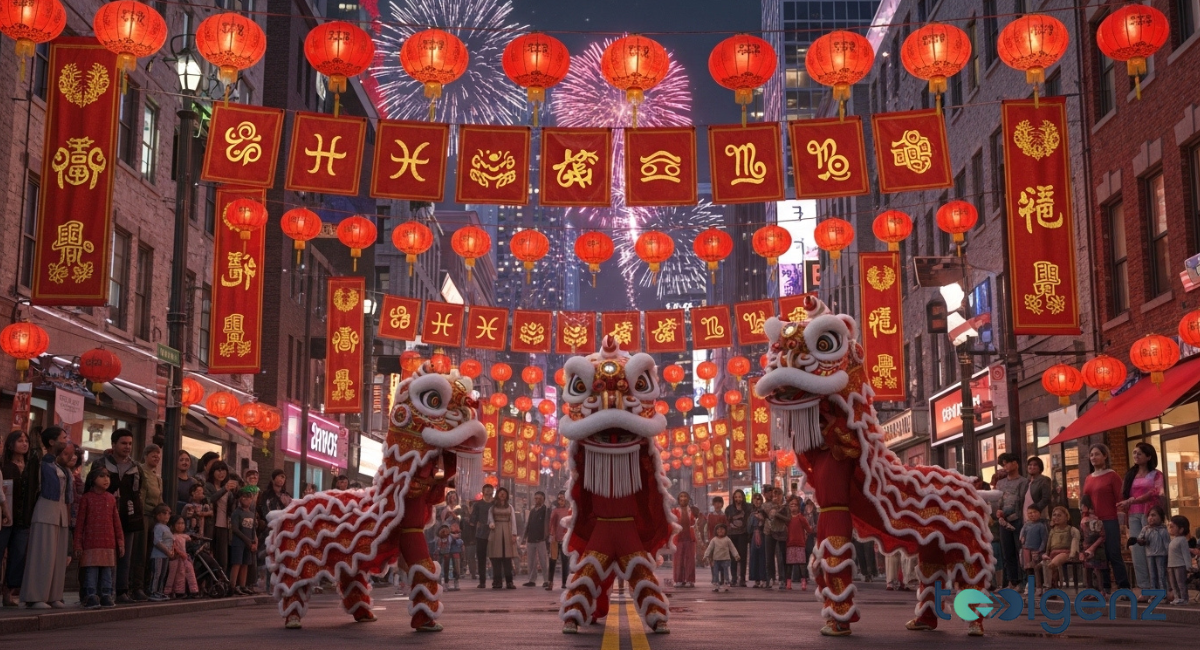
Lunar New Year marks the start of a new cycle based on the ancient Chinese lunisolar calendar and carries deep cultural meaning for millions of families. Unlike January 1 on the Western calendar, this holiday begins on the second new moon after the winter solstice, usually between late January and mid-February.
Families gather, honor ancestors, and welcome a new zodiac cycle featuring the 12 zodiac animals. Also known as the Chinese New Year / Spring Festival, the occasion carries deep meaning across Asia and within Asian American communities throughout the United States. Today, families celebrate in ways that honor tradition while reflecting modern life in America.
History and Legends Behind Lunar New Year
Long ago, legend tells of a beast named Nian. Villagers feared it each winter. They learned loud noise and bright red scared it away. From that myth grew fireworks and red banners. Over centuries, emperors refined rituals during the Chinese New Year / Spring Festival, also called Chun Jie. Dynasties shaped customs, yet families preserved core values. Migration later carried Lunar New Year across oceans into American cities.
Historical records now sit inside institutions like the Library of Congress and research reports by the Congressional Research Service. These archives show how Asian cultural traditions traveled with immigrants in the 19th century. Gold Rush workers in California celebrated quietly at first. Over time, parades filled streets. Over time, private family traditions gradually became large public celebrations. Today, the holiday reflects both historical roots and the lived experiences of Asian American communities.
Celebrations by Region
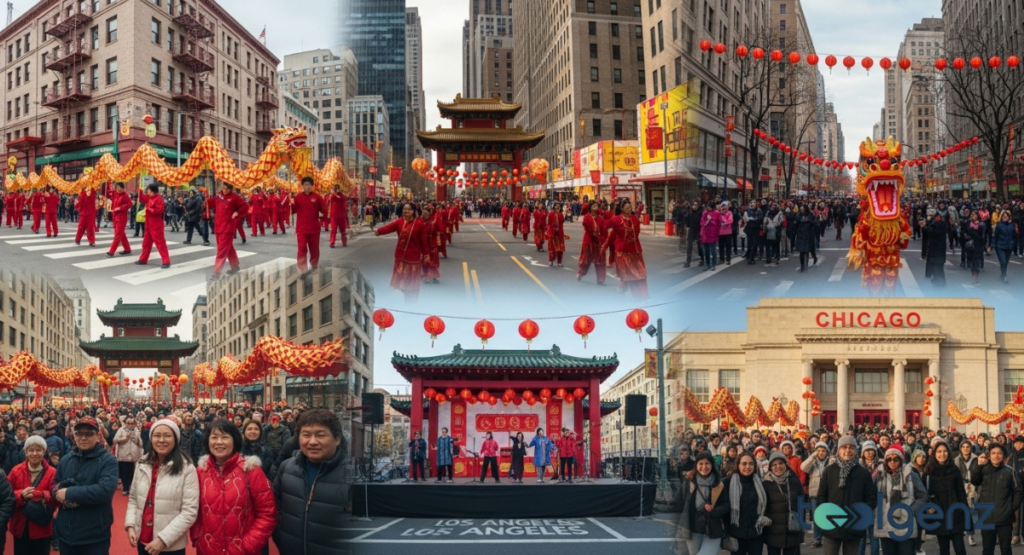
Across Asia, Lunar New Year is celebrated in different ways depending on the country and culture. In China, families host reunion dinners and lantern displays. In Korea, Seollal Korean New Year focuses on ancestral rites and respectful bows. In Vietnam, Tết Nguyên Đán includes unique Vietnamese zodiac variations such as the cat instead of the rabbit. Singapore and Malaysia blend multicultural street festivals with temple visits. While the theme of renewal is shared, each country has its own customs and traditions.
In America, celebrations bloom in neighborhoods shaped by Asian American communities. The famous San Francisco Chinese New Year Festival and Parade draws global attention. Streets in Los Angeles Koreatown pulse with drums. The largest Vietnamese event rises in Little Saigon Westminster CA. The San Francisco Chinese New Year Parade alone generates millions in tourism revenue annually.
Below is a simple comparison table.
| Region | Local Name | Unique Feature | U.S. Connection |
|---|---|---|---|
| China | Spring Festival | Lantern Festival finale | Cultural roots |
| Korea | Seollal | Ancestral bows | Koreatown events |
| Vietnam | Tết | Cat zodiac symbol | Westminster festival |
Chinese Zodiac: History, Legends, and Personality Traits
The Chinese zodiac is often introduced to children through a popular legend about a race among animals. Legend says the Jade Emperor invited animals to race. The first twelve became the zodiac cycle. These include rat, ox, tiger, rabbit, dragon, snake, horse, goat, monkey, rooster, dog, and pig. Each year rotates within the sexagenary cycle. The system blends animals with traditional Chinese elements (Wood, Fire, Earth, Metal, Water).
Americans often compare zodiac signs to horoscopes. However, Lunar New Year zodiac traits connect to birth years, not months. For example, people born in the Year of the Snake 2025 may be described as wise and intuitive. Those born in the Year of the Horse 2026 may seem energetic. The pairing of heavenly stems and earthly branches deepens meaning. Scholars and cultural researchers continue to study how the zodiac system shapes identity and tradition.
Traditions, Customs, and Symbolism
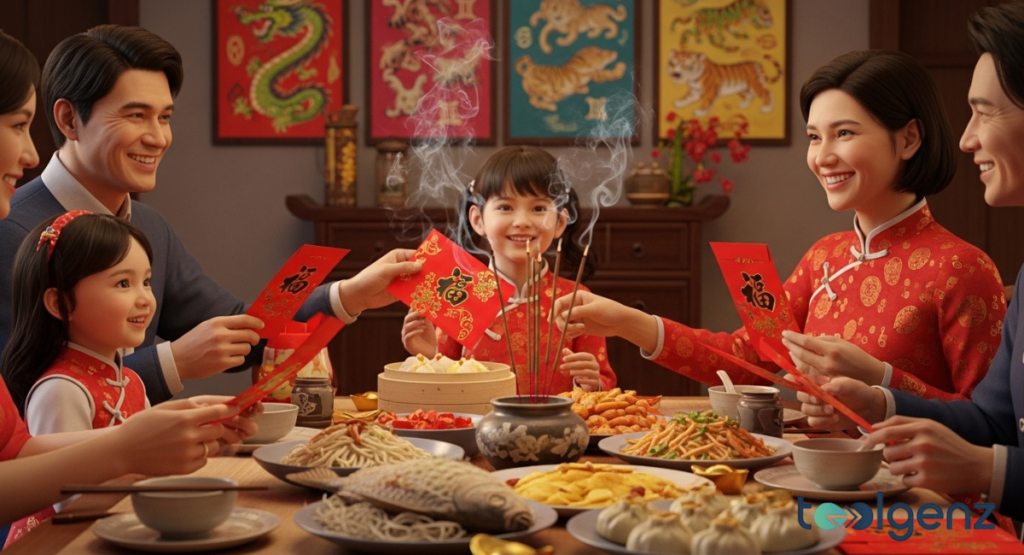
Walk into a home before Lunar New Year and you may see deep cleaning. This ritual reflects house cleaning and settling debts before renewal. Families prepare red decorations and exchange red envelopes and gift money for luck. Elders receive respect through honoring ancestors ceremonies. Children hear stories while fireworks echo outside. These traditions are believed to bring good fortune and maintain family harmony.
Food plays an important symbolic role during the holiday. Fish symbolizes abundance. Dumplings resemble ancient gold bars. Sweet rice cakes signal growth. During traditional dances and festivals, dragons weave through crowds. In Los Angeles, a Korean folk drumming festival energizes streets with rhythm.
The National Folk Museum of Korea documents these customs carefully. Meanwhile, U.S. cities adapt rituals for modern life. At its core, the holiday continues to center on family unity.
Recognition by the United Nations and Global Observance
Global recognition has expanded rapidly. The United Nations now acknowledges the cultural importance of Lunar New Year. In the United States, debate continues around federal holiday status in the U.S.. Several states passed Lunar New Year legislation such as California Assembly Bill 2596, Colorado HB23-1271, New Jersey AJR201, Washington HB 2209, and New York Senate Bill S7573. These laws created public school holiday recognition in certain regions.
At the federal level, proposals like H.R. 794 Lunar New Year Day Act (119th Congress) and H.Res. 75 (2025 recognition resolution) reflect bipartisan interest. Speeches appear in the Congressional Record remarks. Leaders from the Congressional Asian Pacific American Caucus support expanded observance. Data from the U.S. Census Bureau highlights demographic growth strengthening this push. Discussions continue, but public awareness and recognition of the holiday have steadily increased.
Modern Celebrations, Media, and Cultural Events
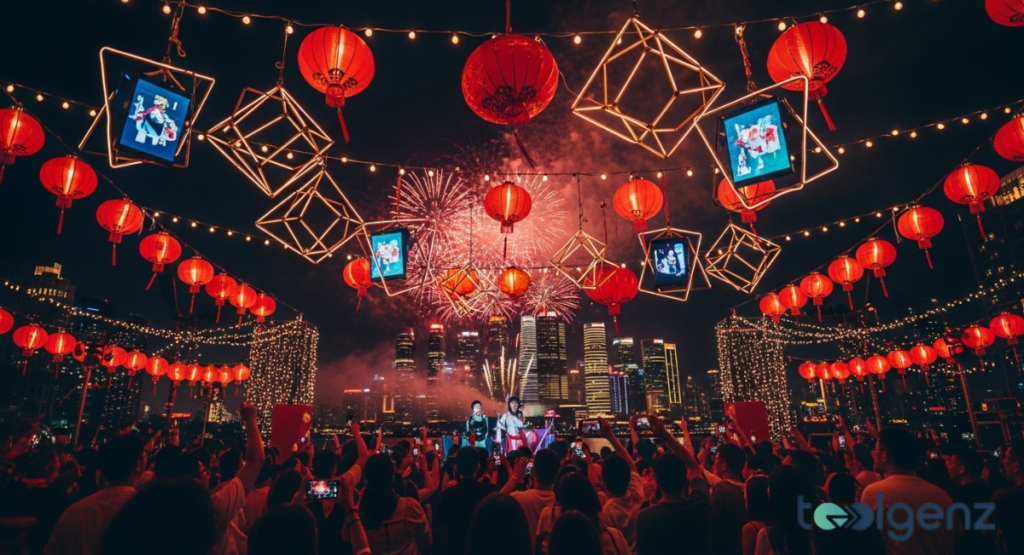
Today, celebrations take place both in public spaces and online. The U.S. Postal Service issues annual stamps known as U.S. Postal Service Lunar New Year stamps. Museums such as the National Museum of Asian Art curate exhibitions. Cultural groups like Asia Society host panels. Presidential messages archived by the American Presidency Project reflect national recognition. Media spreads celebration beyond traditional neighborhoods.
Educational broadcasts and digital tours add depth. Scholars publish insights through the Library of Congress collections. The Congressional Research Service prepares public reports explaining history and policy. Even sports teams host themed nights. In New York, festivities link with New York public schools observances. Through music, art, and community events, the holiday continues to grow while maintaining its traditions.
Educational Resources and Cultural Learning
Teachers across America use Lunar New Year to explain global citizenship. Lesson plans explore zodiac animals and migration stories. Schools invite parents from Asian American communities to share personal memories. Museums collaborate with classrooms. The National Museum of Asian Art offers virtual programs. These programs help students better understand cultural traditions and diversity.
Universities conduct research on diaspora identity. Reports from the U.S. Census Bureau show growing diversity. Cultural literacy now connects to broader themes such as Asian Pacific American Heritage. By studying Lunar New Year, students learn history, astronomy, sociology, and art together. This interdisciplinary approach makes the holiday especially useful in classroom learning.
Why Lunar New Year Matters in America Today
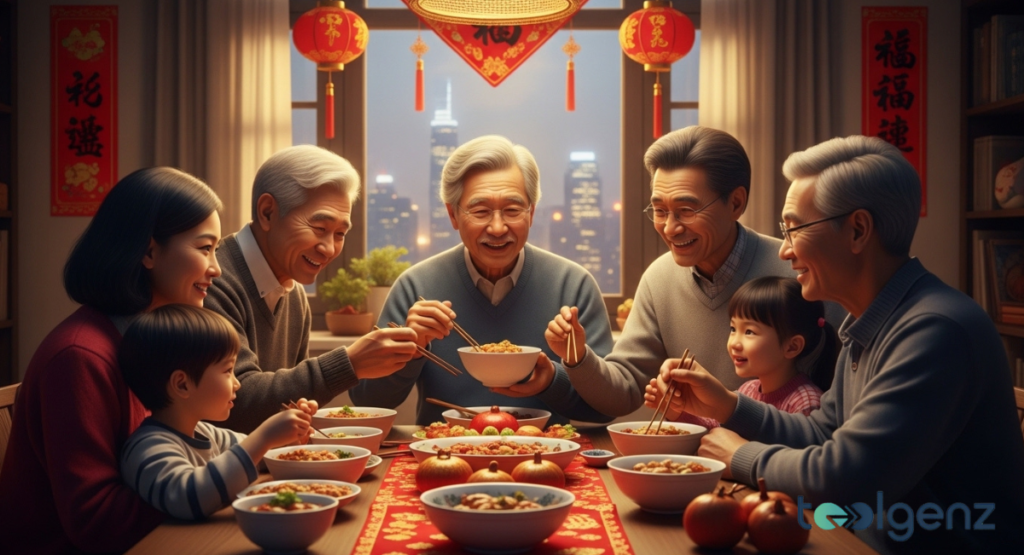
Beyond the public celebrations, the holiday represents a sense of belonging for many families. It connects generations through ritual and memory. Immigrant grandparents share recipes. Children learn zodiac tales. Civic leaders issue presidential proclamations celebrating unity. What once felt foreign now feels woven into American life.
In many ways, the holiday mirrors the changing cultural landscape of the United States. It connects Asian traditions with American civic life. It honors ancient calendars while thriving in modern cities. As demographics shift and awareness grows, Lunar New Year continues shaping American culture. Each year, families welcome a new beginning together.
FAQS
Is Chinese New Year and Lunar New Year the same?
Chinese New Year is part of Lunar New Year, but Lunar New Year includes other cultures like Korean Seollal and Vietnamese Tết, so the terms are related but not identical.
What is January 29 for Asians?
January 29, 2025 marked the beginning of the Lunar New Year and the Year of the Snake in many Asian cultures that follow the lunisolar calendar.
What not to do on Lunar New Year?
People traditionally avoid cleaning on the first day, arguing, breaking dishes, or saying negative words because it is believed to bring bad luck.
Who celebrates the Lunar New Year?
Lunar New Year is celebrated by Chinese, Korean, Vietnamese, and other Asian communities worldwide, including millions of Asian Americans in the United States.
Is it polite to say Chinese or Lunar New Year?
It is generally more inclusive to say Lunar New Year, since the holiday is celebrated by multiple Asian cultures, not only Chinese communities.