
Oil prices play a central role in shaping the global economy. When they climb, families feel it at the gas pump, and businesses face higher costs across supply chains. When they fall, relief spreads through transportation, food, and manufacturing sectors. Today, fluctuations in oil prices are largely driven by geopolitical risks, especially tensions in the Middle East. Traders closely watch global energy markets, knowing that even minor disruptions near key shipping routes can push oil prices up in minutes. Understanding how oil prices respond to conflict helps you anticipate market shifts and prepare for changes that can affect your wallet.
What Does the US–Israel Attack on Iran Mean for Oil Prices?
The recent US–Israel strike on Iran heightened fears of a broader conflict in the Persian Gulf. Investors quickly factored a geopolitical risk premium into crude oil futures, which essentially reflects market anxiety. Even if actual supply hasn’t fallen, markets often price in potential disruptions, which is why oil prices can spike before any physical shortage occurs.
A bigger concern is the Strait of Hormuz, a narrow waterway near Iran that channels a massive portion of global oil exports. Any slowdown in shipping there could tighten global supply almost overnight. According to the U.S. Energy Information Administration, nearly 20 percent of the world’s oil flows through this corridor. A blockage, even temporary, could trigger a significant spike in oil prices and rattle global energy markets.
The U.S. and Israel Launched a Joint Operation at Iran What Happened?
The operation targeted strategic sites linked to Iran’s security infrastructure. Some reports suggest involvement of the Iranian Revolutionary Guard Corps, which had conducted drills in the Persian Gulf just weeks earlier. These maneuvers raised alarms in both Washington and Tel Aviv, and tensions had been simmering quietly before the strike occurred.
Markets reacted quickly. Brent crude surged, and West Texas Intermediate (WTI) followed. Traders feared potential disruptions in Gulf shipping lanes. Iran responded with warnings and limited actions in neighboring countries including the United Arab Emirates, Qatar, Bahrain, and Kuwait. This rapid escalation amplified concerns about oil prices worldwide.
Oil Prices Have Been Rising Over Fears of Conflict
Even before the strike, oil prices were on an upward trend. Rising energy security concerns and stalled nuclear deal talks had already tightened expectations. When tensions flare in the Middle East, investors often assume supply could shrink, which alone pushes oil prices higher, even without direct damage to facilities.
The spread between Brent and WTI crude widened. Brent reflects global trade risk more directly, while WTI tracks U.S. inland supply. Here’s a quick comparison:
| Benchmark | Main Region | Sensitive to Gulf Risk | Typical Reaction |
|---|---|---|---|
| Brent Crude | Global | Very High | Jumps quickly |
| WTI Crude | United States | Moderate | Follows Brent |
This difference shows how concerned traders are about potential disruptions abroad.
Strait of Hormuz Why It Is the Most Critical Oil Chokepoint
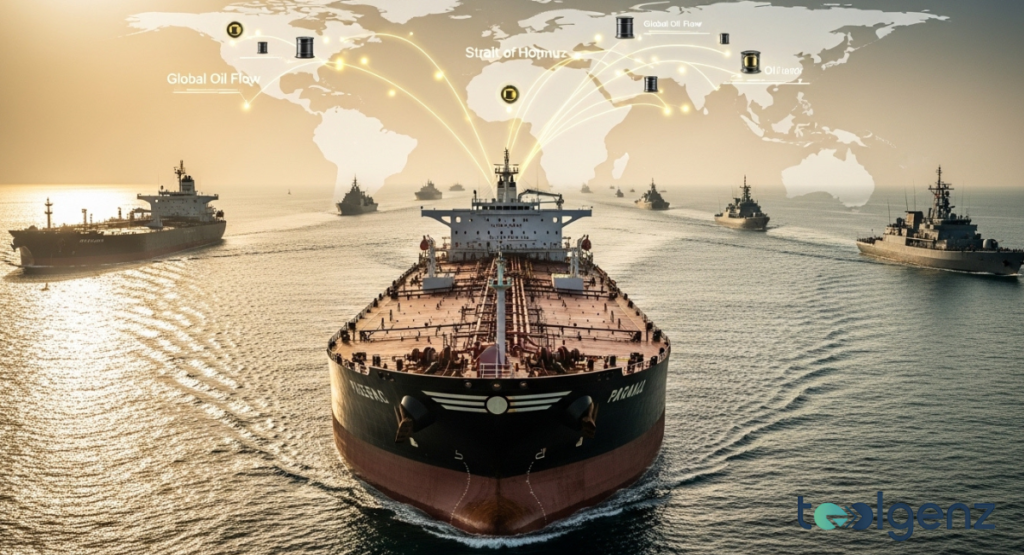
The Strait of Hormuz links the Persian Gulf to the world’s oceans. Tankers carrying oil from Saudi Arabia, Kuwait, and the United Arab Emirates must pass through it. Iran has repeatedly warned that it could block this vital chokepoint if threatened. Even small disruptions can delay shipments and raise insurance costs.
About 20 million barrels of oil pass through the Strait daily, according to the U.S. Energy Information Administration. Few alternatives exist, and pipelines cannot fully replace this volume. Any closure, even briefly, could send oil prices above $100 per barrel, creating a classic supply shock with global consequences.
How Iran’s Retaliation Could Escalate Energy Market Risks
Iran doesn’t need to launch massive attacks to affect oil prices. Even minor strikes on infrastructure in Bahrain or cyber threats to terminals in Qatar could rattle investor confidence. Regional alliances may pull in other major players, including Russia and China, both key energy producers. These moves would make the market even more unpredictable.
OPEC oil production is another concern. Iran’s membership in OPEC means conflict could complicate output coordination. If sanctions tighten further, Iranian exports could drop, shrinking supply at a time when spare capacity is limited. Stability within OPEC has a direct impact on oil prices around the globe.
What This Means for Global Oil Supply and Demand

Supply disruptions could take multiple forms: direct damage to facilities, shipping restrictions, or stricter sanctions. Each scenario affects demand differently. If oil prices climb sharply, consumption may slow in the United States, Canada, and Europe.
The U.S. maintains strategic reserves to cushion shocks, but emergency releases cannot replace long-term shortages. Here’s a simplified picture of demand exposure:
| Region | Dependence on Gulf Oil | Risk Level |
|---|---|---|
| United States | Moderate | Medium |
| China | High | Very High |
| Europe | Medium | High |
China’s heavy reliance on Gulf imports explains its strong diplomatic interest in regional stability and underscores how sensitive oil prices are to Middle East developments.
U.S. and Israel Attack Iran What It Means for Oil and Stocks
Rising oil prices often boost energy stocks, as producers benefit from higher selling prices. At the same time, airlines and transport companies suffer due to rising fuel costs. Investors tend to shift toward defensive sectors during conflicts, a pattern that repeats with nearly every Middle East crisis.
Safe-haven assets also gain attention: gold often rises, the U.S. dollar strengthens, and Treasury bonds attract buyers. In such situations, oil prices both reflect and drive investor anxiety, making the energy market a key barometer of risk.
Impact on Gas Prices and Consumer Inflation
Higher oil prices usually translate into higher gasoline costs within weeks. Refiners adjust quickly, and retail stations pass these costs to consumers. American families feel the impact at the pump first, followed by higher transportation costs that ripple through the prices of food and goods.
Energy costs play a significant role in inflation. If oil prices remain elevated, central banks may hesitate to cut interest rates, adding complexity to economic policy. Inflation driven by energy differs from demand-driven inflation, but it affects household budgets in similar ways.
What Analysts and Energy Experts Are Predicting
Some analysts expect oil prices to hover near $90 per barrel if the conflict remains limited. Others warn that a full closure of the Strait of Hormuz could push oil prices above $120. The duration of the disruption is key: short events create spikes, while prolonged conflict could trigger sustained rallies.
Experts track tanker movements, inventory levels, and OPEC statements closely. They also monitor U.S. production trends. These factors help determine whether the current surge in oil prices is a temporary shock or the start of a longer cycle.
What to Read Next Top Stories and Most Read

Energy markets rarely move in isolation. Updates on diplomatic talks, nuclear negotiations, and sanctions on Iran help readers anticipate future movements in oil prices. Following reports from the U.S. Energy Information Administration, global shipping data, and OPEC statements ensures you are reacting to facts rather than headlines.
Final Thoughts on Oil Prices and Global Stability
Oil prices reflect far more than supply and demand they reflect fear, strategy, and power. The U.S. and Israel strike on Iran highlights just how fragile stability can be. When tensions flare in the Persian Gulf, the impact is felt worldwide.
For American consumers, oil prices are a daily reality, visible at gas stations and on utility bills. Investors track charts, and policymakers weigh decisions carefully. Whether this conflict escalates or subsides will shape oil prices for months ahead. One thing is certain: in global energy markets, stability is priceless.
FAQS
What is the prediction for oil prices?
Most analysts expect oil prices to trade between $80 and $100 per barrel in the near term, though geopolitical risks could push prices higher if supply disruptions occur.
How much did a barrel of oil cost in 1970?
In 1970, a barrel of oil cost roughly $3, before the 1973 oil crisis triggered a dramatic increase.
What happens if oil hits $200 a barrel?
If oil prices reach $200 per barrel, gasoline prices would soar, inflation would spike, and global growth could slow sharply.
Does Iran have petroleum?
Yes, Iran holds some of the world’s largest proven oil reserves and remains a major producer despite sanctions.
Is there an oil boom coming?
An oil boom is possible if supply tightens and demand stays strong, but it depends on conflict levels and OPEC production decisions.