
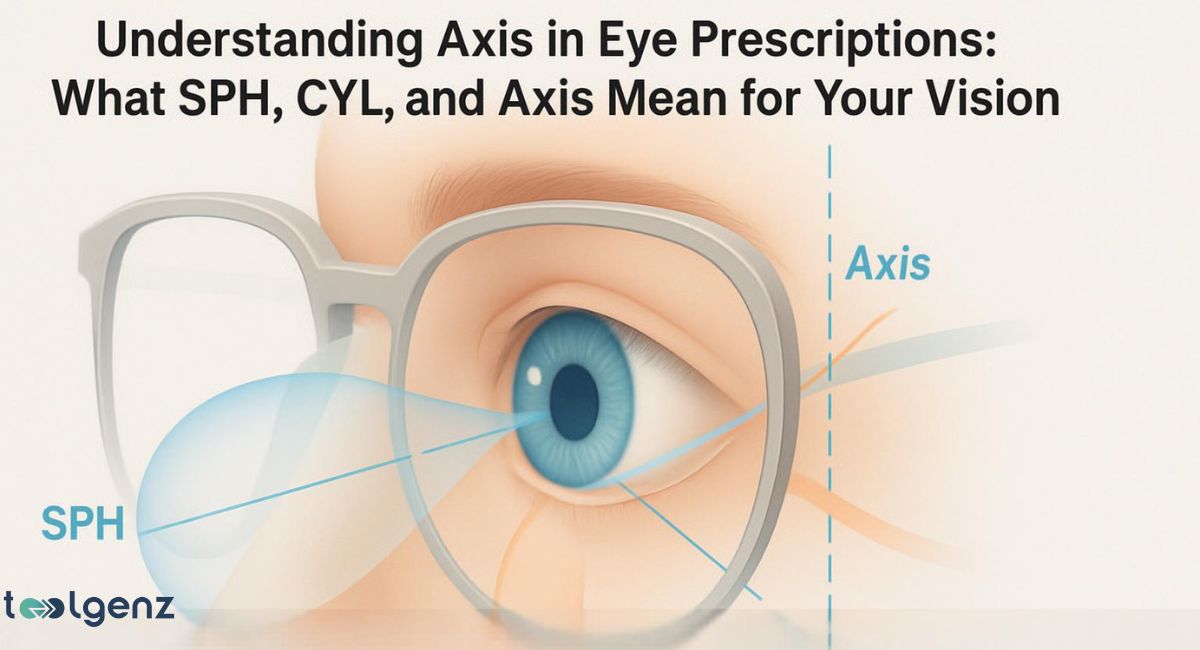
Understanding your eye prescription can feel confusing, especially when you see terms like SPH, CYL, and Axis. These numbers aren’t just technical—they directly impact how clearly you see the world.
Whether you’re getting glasses for the first time or updating an old prescription, knowing what these terms mean can help you make smarter choices for your vision.
The Axis value helps correct astigmatism, while Sphere (SPH) and Cylinder (CYL) adjust for nearsightedness, farsightedness, and blurred vision.
In this guide, we’ll break it all down using easy English so you can understand exactly how these details improve your sight and support better vision correction.
Every number on your prescription helps shape your lenses to match your vision needs. Learning how they work together will help you better communicate with your eye care provider and take control of your eye health.
Eye Test Results Explained: SPH, CYL, and Axis
When your optometrist gives you a prescription, it usually includes three parts. The first is Sphere, which tells whether you are nearsighted or farsighted.
The second is Cylinder, which deals with astigmatism correction. The third is the Axis, which helps place the astigmatism lens correction at the right angle.
These terms help your doctor decide the shape and strength of your glasses lenses. The prescription also includes other values like Pupillary distance (PD), visual acuity, and back vertex distance (BVD).
All these details are used to make sure your glasses give you the clearest vision possible.
Knowing what these numbers mean helps you feel more confident and ask better questions during your eye exam. It also ensures your glasses are not just a fit—but the perfect fit for your daily vision needs.
What Does Axis Mean for Glasses Prescription?
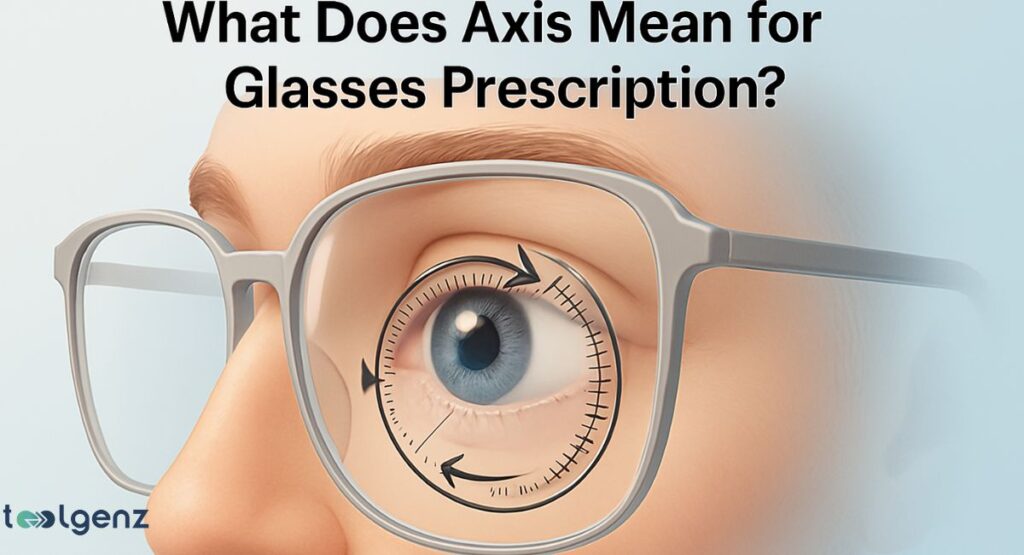
The Axis number in eye test shows the direction of your astigmatism lens correction. It tells the lens maker where to place the power on your lenses. Axis values range from 0 to 180 degrees.
If your axis is 90, it means the correction is placed vertically. If it’s 180, it means the correction is placed horizontally.
Think of the axis as a guide that tells the lens where to focus, helping you see clearly by aligning the correction at the right angle.
If the axis is slightly off, your vision might still feel a bit blurry or uncomfortable—even if the rest of your prescription is right. So, this number is just as important as your Cylinder power or Sphere (SPH).
Getting your Axis right ensures precise alignment for optimal clarity.
For professionals seeking mastery of the term “Axis” in technical contexts — like video surveillance — check out our Axis Certification Program top guide Even with perfect SPH and CYL, incorrect axis placement can leave your eyesight strained.
Always double-check your prescription before ordering glasses.
What is a “Normal” Eye Axis?
There is no exact “normal” axis because everyone’s eye shape is different. However, most Axis values are between 0 and 180 degrees. This range is used to rotate the lens to match the angle of your astigmatism correction.
If both eyes have axis numbers close to 180 or 0, it usually means your horizontal and vertical eye meridians are off by a small angle.
That’s common in people with mild refractive error. A larger difference between the two eyes might mean a more serious case of astigmatism.
Still, having a higher or lower axis doesn’t mean your eyes are unhealthy. It simply reflects how your lenses must be shaped to give you the sharpest vision possible. Your optometrist will interpret the axis value in the context of your overall eye health.
Sphere (SPH): What It Means for Your Vision
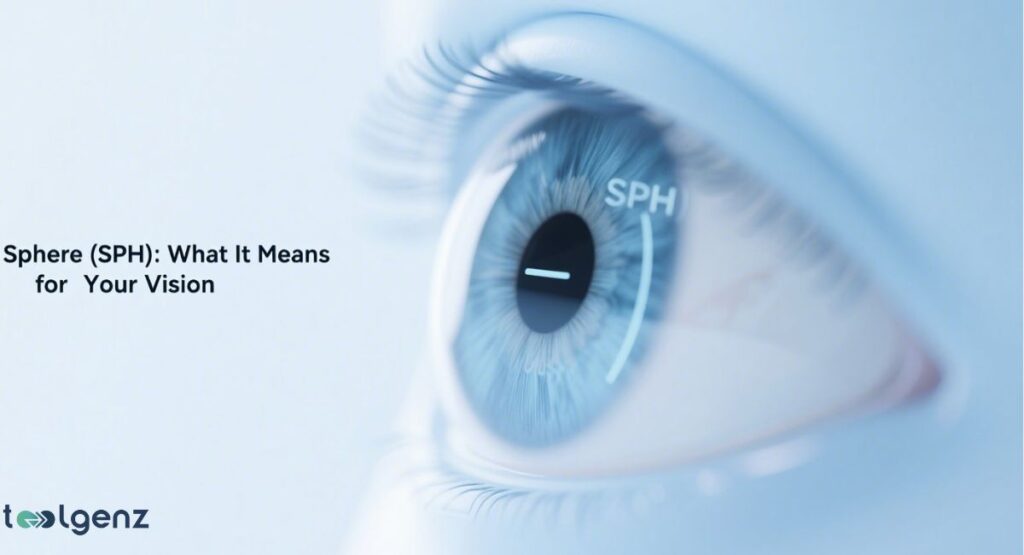
Sphere tells if you have myopia (nearsightedness) or hyperopia (farsightedness). A minus sign (-) means you are nearsighted and objects far away look blurry.
A plus sign (+) means you are farsighted and nearby objects are blurry. The further the number is from zero, the stronger your lens needs to be.
This number is measured in diopters in eye prescriptions. It shows how strong your lenses need to be to focus light clearly onto your retina. For example, -2.00 SPH means you need a lens with 2 diopters of correction for nearsightedness.
Once you understand your SPH number, you can keep an eye on how your vision changes from year to year. Regular eye examinations will ensure your prescription strength is up to date and still working effectively for your daily needs.
Cylinder (CYL): Understanding Astigmatism Correction
Cylinder shows how much astigmatism correction you need. Astigmatism happens when your cornea has an uneven curve.
Instead of being round, it’s more oval. This causes blurred or distorted vision.
The cylinder power in glasses fixes this by changing how light enters your eye. It also works together with the Axis value to give full vision correction for astigmatism.
If your prescription has no CYL, it means you don’t have astigmatism. A stronger CYL number means a higher level of astigmatism correction is needed.
This value ensures that both horizontal and vertical eye meridians are focused properly, allowing for sharper and clearer sight.
Axis: How It Completes Astigmatism Correction
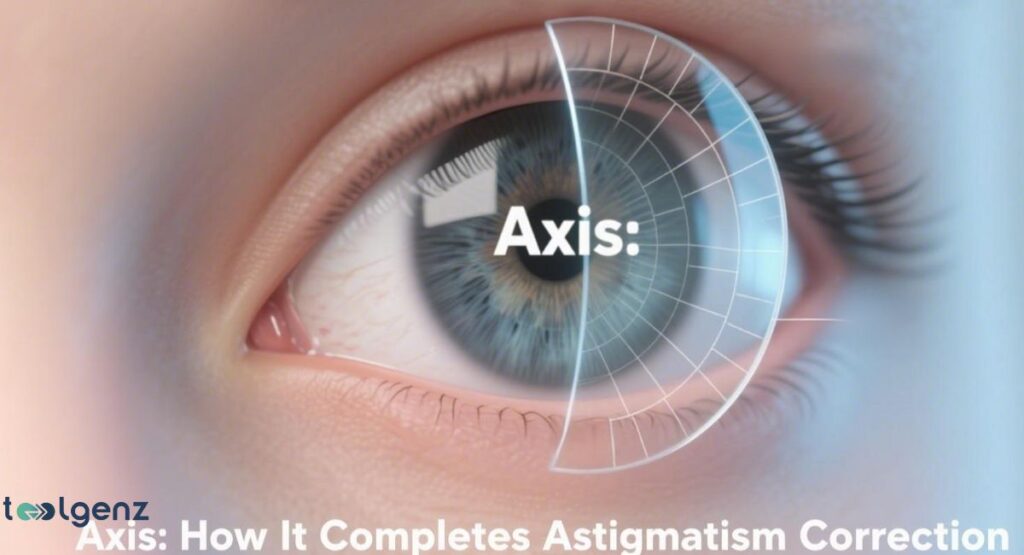
Once the Cylinder is found, your doctor needs the correct Axis to apply it properly.
The Axis value tells the direction where the cylinder power should be placed. Without the correct angle, your astigmatism lens correction won’t work.
This is why both Cylinder and Axis are needed. One tells how strong the correction is, and the other tells where to place it.
Both work together to fix uneven curves on your eye and give you sharp vision.
If the CYL and Axis don’t match up, it could cause things like eye strain, headaches, or even double vision.
Accurate alignment ensures the prescription works as intended, especially in daily tasks like reading or driving.
Example Table of SPH, CYL, and Axis Values
| Eye | SPH | CYL | Axis |
| OD (Right Eye) | -2.25 | -1.00 | 180 |
| OS (Left Eye) | -1.75 | -0.75 | 165 |
Further Eye Test Definitions You Should Know
There are other terms in your glasses prescription you should know. Pupillary distance (PD) is the distance between your pupils, and it helps position your lenses correctly.
Back vertex distance (BVD) is the space between your eye and the back of the lens.
Visual acuity shows how clearly you can see. It’s usually written as 20/20 or similar. Prescription strength shows how much help your eyes need to focus.
They help ensure your glasses are tailored perfectly to how your eyes see.
Understanding these extra details helps you read your prescription with confidence. It also helps your optician design lenses that match your exact vision needs for the best possible comfort and clarity.
Book Your Eye Test: Why Professional Exams Matter

A regular eye examination can catch changes in your vision early. It helps update your prescription and ensures your lenses match your current needs.
In the USA, it’s best to get tested once a year or as advised by your optometrist.
Only licensed professionals can measure your prescription strength accurately. They also check for eye diseases and other health issues. This is why getting a full eye test matters, not just online vision checks.
Visiting a trusted eye care clinic ensures you get the most precise results. Accurate testing means better vision correction and healthier eyes in the long run.
Summary: Key Takeaways for Understanding Your Eye Prescription
Understanding your SPH vs CYL in prescriptions, Axis value, and other terms helps you make better choices.
Whether you’re buying new glasses or just reviewing your test results, this knowledge gives you control over your eye care.
Every part of your prescription works together. Your Cylinder, Sphere, and Axis all correct different issues.
Knowing how they work can prevent headaches, eye strain, and poor vision from incorrect lenses.
By understanding these terms, you can also ask better questions during your eye examination.
It empowers you to be more involved in your vision correction and make informed decisions with confidence.
More Reading and Eye Care Tips
Want to learn more? Check out trusted sources like the American Optometric Association, Vision Source, or your local optometry clinic.
Good vision starts with good information. Keep learning about vision correction for astigmatism, diopters in eye prescriptions, and how to keep your eyes healthy for life.
If you’re still unsure, schedule a full eye examination with a professional and bring all your questions with you.
Staying informed helps you make better decisions when choosing lenses or understanding changes in your prescription.
The more you know, the better prepared you are to protect your eyesight now and in the future.
Want to learn more? Check out trusted sources like the American Optometric Association’s Eye Health for Life guide, Vision Source, or your local optometry clinic.
FAQs
What is a normal axis for eyes?
There is no single “normal” axis; values range from 0 to 180 degrees depending on your astigmatism. Most people with astigmatism fall between 10 and 180 degrees.
What does eje mean?
“Eje” is the Spanish word for “axis,” which refers to the angle (0–180°) used to position astigmatism correction in your lenses.
What does 170 axis mean in eye prescription?
A 170 axis means the astigmatism correction is placed near the horizontal meridian, slightly tilted to the left.
Is eye axis 180 normal?
Yes, 180 is a common axis value and indicates horizontal alignment of the correction for astigmatism.
What axis is bad for astigmatism?
No specific axis is “bad,” but irregular or extreme axis values may indicate more complex astigmatism that requires precise correction.