
Computer science is an exciting and ever-evolving field that shapes nearly every aspect of our daily lives. From designing efficient algorithms to exploring the possibilities of artificial intelligence, CS drives innovation across industries. It examines how digital systems process information, how software solves real-world problems, and how humans interact with technology through thoughtful interface design.
The field continues to expand rapidly, influencing areas like machine learning, cybersecurity, and quantum computing. Learning computer science not only opens doors to rewarding careers but also helps us understand the evolution of technology and its impact on modern society, making it a fascinating subject to explore.
History of Computer Science
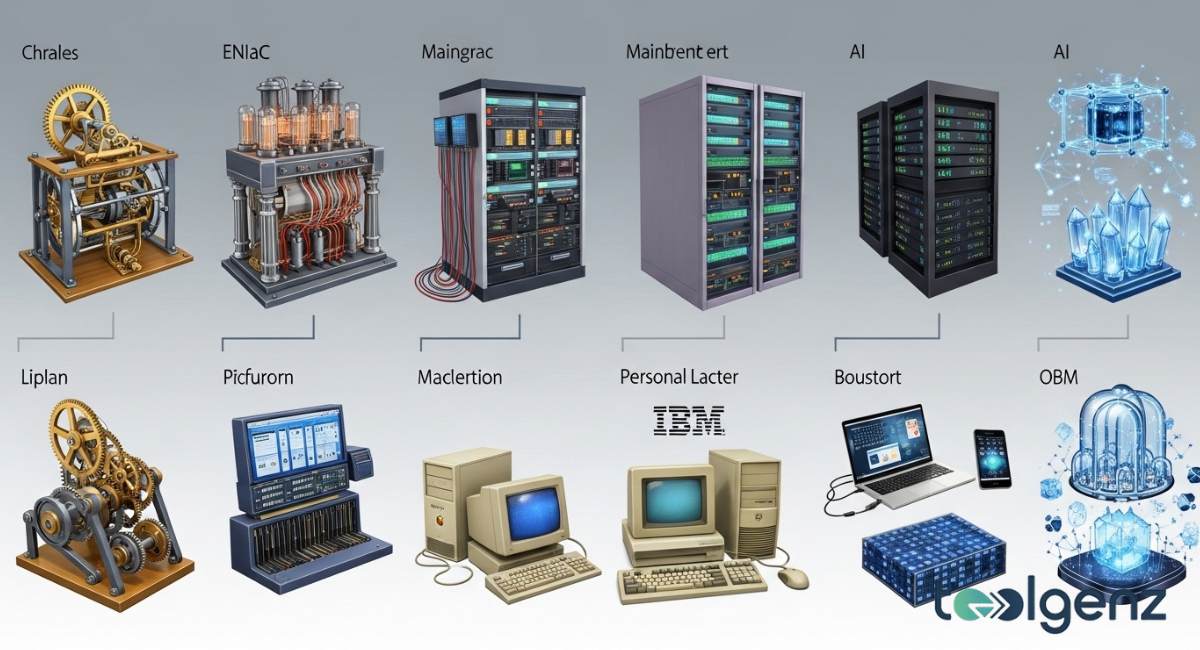
The roots of computer science stretch far back, long before digital computers existed. Early innovators like Gottfried Wilhelm Leibniz and Wilhelm Schickard created mechanical calculators to perform arithmetic efficiently. Later, Charles Babbage envisioned the Analytical Engine, often regarded as the first programmable computer, while Ada Lovelace wrote the earliest algorithms for it, earning recognition as the first computer programmer. Inventors such as Thomas de Colmar and Herman Hollerith contributed innovations in data processing and calculation, laying the groundwork for computational applications in business and government.
In the 20th century, electronic computing emerged. Machines like the ASCC/Harvard Mark I and ENIAC made programmable electronic computation possible. Alan Turing introduced the Turing machine, formalizing the concept of computation, while Claude Shannon developed information theory, creating the mathematical foundation for digital communication. By the 1970s, personal computers brought digital technology into homes and businesses. This journey demonstrates how CS evolved from mechanical tools into the powerful digital systems that drive our modern world.
Etymology and Scope of Computer Science
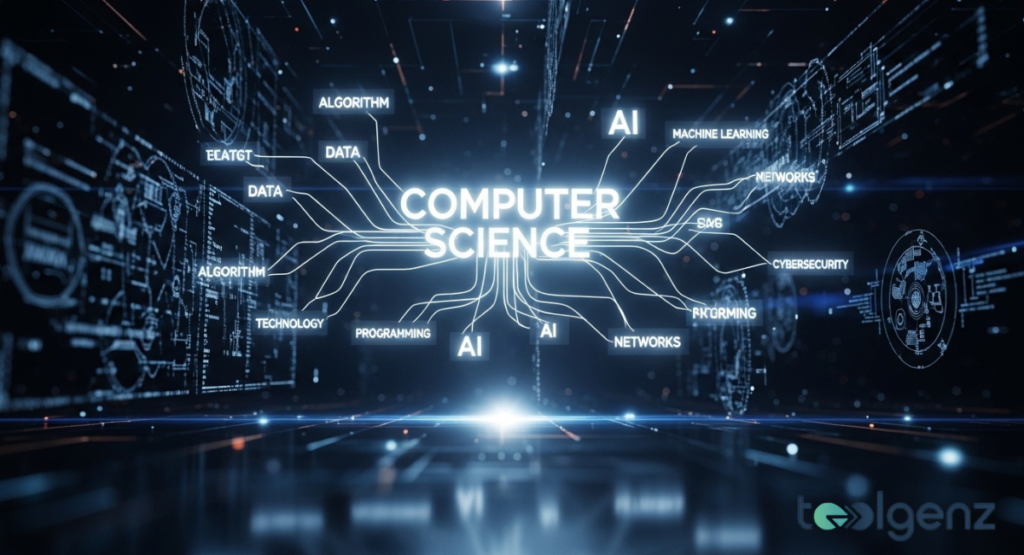
The foundational pillars and expanding horizons of modern computational study.
Originally, the term “computer science” referred to the study of algorithms and computational processes. Over time, its meaning expanded to include software, hardware, networks, and operating systems. Today, it is a multidisciplinary field linking mathematics, engineering, and social sciences. Areas like database theory, computational complexity, and natural language processing exemplify the field’s broad scope.
CS continues to grow into new territories. Emerging fields such as quantum computing, computational biology, and data mining illustrate the expanding potential of computation. Institutions like the University of Cambridge Computer Laboratory and Purdue University have been instrumental in research that bridges theory and practical applications. Across the United States, government labs, startups, and tech companies continue pushing the boundaries of what computers can achieve.
Philosophy of Computer Science
The philosophy of computer science investigates fundamental questions about algorithms, computation, and the ethics of technology. Scholars debate whether CS should be considered a branch of mathematics, engineering, or a pure science. Philosophical frameworks, shaped by thinkers like Edsger W. Dijkstra and Tony Hoare, help define standards for correctness, efficiency, and reliability in software and algorithms.
Ethical concerns have become a core part of the field. Decisions in AI, cybersecurity, and software engineering can directly affect privacy, security, and society. Questions about bias in machine learning or the environmental impact of computational science highlight the role of philosophy in guiding responsible innovation.
Major Fields and Subfields

An expert interacts with transparent data panels representing different branches of engineering.
Computer science encompasses many branches, each contributing to technological advancement. Artificial intelligence and machine learning power voice assistants, recommendation engines, and autonomous vehicles. Software engineering ensures applications remain reliable and maintainable, while human-computer interaction focuses on improving user experiences across devices and platforms.
Other key areas include computer graphics, which brings lifelike visuals to games and simulations; computational geometry; networks and embedded systems; and database theory, which structures enormous amounts of information. Advanced fields like quantum computing and computational complexity push the boundaries of what computers can achieve, reflecting the depth and diversity of computer science.
Field Examples and Applications
- Artificial Intelligence — Neural Networks — Self-driving cars
- Software Engineering — Agile Methodology — App Development
- Human-Computer Interaction — UI/UX Design — Mobile Apps
- Quantum Computing — Qubits — Encryption & Research
Key Discoveries and Innovations
Many innovations have shaped computer science. The development of algorithms and data structures optimized computing efficiency, while programming languages such as Fortran, C, Python, and Java revolutionized software creation. Advances in hardware, including CPUs, GPUs, and digital computers, dramatically increased computational speed and capability.
Women have played crucial roles in these breakthroughs. Ada Lovelace created the first algorithm for a machine, Grace Hopper developed the first compiler, and Katherine Johnson contributed critical calculations for space missions. Modern innovations in neural networks, data mining, and scientific computing further demonstrate how technical skill and creativity drive computer science forward.
Programming Paradigms and Approaches

A visual representation of the abstract concepts used to build modern software.
Programming paradigms shape how software is designed and structured. Structured programming emphasizes modular code for managing complex projects. Object-oriented programming introduced encapsulation, inheritance, and polymorphism, allowing developers to create reusable, maintainable systems.
Functional programming prioritizes pure functions, immutability, and declarative styles, often used in data science and AI. Today, concurrency and distributed computing are essential for cloud services, large-scale simulations, and high-performance systems. These paradigms define how developers approach problem-solving and build efficient applications.
Research and Modern Applications
Research in computer science drives technological innovation. AI studies deep learning, reinforcement learning, and natural language understanding. Cybersecurity research explores advanced encryption, intrusion detection, and ethical hacking. Quantum computing experiments focus on using qubits to tackle complex problems beyond classical computers.
The field has a direct impact on everyday life. Machine learning predicts trends in finance and healthcare, data mining uncovers hidden patterns in large datasets, and computational science enables simulations for climate modeling, physics, and engineering. Research labs like IBM Watson Scientific Computing Laboratory and numerous university labs across the United States continue expanding the boundaries of possibility.
Women’s Contributions to Computer Science

Celebrating the evolution of work and the enduring role of women in technical fields.
Women have made lasting contributions to computer science. Ada Lovelace pioneered early programming, Grace Hopper developed foundational tools for modern software, Radia Perlman invented the spanning-tree protocol for networks, and Shafi Goldwasser advanced cryptography to secure digital communication.
Today, mentorship programs, scholarships, and STEM outreach initiatives encourage more women to enter tech, ensuring that diverse perspectives drive continued innovation. These contributions shape areas from AI and software engineering to cybersecurity, reinforcing the importance of inclusivity in advancing computer science.
Notable Computer Science Buildings and Institutions
Several institutions have become landmarks in the field of computer science. The Gates Computer Science Building, now the Peter Thiel Center, serves as a hub for AI and software research. Leading universities like MIT CSAIL, Stanford CS Department, and Carnegie Mellon School of Computer Science produce influential research and groundbreaking technologies.
These institutions foster collaboration between academia and industry, hosting labs for AI, quantum computing, and computational biology. Hackathons, workshops, and mentorship programs inspire the next generation of computer scientists. These buildings stand not only as research centers but also as symbols of how technology shapes our modern world.
Conclusion

A team explores digital data visualizations on an advanced touchscreen interface.
Computer science is a dynamic field that continues to influence nearly every aspect of modern life. From the pioneering work of Charles Babbage and Ada Lovelace to contemporary breakthroughs in AI, quantum computing, and data mining, the field has grown exponentially. Its subfields, ethical considerations, and interdisciplinary reach make it an essential subject for anyone navigating the digital era. With the contributions of women, iconic institutions, and ongoing research, computer science remains a vibrant field of creativity, discovery, and impact.
FAQs
What does computer science do?
Computer science studies computation, programming, and the design of software and hardware systems to solve problems efficiently.
Which is harder, IT or computer science?
Computer science tends to be more theoretical and math-intensive, while IT focuses on practical technology and system management.
Can I get a remote job with a computer science degree?
Yes, many roles such as software development, data analysis, and AI engineering can be performed remotely.
Are computer science degrees worth it compared to IT?
Yes, a computer science degree offers deeper knowledge of programming, algorithms, and innovation, often leading to higher-paying tech careers.
Is computer science very hard?
It can be challenging due to math, algorithms, and problem-solving, but dedication and practice make it manageable.