

What Is World Quantum Day?
World Quantum Day is a global science initiative that highlights how quantum physics shapes our understanding of the universe at its smallest scales. It brings together educators, researchers, and students to explore scientific ideas in a more approachable way. Rather than being limited to textbooks or laboratories, this event encourages open discussions about how quantum science influences modern life.
Across schools and research centers, activities are designed to make abstract physics concepts easier to grasp. From demonstrations to interactive talks, the goal is to spark curiosity and encourage learning in a field that often feels complex.
At its core, Quantum Day reflects a shared effort to make science more accessible to everyone, regardless of background or expertise. It is not just about theory but about connecting ideas to real-world understanding and innovation.
World Quantum Day Explained: Meaning and Importance in Modern Science
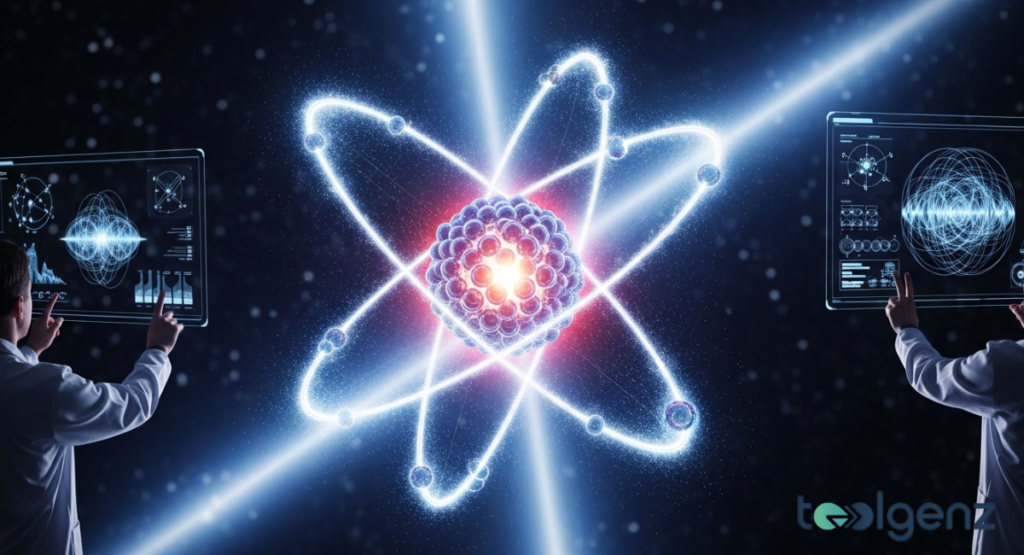
Quantum principles power innovations from sensors to next-gen encryption.
World Quantum Day is more than just a scientific observance. It is a global movement that helps simplify quantum physics for broader audiences. By translating complex scientific principles into understandable ideas, it bridges the gap between researchers and the public.
In many ways, World Quantum Day acts as a reminder that modern technology is deeply rooted in quantum science. Devices like smartphones, navigation systems, and imaging technologies all rely on quantum-based principles to function properly.
Quantum Day also plays an important educational role. Schools and universities use it as an opportunity to inspire students to explore careers in science, technology, and research. This helps build the next generation of innovators who will continue advancing scientific discovery.
World Quantum Day (April 14) – Why It Is Celebrated Globally
World Quantum Day is observed every year on April 14 to bring attention to the importance of quantum science worldwide. The date serves as a symbolic moment for scientists and educators to share knowledge and engage the public.
In classrooms and universities, discussions and workshops help break down complex topics into understandable lessons. These activities allow learners to see how science is not just theoretical but deeply connected to everyday life.
In recent years, Quantum Day has grown into a global collaboration, with participants from many countries contributing ideas and research discussions. It encourages curiosity and supports a more informed public understanding of advanced science.
History of World Quantum Day and Its Scientific Origins

Honoring the pioneers whose theories became the technology we build on today.
The origins of World Quantum Day trace back to scientists who wanted to make quantum theory more accessible and engaging for non-experts. Their goal was to create a shared platform where complex scientific ideas could be communicated in simpler ways.
The early foundations of quantum theory were shaped by major physicists who debated the nature of reality at the atomic level. Their work laid the groundwork for modern quantum science and continues to influence research today.
Over time, these discussions evolved into structured educational efforts, eventually leading to the creation of Quantum Day as a global awareness initiative.
World Quantum Day 2026 – Date, Theme, and Global Focus
World Quantum Day 2026 continues to build on previous years by focusing on innovation and advanced scientific applications. The event highlights how quantum research is increasingly shaping industries such as computing, communication, and data security.
World Quantum Day 2026 also emphasizes collaboration between academic institutions and technology companies. This partnership helps accelerate research and encourages the practical use of quantum technologies in real-world systems.
Each year, the event evolves to reflect new scientific developments and challenges, making it an important marker of progress in modern physics.
How World Quantum Day Promotes Quantum Computing and Education

Interactive classrooms make complex concepts in superposition and algorithms accessible.
World Quantum Day plays a key role in increasing awareness of quantum computing and its future potential. Educational programs and demonstrations help students understand how quantum systems operate differently from traditional computing systems.
Workshops often include simulations and visual models that show how particles behave under quantum conditions. These hands-on experiences make abstract ideas more understandable and engaging.
By connecting theory with practice, World Quantum Day encourages more students to explore careers in science and technology fields. This helps build long-term interest in advanced research areas.
Highlights and Key Takeaways from World Quantum Day Events
Events held during World Quantum Day often include lectures, demonstrations, and interactive sessions led by scientists and educators. These activities are designed to make complex topics easier to understand.
One of the key lessons is that quantum science is becoming increasingly relevant to everyday technology. From secure communication systems to advanced medical imaging, its applications continue to grow.
World Quantum Day also helps people realize that science is not distant or abstract. Instead, it is actively shaping the world we live in today.
Upcoming World Quantum Day Events and Global Activities

From conferences to light shows, global communities unite around science and discovery.
Upcoming celebrations of World Quantum Day are expected to feature even more global participation. Universities, research labs, and tech companies are planning events that focus on education and collaboration.
These gatherings will include discussions on emerging technologies and future scientific challenges. Participants will have opportunities to learn directly from experts in the field.
As interest grows, World Quantum Day continues to build a strong international community centered around scientific learning and discovery.
World Quantum Day 2025 vs 2026 – What Has Changed?
Over the years, World Quantum Day has evolved significantly in its focus and reach. Earlier editions focused mainly on basic awareness and introducing key concepts to the public.
In contrast, more recent events emphasize real-world applications and advanced technologies. This shift reflects the rapid progress being made in quantum research and development.
The growing involvement of industry leaders shows how quickly quantum science is moving from theory into practical use across multiple sectors.
Final Thoughts on World Quantum Day
Our shared curiosity will define how this science shapes the coming century.
World Quantum Day is more than a scientific observance; it is a global effort to connect people with the future of science. It encourages learning, curiosity, and collaboration across borders.
As research continues to advance, the importance of quantum science will only increase. The growing interest in quantum technologies shows how deeply this field is shaping modern innovation.
World Quantum Day reminds us that scientific discovery is an ongoing journey, one that continues to expand our understanding of the universe.
FAQS
Why is World Quantum Day celebrated?
It is celebrated to raise awareness about quantum science and encourage global interest in physics and modern technology.
Why is World Quantum Day on April 14th?
World Quantum Day is observed on April 14th because the date symbolically relates to key scientific constants used in quantum physics research.
What is World Quantum Day 2026?
World Quantum Day 2026 is a global science event focused on innovation, education, and the growing role of quantum technology in modern industries.
What does the quantum world mean?
The quantum world refers to the microscopic level of atoms and particles where the rules of quantum mechanics govern behavior.
What does the Bible say about quantum physics?
The Bible does not address quantum physics directly, as it belongs to a different domain of study focused on science rather than theology.