
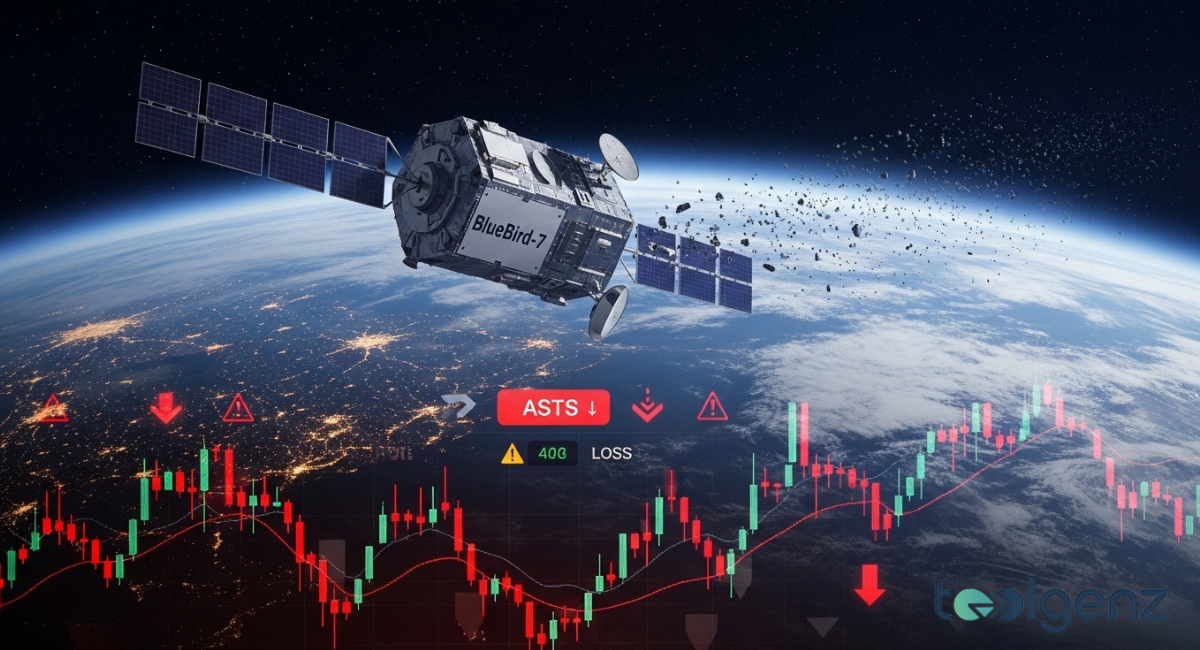
The recent volatility in ASTS stock has drawn significant attention after the unexpected BlueBird-7 orbit failure disrupted investor expectations. ASTS reacted sharply as traders reassessed the risks tied to early-stage satellite deployment and the challenges of building a global space-based network.
What makes this situation particularly important is how tightly ASTS is linked to execution success. Even a single failed launch can influence sentiment, especially in a company still scaling its infrastructure. While the long-term vision remains intact, short-term uncertainty has clearly increased.
For investors following the company , this moment feels like a turning point where optimism and caution are colliding.
BlueBird-7 Launch Failure and Missed Orbit Explained
The BlueBird-7 mission did not achieve its intended orbit, leading to the loss of the satellite before it could join the operational fleet. For ASTS, this represents a technical setback rather than a strategic one, but markets rarely separate the two in the short term.
Space missions involve complex systems where even small deviations can result in complete mission failure. In this case, the company faced the reality of how fragile early-stage satellite deployment can be, especially when scaling a low Earth orbit network.
Despite this setback, the broader mission continues, and the company remains focused on maintaining momentum in its satellite rollout schedule.
Impact on AST SpaceMobile’s Network Buildout
The failed deployment has slowed the planned expansion of the ASTS satellite constellation. Each satellite plays a critical role in building continuous global coverage, and losing one affects overall network density.
For ASTS, timing is everything. Delays in deployment can temporarily impact coverage goals, even if production continues smoothly on the ground. The company’s pipeline is still active, but the pace of network expansion has clearly been affected.
Investors watching the company are now closely monitoring whether future launches can return consistency to the buildout schedule.
Direct-to-Phone Strategy: Why the Long-Term Vision Remains Intact

One launch setback doesn’t change the global coverage thesis.
Despite the setback, the core vision behind ASTS remains unchanged. The company continues to pursue direct-to-phone satellite connectivity, aiming to connect standard smartphones without requiring special hardware.
This approach is one of the most ambitious in the satellite communications sector, and ASTS has positioned itself as a key player in this emerging space. The Block-2 satellite platform is central to this strategy, designed to support large-scale broadband delivery from orbit.
Partnerships with major telecom operators also strengthen confidence in the long-term direction of the company, even if execution risks remain part of the journey.
AST SpaceMobile Business Update and Financial Position
Financially, ASTS continues to operate in a high-investment phase typical of space infrastructure companies. Heavy spending on research, manufacturing, and launches is expected at this stage of development.
For ASTS, the priority remains building out its satellite constellation rather than focusing on short-term profitability. This means cash burn is elevated, but aligned with long-term scaling goals.
Leadership has repeatedly emphasized patience, and the company continues to position itself as a long-duration infrastructure play in the telecom space.
Analyst Ratings and Institutional Investor Sentiment

Downgrades followed the anomaly, but long-term price targets remain mixed.
Analysts have taken a more cautious stance following the recent satellite failure. Some have downgraded outlooks for ASTS, citing execution risks and the unpredictability of space deployments.
Institutional investors typically respond quickly to technical setbacks, and ASTS is no exception. However, not all sentiment has turned negative. Some analysts still highlight the potential of satellite-based broadband markets.
For the company ,divide between cautious and optimistic perspectives reflects the broader uncertainty in early-stage space infrastructure investing.
Retail Trader Sentiment and Market Reaction
Retail investors have reacted differently compared to institutions. Despite the sharp drop, sentiment around ASTS among retail traders has remained relatively optimistic.
Platforms tracking investor discussions show that many still believe in the long-term potential of ASTS, especially in the direct-to-phone connectivity space. This creates a noticeable contrast between short-term caution from institutions and long-term optimism from retail participants.
Such divergence often leads to increased volatility, which has been visible in recent the company trading activity.
Recent News and Key Developments Around ASTS

Coverage focuses on launch cadence, spectrum deals, and MNO partnerships.
Beyond the BlueBird-7 issue, ASTS continues to make progress in other areas of its roadmap. Upcoming launches tied to newer rocket systems are still in preparation, supporting future expansion plans.
Strategic partnerships with telecom operators also remain active, reinforcing the company’s long-term connectivity vision. For the company , these collaborations are essential to scaling adoption once the satellite network reaches operational maturity.
Even with setbacks, the company continues to move forward with its broader deployment strategy.
Broader Market Context: Crypto Volatility and Risk Appetite
Market conditions also play a role in shaping sentiment around ASTS. Periods of high risk appetite in broader markets often lead investors toward speculative sectors, including space technology.
When risk-on behavior increases, stocks like the company tend to attract more attention due to their high-growth narratives. However, this also means they are more sensitive to negative news, such as launch failures or delays.
In this environment, the company becomes closely tied not only to company execution but also to broader investor sentiment cycles.
Risks, Challenges, and What Investors Should Watch Next
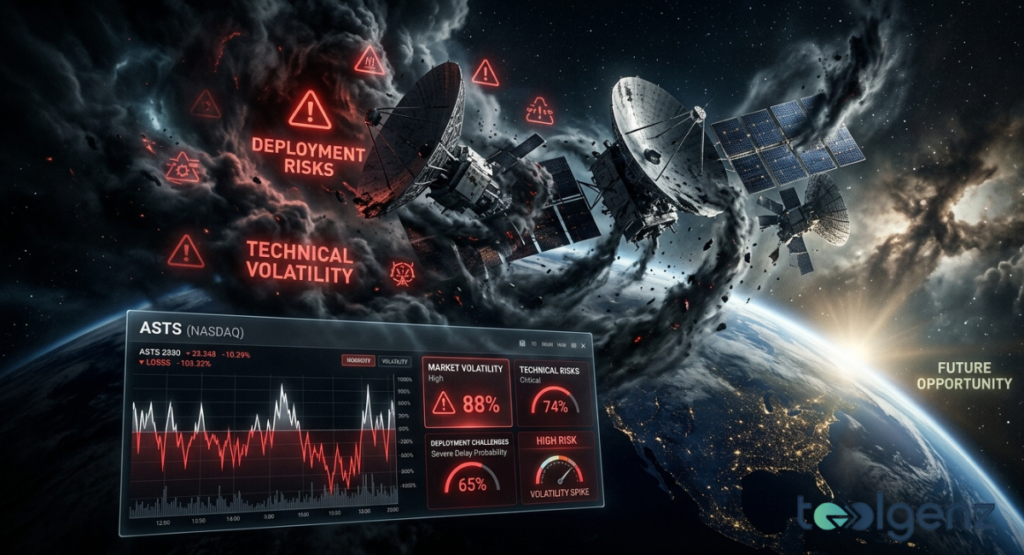
Execution, funding runway, launch reliability, and regulatory approvals are key.
Space infrastructure is inherently risky, and ASTS operates in one of the most technically demanding industries. Launch failures, technical delays, and regulatory hurdles are all part of the landscape.
For the company , consistency in execution will be the most important factor going forward. Each successful launch builds credibility, while setbacks can temporarily weigh on investor confidence.
Regulatory approvals and international coordination also remain key challenges as the company works toward global coverage.
Should You Invest in AST SpaceMobile Right Now?
The investment case for ASTS ultimately depends on risk tolerance. Supporters see a transformative opportunity in satellite-based mobile connectivity, while skeptics focus on execution risk and capital intensity.
For the company, upside potential is significant if the company successfully scales its network and maintains launch reliability. However, volatility is likely to remain a defining feature of the stock.
This makes the company classic high-risk, high-reward scenario where timing and patience play a critical role.
FAQs
What does ASTS company do?
ASTS builds a satellite network designed to deliver mobile broadband directly to standard smartphones from space.
Is ASTS a good stock to buy?
ASTS is considered a high-risk, high-reward investment, with strong long-term potential but significant execution uncertainty.
How is ASTS different from Starlink?
Unlike Starlink, ASTS focuses on direct smartphone connectivity without requiring satellite dishes or additional hardware.
Why is ASTS stock volatile?
ASTS is highly sensitive to launch outcomes, technical milestones, and investor sentiment shifts in the space sector.
What is the long-term outlook for ASTS?
The long-term outlook for ASTS depends on successful satellite deployment and the adoption of its direct-to-phone technology.