
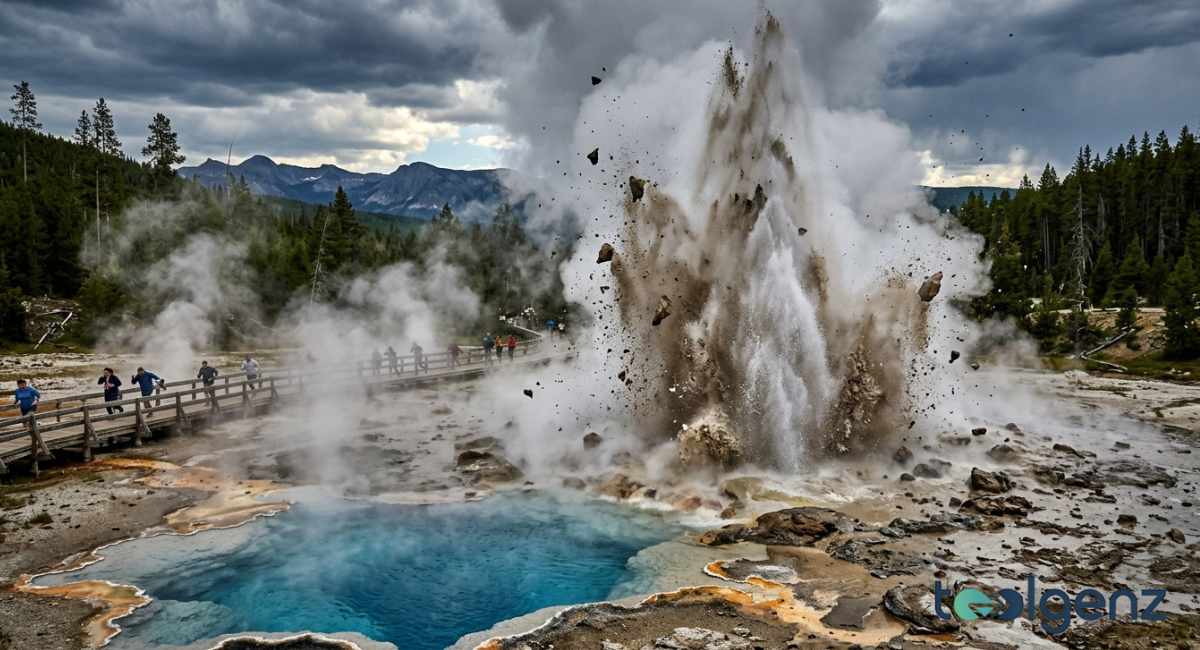
What Happened at Biscuit Basin in Yellowstone?
A hydrothermal explosion is a sudden release of steam, boiling water, mud, and rock that occurs when pressure builds beneath the Earth’s surface in an active geothermal area. Unlike a volcanic eruption fueled by rising magma, this type of event happens when superheated groundwater rapidly turns into steam, creating enough force to fracture the surrounding rock. Yellowstone National Park, home to one of the world’s largest geothermal systems, is especially prone to these natural events because of the intense heat generated beneath the Yellowstone Caldera.
The recent hydrothermal explosion at Biscuit Basin attracted widespread attention from scientists, visitors, and geology enthusiasts alike. Although dramatic, the event was a reminder that Yellowstone’s thermal landscape is constantly changing. Geysers, hot springs, mud pots, and steam vents are all connected to an underground system that remains active every day, making the park one of the most dynamic geological environments on Earth.
Researchers at the Yellowstone Volcano Observatory (YVO) closely monitor these changes to better understand how the park’s geothermal system behaves over time. Every significant event provides valuable information about underground pressure, groundwater movement, and the natural processes that continue shaping Yellowstone’s landscape.
How the Hydrothermal Explosion Reshaped Biscuit Basin
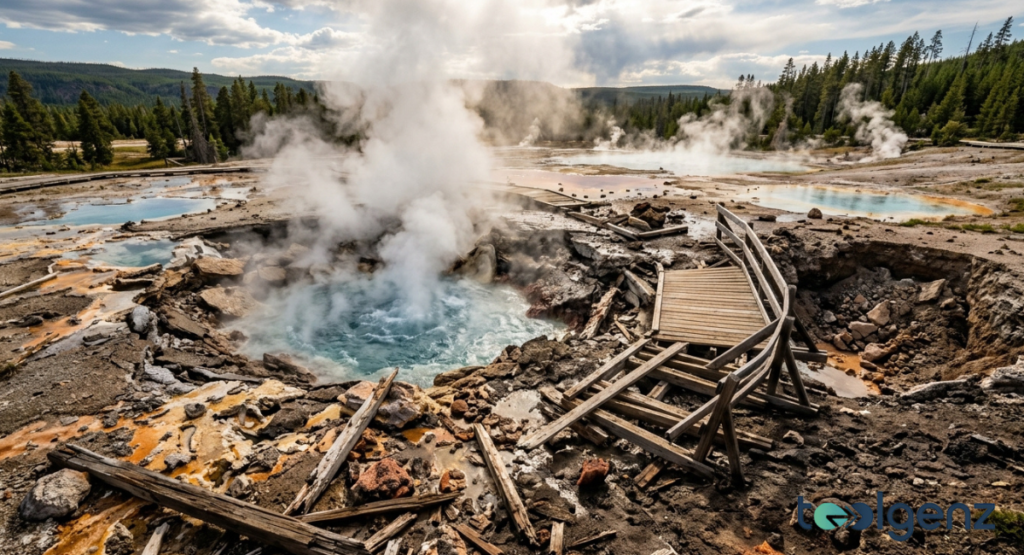
The July 2024 event destroyed walkways and exposed a new thermal feature.
The recent hydrothermal explosion dramatically altered parts of Biscuit Basin within moments. Powerful underground steam broke through layers of rock, leaving behind newly formed vents, fresh surface cracks, and expanded pools of boiling water. Areas that had appeared stable only hours earlier suddenly looked very different, illustrating how quickly Yellowstone’s geothermal features can evolve.
Scientists surveying the site observed that the blast created new pathways for hot water and steam to reach the surface. As pressure escaped, nearby thermal features also changed, with some pools experiencing shifts in water levels while others displayed increased steaming activity. These changes are common after geothermal disturbances and often continue for weeks or even months.
Although the surrounding landscape was reshaped, events like this are part of Yellowstone’s long geological history. Biscuit Basin has experienced multiple changes over the years, and researchers expect its appearance to continue evolving as underground conditions shift naturally.
What Caused the Hydrothermal Explosion?
Understanding what caused the hydrothermal explosion requires a closer look at how Yellowstone’s geothermal system works. Beneath the surface, groundwater circulates through fractures in hot rock that has been heated by magma located deep below the park. As the water absorbs heat, it can reach temperatures well above the normal boiling point while remaining trapped under pressure.
Eventually, that pressure can become too great for the surrounding rock to contain. When a fracture suddenly opens, the trapped water rapidly flashes into steam, expanding with tremendous force. The result is a hydrothermal explosion that ejects hot water, steam, mud, and rock fragments into the air.
Scientists believe this process occurred beneath Black Diamond Pool, where underground pressure likely increased until the rock finally gave way. Unlike volcanic eruptions, which involve molten rock reaching the surface, this event remained confined to shallow groundwater systems. That distinction is important because hydrothermal events are driven primarily by pressure and heated water rather than fresh magma moving upward.
Experts from the U.S. Geological Survey continue studying the event to better understand what triggered the sudden release of energy and whether similar conditions may develop elsewhere within the park.
How Powerful Was the Explosion?
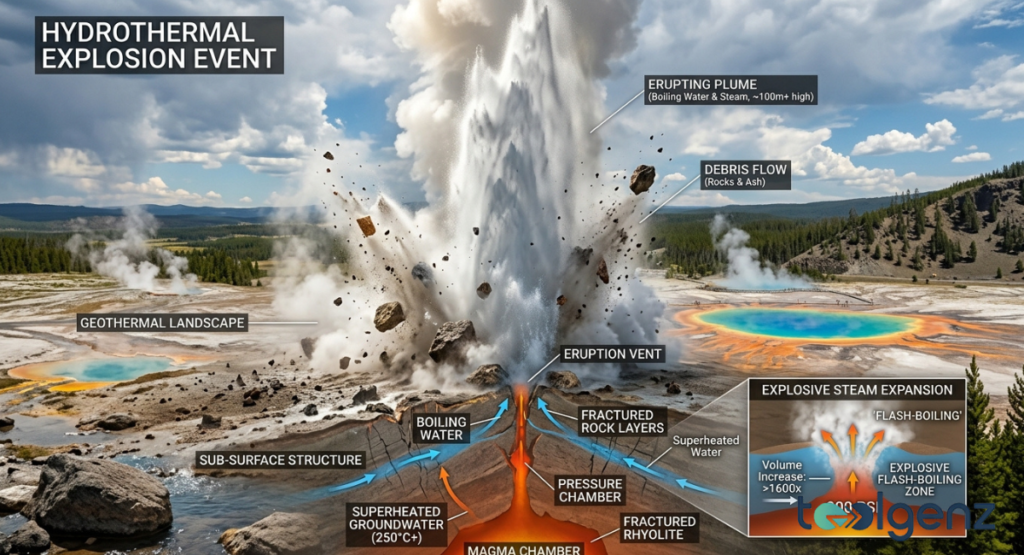
When confined water instantly turns to steam, volume expands over 1600x with violent force.
Although not among the largest geothermal events in Yellowstone’s history, the recent hydrothermal explosion was still powerful enough to significantly change the surrounding area. Steam, hot water, and rock fragments were blasted outward, leaving fresh deposits across nearby ground surfaces and altering existing thermal features.
Field investigations found scattered rock debris surrounding the blast site, while newly created fractures allowed additional steam and heated water to escape. Observers also reported a large steam plume rising above Biscuit Basin immediately after the event, making it visible from surrounding areas before gradually dissipating.
Fortunately, damage to visitor infrastructure remained limited. Existing safety measures and restricted access around unstable thermal areas helped reduce potential risks. Even so, the event demonstrated that Yellowstone’s geothermal landscape can change with little warning, reinforcing the importance of ongoing monitoring.
Compared with the well-known 2024 Black Diamond Pool incident, this hydrothermal explosion caused less widespread disruption but still provided researchers with valuable scientific data. Every event improves scientists’ understanding of how pressure builds beneath active geothermal regions and how these systems evolve over time.
Why Scientists Are Closely Monitoring Biscuit Basin
Following the recent hydrothermal explosion, scientists expanded monitoring efforts around Biscuit Basin to collect detailed information about the area’s changing geothermal activity. Temporary instruments were installed to measure ground vibrations, underground pressure changes, steam emissions, and acoustic signals that may reveal ongoing movement beneath the surface.
Researchers from the Yellowstone Volcano Observatory work alongside geologists from the U.S. Geological Survey to analyze this information. By comparing new measurements with historical records, they hope to identify patterns that could improve future hazard assessments.
Advanced seismic equipment records even the smallest underground movements, while specialized monitoring stations measure temperature variations and gas emissions around active thermal features. Together, these technologies provide a clearer picture of how Yellowstone’s geothermal system responds before and after significant events.
Scientists such as Michael Poland and Jamie Farrell have emphasized that hydrothermal systems are naturally unpredictable. While no monitoring system can forecast every event with complete accuracy, continued research improves scientific understanding and helps park officials make informed safety decisions.
Every hydrothermal explosion contributes another piece to the larger puzzle of Yellowstone’s underground activity. The more researchers learn about these events, the better they can understand the complex interactions between heat, groundwater, pressure, and rock beneath the park.
Impact on Yellowstone National Park Visitors
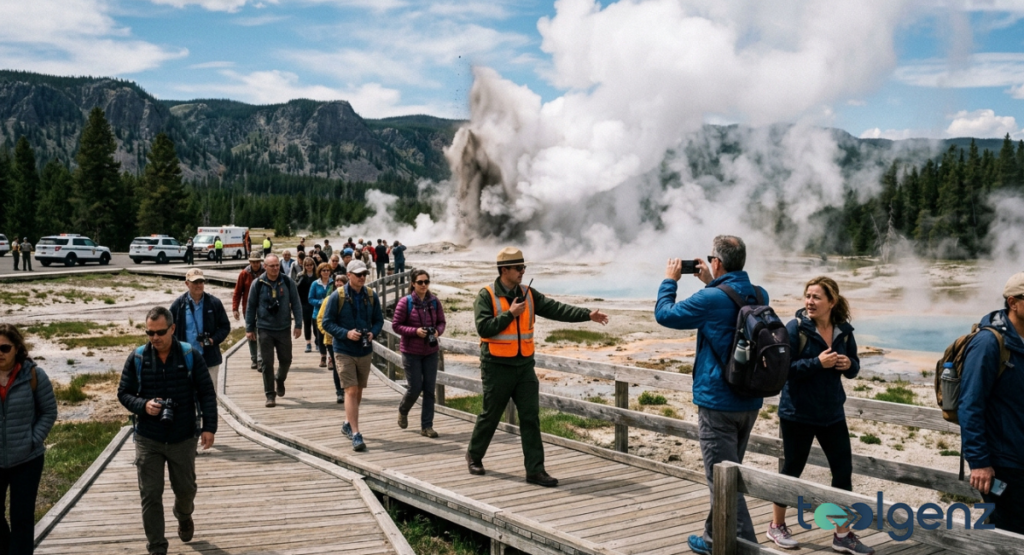
Visitors experienced firsthand how quickly geothermal activity can turn dangerous.
The recent hydrothermal explosion prompted park officials to extend temporary closures around Biscuit Basin while scientists assessed the area for ongoing hazards. Visitor safety remains the highest priority whenever significant geothermal changes occur, especially in locations where unstable ground or newly formed steam vents may present additional risks.
Officials advised visitors to remain on designated boardwalks and obey all posted closures, as thermal areas can become dangerous without visible warning signs. Ground that appears solid may actually conceal extremely hot water just beneath a thin surface layer, making off-trail travel especially hazardous.
Following the event, researchers also monitored nearby waterways, including sections of the Firehole River, for changes in water temperature and mineral content caused by thermal runoff. Although these changes are usually temporary, they help scientists better understand how geothermal disturbances affect the surrounding environment.
While closures may inconvenience visitors, they play an essential role in protecting both people and the fragile geothermal features that make Yellowstone unique. As monitoring continues, officials will evaluate conditions carefully before reopening affected areas to the public.
Previous Hydrothermal Explosions at Biscuit Basin
Biscuit Basin has experienced geothermal activity for thousands of years, making it one of the most fascinating thermal areas in Yellowstone National Park. While many visitors associate the basin with colorful hot springs and active geysers, its underground plumbing system is constantly changing. Over time, pressure builds, water shifts through new underground pathways, and thermal features naturally evolve.
The 2024 Black Diamond Pool event remains one of the most closely studied examples of a hydrothermal explosion in recent years. It demonstrated how quickly a familiar geothermal feature could change when underground pressure is suddenly released. The latest event in 2026 has given scientists another opportunity to compare how similar processes unfold under different geological conditions.
Although the two incidents differed in size and intensity, both underline the dynamic nature of Yellowstone’s geothermal landscape. Researchers found that new vents formed, existing pools changed shape, and sections of the surrounding ground settled after each event. These observations help scientists understand how pressure accumulates beneath thermal basins and why certain areas are more susceptible to future activity.
Historical records also show that Yellowstone has experienced numerous hydrothermal explosion events over thousands of years. Many of the park’s craters and unusual geothermal formations are believed to have originated from similar steam-driven blasts. Each new event expands scientific knowledge and improves long-term monitoring of one of Earth’s most active geothermal systems.
What This Means for the Future of Yellowstone’s Geothermal Landscape
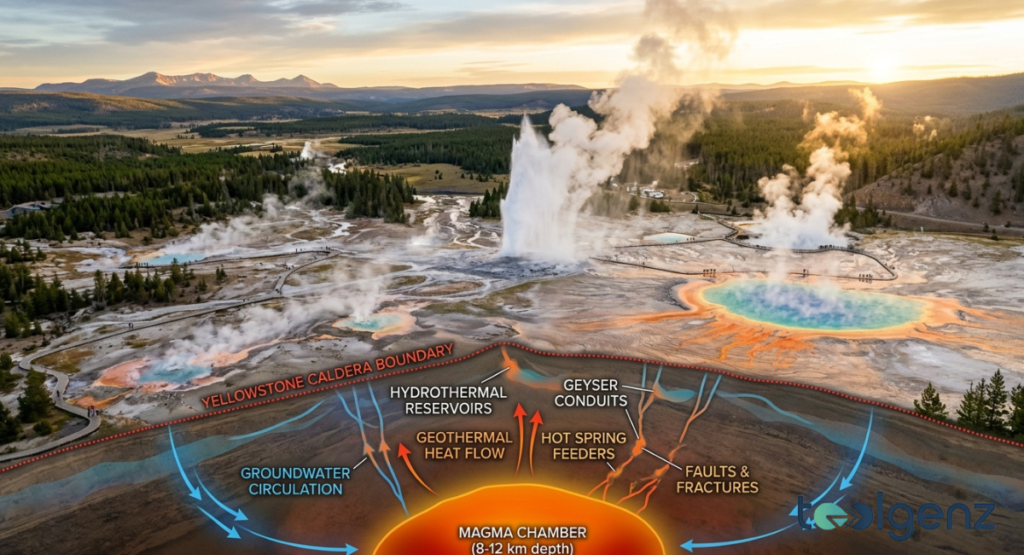
Park staff respond to active features while scientists study long-term changes.
The recent hydrothermal explosion serves as another reminder that Yellowstone is a living geological system rather than a static landscape. Rivers may gradually change course, geysers can become more active or suddenly go dormant, and new thermal features may appear where none previously existed. These natural transformations are part of the park’s ongoing evolution.
Scientists do not view this event as evidence that a volcanic eruption is imminent. Instead, it reflects the normal behavior of a highly active geothermal environment where heat, groundwater, and underground pressure continuously interact. While future geothermal events are possible, they are expected to remain localized and independent of volcanic activity.
Continued scientific research will help improve understanding of how underground pressure changes over time and what conditions are most likely to trigger another hydrothermal explosion. Every new dataset strengthens hazard assessments, allowing park managers to make better-informed decisions about visitor access and safety.
The event also highlights the importance of preserving Yellowstone’s unique geothermal landscape. These natural processes provide scientists with rare opportunities to study Earth’s internal energy while giving visitors a firsthand look at one of the planet’s most remarkable geological environments.
Conclusion
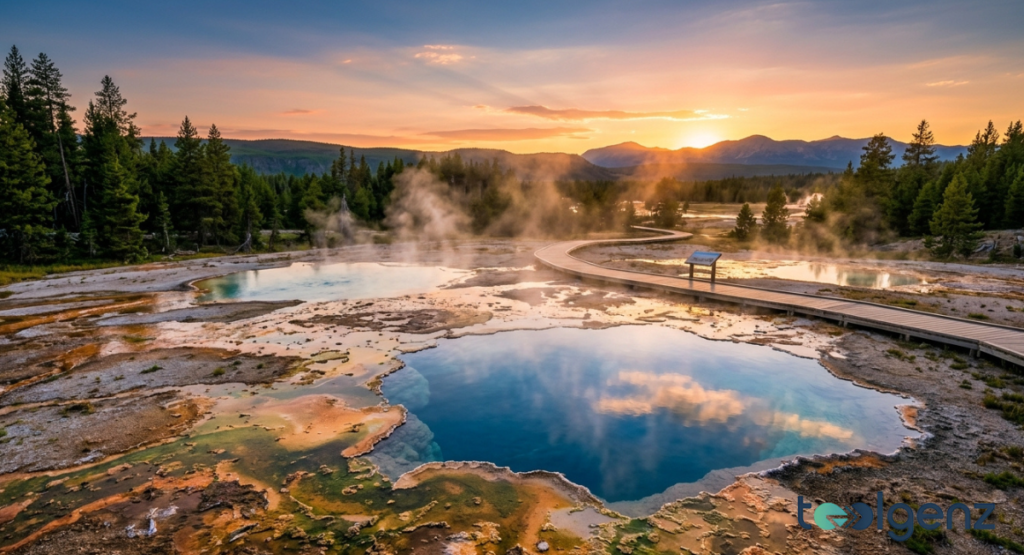
Yellowstone’s geysers and hot springs are surface signs of a vast volcanic system.
The recent hydrothermal explosion at Biscuit Basin illustrates both the beauty and unpredictability of Yellowstone National Park. Within moments, underground pressure transformed a familiar landscape, creating new geothermal features and reminding everyone that the park remains one of the world’s most active geothermal regions.
Although dramatic, this hydrothermal explosion was a natural geological event rather than a sign of an impending volcanic eruption. Scientists continue collecting data to understand how these steam-driven explosions develop, how they reshape the landscape, and how future hazards can be better assessed.
For visitors, the event reinforces the importance of respecting closures, staying on designated boardwalks, and following park safety guidance. Yellowstone’s geothermal features are extraordinary to witness, but they can also change without warning.
For researchers, each hydrothermal explosion represents an opportunity to deepen scientific understanding of the complex interactions between groundwater, underground heat, pressure, and rock. Those discoveries not only improve public safety but also contribute to broader geological research around the world.
As monitoring continues, scientists will keep studying Yellowstone’s evolving geothermal system, knowing that another hydrothermal explosion could occur someday as part of the park’s natural cycle. Rather than signaling catastrophe, these events remind us that Yellowstone is a constantly changing landscape shaped by powerful forces hidden beneath the Earth’s surface.
FAQs
Will Yellowstone erupt in 2026?
There is no scientific evidence that Yellowstone will erupt in 2026.
Would the United States survive if Yellowstone erupted?
Yes. Even though a massive Yellowstone eruption would have significant regional and global consequences, it would not destroy the entire United States.
How far would the Yellowstone explosion reach?
The impact depends entirely on the type of event. A localized hydrothermal explosion generally affects only the immediate surrounding area.
Is the Yellowstone supervolcano due for an eruption?
No. Scientists emphasize that volcanoes do not operate on predictable schedules, so Yellowstone is not considered “overdue.”
What supervolcano is waking up?
At present, scientists have not confirmed that any supervolcano is “waking up.” Geological observatories around the world continuously monitor active volcanic systems, including Yellowstone, for unusual changes.