
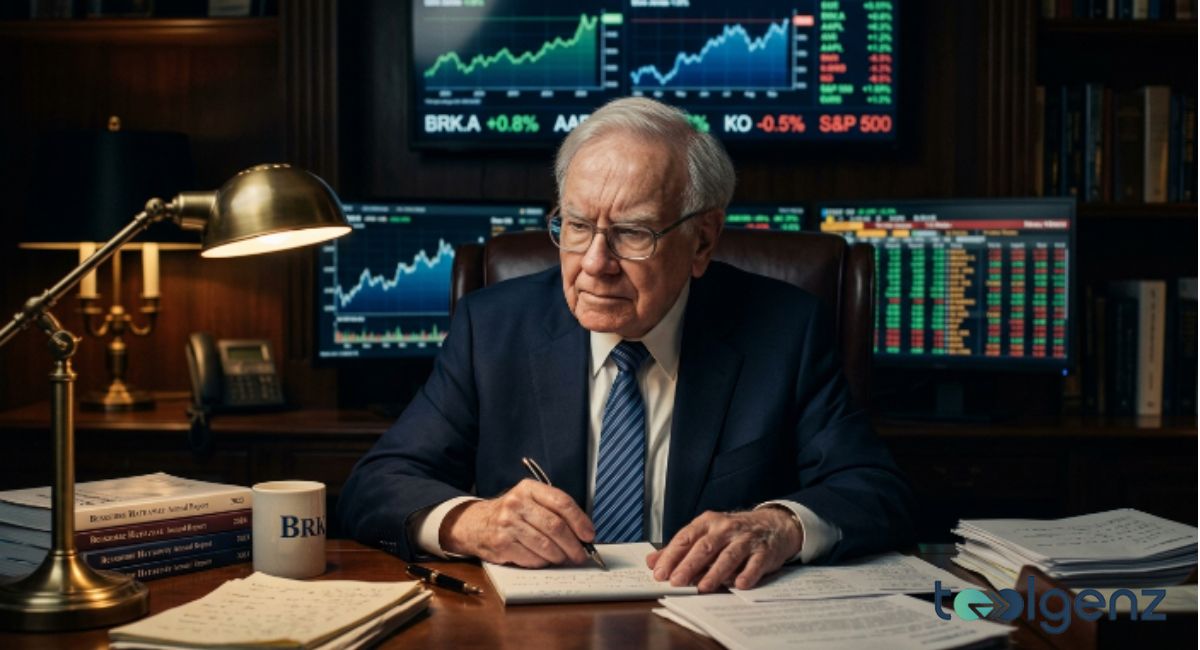
The latest comments from Warren Buffett have once again sparked conversations among investors across the United States. While financial markets continue to post impressive gains in many sectors, Buffett’s cautious outlook reminds people that rising prices don’t always reflect a healthy market. His perspective has encouraged both experienced and new investors to take a closer look at today’s conditions before making important financial decisions.
One of the biggest concerns is the growing gap between market enthusiasm and underlying business fundamentals. Stock prices have climbed rapidly, particularly in technology and artificial intelligence companies, leading many analysts to question whether current valuations are sustainable. Although optimism has fueled recent gains, history shows that periods of excessive confidence can sometimes be followed by sharp market corrections.
Another factor adding to the uncertainty is the increasing level of market volatility. Investor sentiment can shift quickly as economic data, interest rate decisions, and corporate earnings continue to influence prices. Rather than assuming the market will continue moving upward indefinitely, Buffett’s message encourages investors to remain patient, stay disciplined, and focus on long-term financial goals instead of short-term excitement.
Warren Buffett Just Sent Investors an 11-Word Warning About the Stock Market
One of the reasons Warren Buffett has earned worldwide respect is his ability to explain complex investing principles with remarkable simplicity. His recent warning, stating that the market is beginning to resemble a casino, has captured widespread attention because it reflects a growing concern about investor behavior rather than business performance.
When Buffett compares today’s market to gambling, he is referring to speculation driven by emotion instead of careful analysis. Many traders are chasing rapid gains without fully understanding the companies they invest in. Instead of evaluating financial strength, competitive advantages, or long-term earnings potential, they often rely on market trends, online discussions, and social media hype.
This type of investing can create an unstable environment where prices rise faster than the actual value of businesses. Once enthusiasm begins to fade, even minor negative news can trigger significant declines. Throughout his career, Warren Buffett has consistently encouraged investors to avoid emotional decision-making and instead focus on businesses with strong fundamentals and lasting value.
Buffett Warns Stock Market Gambling Mood Is at Record High
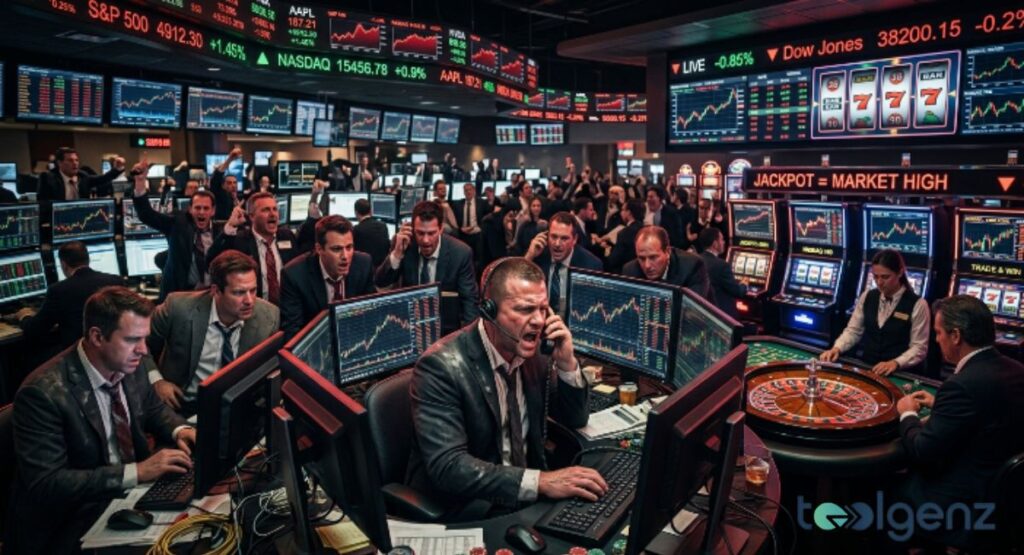
Speculation and hype are driving decisions, not company value.
Today’s investment landscape is very different from what it was just a decade ago. Mobile trading platforms, instant market news, and viral financial content have made investing more accessible than ever before. While these developments have many benefits, they have also encouraged a culture of frequent trading and speculation.
Many investors now buy stocks based on trending topics rather than careful research. Artificial intelligence companies, for example, have attracted enormous attention, leading some experts to wonder whether parts of the market are becoming overheated. Rapid price increases often generate even more excitement, attracting additional buyers who fear missing future gains.
According to Warren Buffett, this cycle can become dangerous when investors stop paying attention to the actual value of the companies they own. Markets become increasingly fragile when prices are supported more by optimism than by financial performance. Experienced investors understand that periods of extreme enthusiasm often require greater caution rather than greater risk-taking.
Why Investors May Be Taking on Unnecessary Risk
Fear of missing out continues to influence investment decisions across today’s market. Instead of following a carefully planned strategy, many people rush into stocks simply because they see others making money. While this approach can occasionally produce short-term gains, it often exposes investors to unnecessary risk.
A common mistake is placing too much money into a small number of popular stocks without considering diversification. Concentrated portfolios can perform well while markets are rising, but they also become far more vulnerable during periods of increased volatility. Even strong companies can experience significant price declines when investor sentiment changes.
Warren Buffett has repeatedly emphasized the importance of understanding what you own before investing. Careful research, patience, and diversification remain some of the most effective ways to manage uncertainty. Investors who stay focused on long-term objectives are generally better prepared to handle temporary market swings without making emotional decisions.
Historical Evidence: When Buffett’s Market Warnings Proved Right

Past market bubbles and crashes offer lessons for navigating today’s volatility.
History offers several examples where Warren Buffett expressed caution long before major market downturns occurred. During the late 1990s, many investors believed technology stocks could only continue rising. Buffett remained skeptical of businesses with unrealistic valuations, even when that opinion was unpopular.
When the dot-com bubble eventually burst, countless investors suffered heavy losses after buying companies with little or no sustainable earnings. Years later, before the global financial crisis of 2008, Buffett again highlighted the importance of understanding risk and avoiding excessive speculation.
Although every market cycle is unique, there are noticeable similarities between previous bubbles and some of today’s investment trends. Rapid price appreciation, excessive optimism, and growing speculation have historically appeared before significant corrections. These historical patterns don’t guarantee another downturn, but they remind investors why discipline remains essential.
Current Stock Market Conditions and Valuation Concerns
Many financial analysts believe today’s market is trading at historically elevated valuation levels. One of the most widely discussed indicators is the Buffett Indicator, which compares the total value of the stock market with a country’s gross domestic product. According to Warren Buffett, while no single indicator can predict future performance, unusually high valuations deserve careful attention.
Other commonly followed metrics also suggest that investors should proceed thoughtfully. Price-to-earnings ratios remain above long-term averages in several sectors, while expectations for future corporate growth continue to stay exceptionally high. If those expectations fail to materialize, stock prices could come under pressure.
| Metric | Healthy Range | Current Trend |
|---|---|---|
| GDP Ratio | 70%–100% | Above 150% |
| P/E Ratio | 15–20 | Above 25 |
| Growth Expectation | Stable | Overly optimistic |
These figures do not necessarily mean that a market correction is imminent. However, they do indicate that investors should carefully evaluate risk before making new investment decisions. Rather than chasing momentum, Warren Buffett has long encouraged investors to focus on quality businesses with durable competitive advantages and the ability to generate consistent value over many years.
Should You Buy Stock in S&P 500 Index Right Now?

Individual research beats following the crowd when evaluating index funds.
For many investors, the S&P 500 remains one of the simplest and most reliable ways to build long-term wealth. The index represents hundreds of America’s largest companies, providing broad diversification that individual stock picking often cannot match. This is one reason Warren Buffett has consistently recommended low-cost index funds for most investors.
That doesn’t mean timing is irrelevant. Entering the market during periods of high valuations may lead to short-term fluctuations, especially if economic conditions become less favorable. Investors with a long investment horizon, however, are generally better positioned to ride out temporary declines and benefit from long-term market growth.
Instead of trying to predict every market move, investors should focus on building a consistent investment plan. Regular contributions, diversification, and patience have historically produced stronger results than attempting to buy and sell based on daily headlines.
What Investors Can Do Right Now to Protect Their Portfolio
Periods of uncertainty often remind investors that protecting capital is just as important as growing it. Rather than chasing the latest market trend, it can be more beneficial to review your portfolio and ensure it reflects your long-term goals.
Diversification remains one of the most effective risk-management strategies. Spreading investments across different industries and asset classes can reduce the impact of volatility if one sector experiences a downturn. Maintaining a reasonable cash reserve can also provide flexibility when opportunities arise during market declines.
Warren Buffett has always encouraged investors to buy businesses they understand and to avoid making decisions based purely on emotion. Companies with strong balance sheets, reliable earnings, and durable competitive advantages often prove more resilient during challenging economic conditions.
Long-Term vs Short-Term Investing: Buffett’s Core Philosophy

Patience and perspective separate speculation from true wealth building.
Throughout his investing career, Warren Buffett has demonstrated that patience is one of the most valuable qualities an investor can possess. Instead of chasing short-term gains, he focuses on businesses capable of creating value over many years.
Short-term trading often depends on predicting market movements, something even experienced professionals struggle to do consistently. Long-term investing, on the other hand, allows time for quality companies to grow, generate profits, and reward patient shareholders through compounding.
History repeatedly shows that investors who remain committed to a disciplined strategy tend to outperform those who frequently react to market noise. Staying invested during both bull and bear markets has historically produced better long-term outcomes than trying to time every correction.
Key Lessons from Warren Buffett for Modern Investors
The investing principles taught by Warren Buffett remain remarkably relevant despite changing market conditions. While technology, trading platforms, and investment products continue to evolve, the fundamentals of successful investing have remained largely unchanged.
One of Buffett’s most important lessons is to invest only in businesses you understand. A company with sustainable earnings, capable leadership, and a competitive advantage is often a stronger investment than one driven solely by market excitement.
He also emphasizes emotional discipline. Fear and greed regularly influence financial markets, but investors who stay focused on their long-term objectives are often better equipped to navigate periods of uncertainty. Successful investing is rarely about making perfect predictions—it’s about making consistently sound decisions over time.
Warren Buffett’s Stock Market Warning and What It Means for You
The message from Warren Buffett is not that investors should fear the stock market. Instead, it is a reminder that successful investing requires patience, discipline, and realistic expectations.
Markets naturally experience cycles of growth and decline. During periods of optimism, it’s easy to believe prices will continue rising indefinitely. However, history demonstrates that every cycle eventually changes, making thoughtful decision-making more important than emotional reactions.
For everyday investors, focusing on diversification, quality investments, and long-term financial goals remains a practical approach. Building wealth is typically a gradual process rather than the result of chasing short-lived opportunities.
Final Thoughts on Warren Buffett’s Stock Market Warning
The latest warning from Warren Buffett serves as a valuable reminder that investing should always be guided by careful analysis rather than excitement. Although no one can predict exactly when markets will rise or fall, investors can control how they prepare for uncertainty.
Economic conditions, interest rates, and corporate earnings will continue to shape financial markets in the years ahead. While short-term volatility is unavoidable, maintaining a disciplined investment strategy has consistently proven to be one of the most reliable ways to achieve long-term financial success.
Ultimately, Warren Buffett encourages investors to remain patient, think independently, and focus on quality rather than speculation. Those timeless principles have helped generations of investors navigate difficult markets, and they remain just as relevant today.
FAQs
What was Warren Buffett’s warning?
Warren Buffett warned that parts of today’s stock market are beginning to resemble a casino, with speculation and emotional trading taking priority over long-term investing. His advice encourages investors to focus on business fundamentals instead of short-term market excitement.
Which billionaire eats McDonald’s every day?
Warren Buffett is well known for his simple daily routine and has often shared that he regularly eats McDonald’s for breakfast.
Who owns 90% of the stock market?
A significant portion of the U.S. stock market is owned by the wealthiest households and large institutional investors, including pension funds, mutual funds, and investment firms.
Does Warren Buffett think the stock market is going to crash?
Warren Buffett does not usually predict market crashes. Instead, he advises investors to prepare for uncertainty by maintaining a long-term perspective and investing in quality businesses.
What does Warren Buffett say about Donald Trump?
Warren Buffett has occasionally commented on economic and tax policies under different administrations, including Donald Trump’s, but he generally avoids making political predictions and prefers to focus on long-term investing principles rather than politics.