
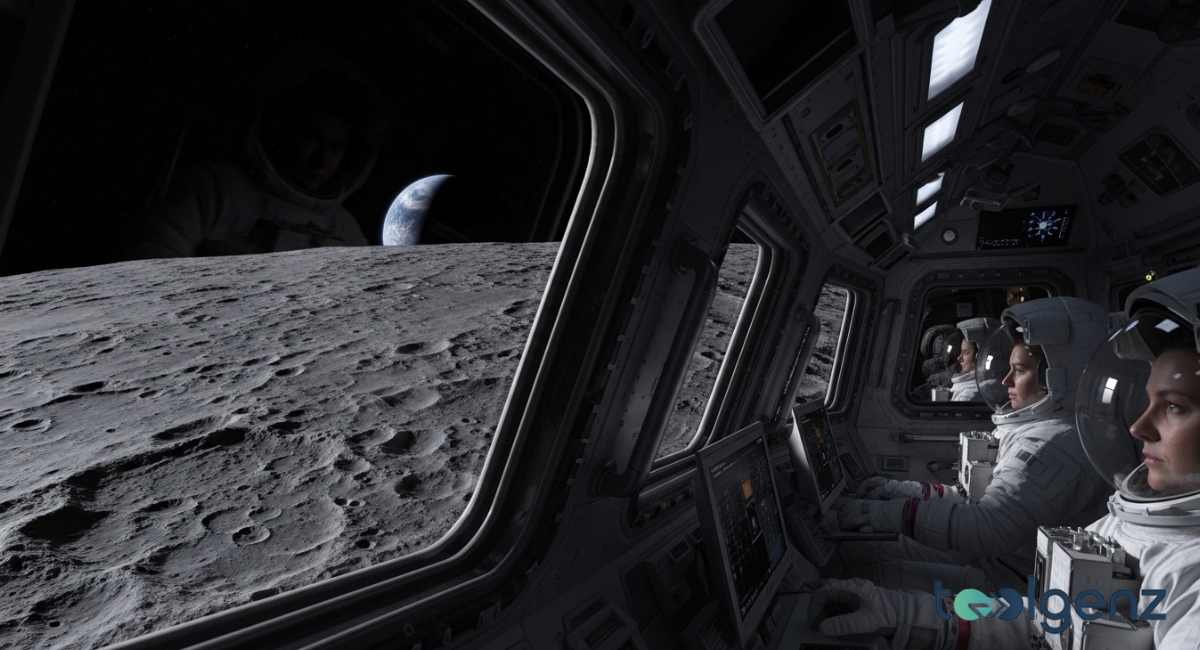
NASA’s Artemis II mission is making headlines as the first crewed flight in the Artemis program, sending astronauts beyond Earth orbit for the first time in decades since Apollo. Aboard the Orion spacecraft, the crew is journeying toward the Moon to study its far side, capturing breathtaking lunar images and experiencing life in deep space.
This mission offers a rare glimpse into astronaut life while testing vital systems and conducting experiments that will pave the way for future lunar exploration. As Orion approaches the Moon, the crew prepares for a historic flyby, giving the public an unprecedented view of both Earth and its celestial companion.
Mission Overview: What Is Artemis II?
Artemis II marks NASA’s first crewed mission in the Artemis program. Unlike its predecessor, Artemis I, which flew uncrewed, this mission carries astronauts around the Moon without landing. Its main goal is to test the Orion capsule in deep space, evaluate systems for longer missions, and lay the groundwork for a future lunar landing with Artemis III. The mission is a vital step in confirming that humans can safely travel and operate beyond Earth’s orbit.
The spacecraft carries a range of instruments designed to capture Earth from orbit, photograph the Moon, and conduct onboard experiments. This includes radiation sensors, environmental monitors, and cameras mounted on the solar array wings. Scientists are particularly excited about studying the lunar transition region, which connects the near and far sides of the Moon.
By gathering this data, Artemis II is helping NASA prepare for longer journeys to Mars and other deep-space destinations.
Flight Day 4: Deep-Space Flying and Lunar Flyby Preparation
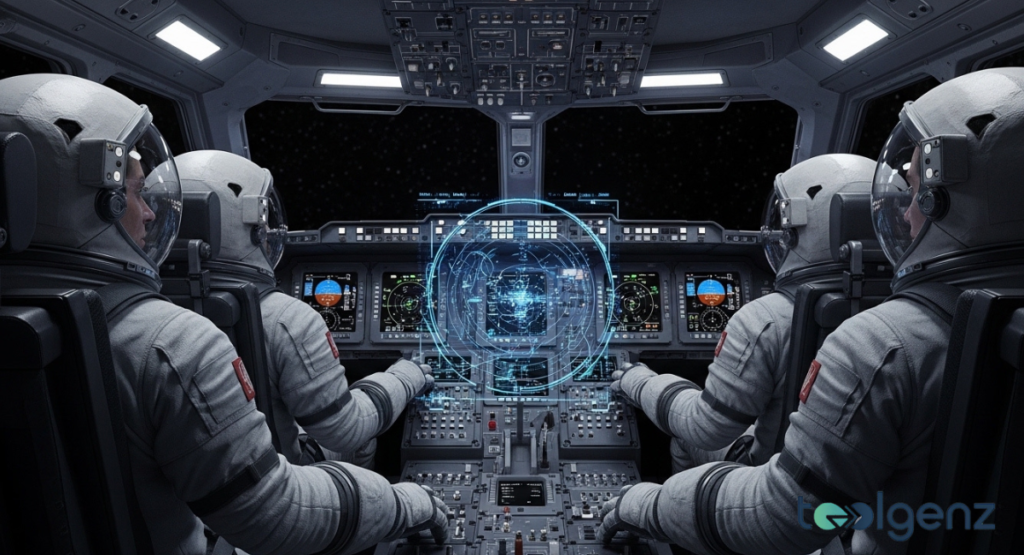
On the fourth day of the mission, the crew focused on preparing for their upcoming lunar flyby. This involved carefully adjusting Orion’s trajectory to ensure a precise approach. Astronauts monitored navigation systems, communicated with mission control, and conducted routine system checks—all crucial for mission success and crew safety.
The day also included testing Orion’s deep-space capabilities, tracking astronaut life in microgravity, and confirming that all cameras and scientific instruments were functioning correctly. The lunar flyby offers a chance not only to observe the Moon up close but also to collect valuable information about its gravity, surface features, and environment.
The crew’s real-time observations will help refine plans for future missions, making this a pivotal milestone in the Artemis II program.
Artemis II Lunar Images: Capturing the Moon Like Never Before
Artemis II has provided stunning lunar images, revealing features previously observed only by robotic spacecraft. One photo highlights the Orientale basin, a massive crater stretching over 600 miles across, showcasing the rugged terrain of the Moon’s far side. Beyond their visual impact, these images provide scientists with detailed information about lunar geology and cratering patterns.
Astronauts can also take selfies with the Moon in the background, thanks to cameras on Orion’s solar array wings. These photos even capture Earth as a delicate crescent—a view not seen by humans since the Apollo missions. The images serve both scientific and public interest purposes, allowing everyone to share in the beauty of space as the crew ventures farther from home.
| Feature | Description | Importance |
|---|---|---|
| Orientale basin | Largest visible far-side crater | Geological study |
| Earth crescent | View from deep space | Educational, public interest |
| Orion selfies | Crew photos in space | Astronaut documentation |
Seeing the Far Side: Astronauts’ Unique Perspective

The astronauts describe the Moon’s far side as breathtaking and unlike anything seen from Earth. This area is heavily cratered and shrouded in shadows, revealing the Moon’s ancient history. Christina Koch shared, “It’s not the Moon I’m used to seeing. The textures and shadows are surreal.” These firsthand observations provide not only scientific insights but also a human perspective on living and working in deep space.
Exploring the far side is important because it presents challenges for communication and navigation. Observing it firsthand allows the crew to collect crucial information about radiation levels, surface conditions, and potential landing hazards. This experience will inform Artemis III, helping future astronauts safely explore areas of the Moon that have never been visited.
Science and Experiments Onboard Artemis II
Artemis II carries a suite of experiments aimed at understanding the space environment and astronaut health. Instruments track cosmic radiation, monitor life aboard the spacecraft, and evaluate system performance. The mission also tests communication protocols that could one day support lunar settlements.
High-resolution cameras document the spacecraft and its surroundings, helping scientists study reflections, structural integrity, and environmental effects. Daily observations include Moon images and Earth views, offering insights into planetary science and orbital mechanics. Each experiment contributes to astronaut safety and knowledge, ensuring humanity is ready for longer journeys beyond low Earth orbit.
Mission Milestones: Halfway to the Moon
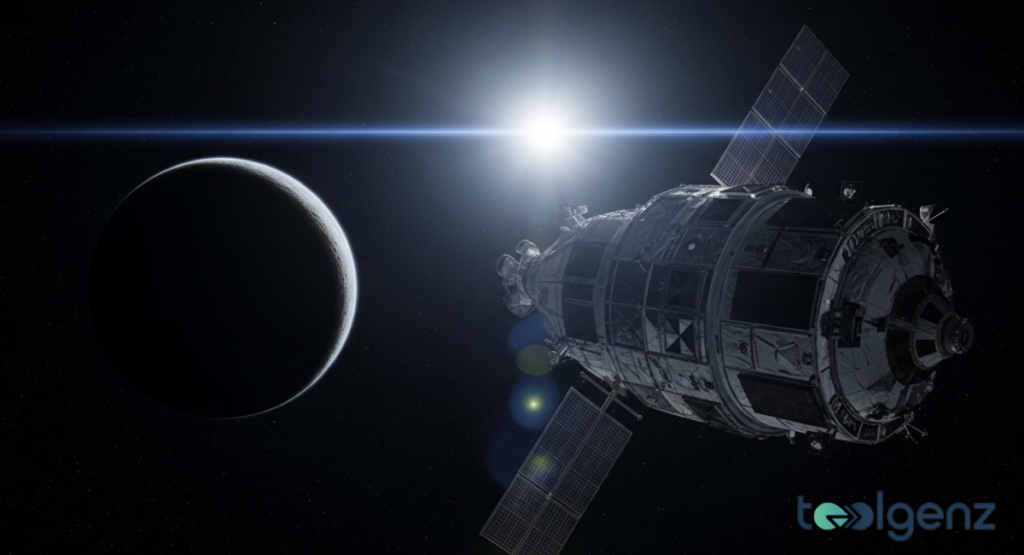
The Artemis II crew recently reached a major milestone: they are now more than halfway to the Moon. At this point, lunar gravity begins to dominate, requiring careful trajectory adjustments. The crew observes both the approaching Moon and distant Earth while instruments track gravitational anomalies and cameras capture the evolving lunar surface.
Reaching this halfway mark confirms that Orion can maintain course and stability during deep-space operations. It also signals that scientific experiments and daily life routines are running smoothly in microgravity, providing essential data for the next phase of exploration.
The Artemis II Crew: Who’s Onboard?
The crew of Artemis II is composed of highly trained astronauts with diverse expertise. Christina Koch brings experience from long-duration stays aboard the International Space Station, while Jeremy Hansen from the Canadian Space Agency contributes knowledge in robotics and systems engineering. Together, they manage the Orion capsule, conduct experiments, and document the journey with photos and live streams.
Other crew members specialize in navigation, spacecraft systems, and scientific research. Their combined skills ensure that the mission operates seamlessly and delivers invaluable insights for future missions. The human element of Artemis II allows NASA to study how astronauts adapt to deep-space conditions, information that is critical for Artemis III and beyond.
Preparing for Artemis III: What This Mission Means for Lunar Return

Artemis II lays the foundation for Artemis III, which aims to land humans on the Moon once again. Lessons learned from this mission refine spacecraft systems, astronaut training, and scientific instruments. Every observation from lunar images to life-support monitoring—helps determine how humans can live and work safely on the Moon.
Data from Artemis II also informs planning for habitats, lunar rovers, and communication networks. Scientists study the lunar transition region and far-side conditions to ensure future explorers can safely venture into new areas. This mission is not just a test flight; it establishes a blueprint for a sustainable human presence on the Moon.
Challenges and Achievements of Artemis II
Deep-space radiation, microgravity effects on the human body, and system reliability are ongoing challenges for Artemis II. Despite these hurdles, the crew has completed intricate maneuvers, captured groundbreaking Moon photos, and provided a rare glimpse into astronaut life.
Achievements include selfies with Earth from deep space, the first human observation of the Orientale basin, and flawless operation of the Orion spacecraft. These successes highlight how Artemis II advances human space exploration, demonstrating that NASA is ready to return humans to the Moon and eventually journey to Mars. The mission showcases the power of technology, teamwork, and international collaboration, setting a new standard for deep-space exploration.
FAQS
Is Artemis II actually going to land on the Moon?
No, Artemis II will perform a crewed lunar flyby but will not land. It is primarily a test mission for Artemis III.
Why do astronauts wear orange?
Astronauts wear bright orange launch and re-entry suits called Advanced Crew Escape Suits. These are highly visible in emergencies, especially during ocean splashdowns.
Why has Artemis II been delayed?
Delays have been due to technical checks, safety upgrades, and ensuring the Orion spacecraft is fully prepared for deep-space travel.
What is so special about Artemis II?
It is the first crewed mission in the Artemis program, offering humans a close view of the Moon’s far side while testing systems for future landings.
How do female astronauts urinate in space?
Female astronauts use specially designed space toilets or funnel systems that function in microgravity, allowing them to relieve themselves safely and hygienically.