
Introduction
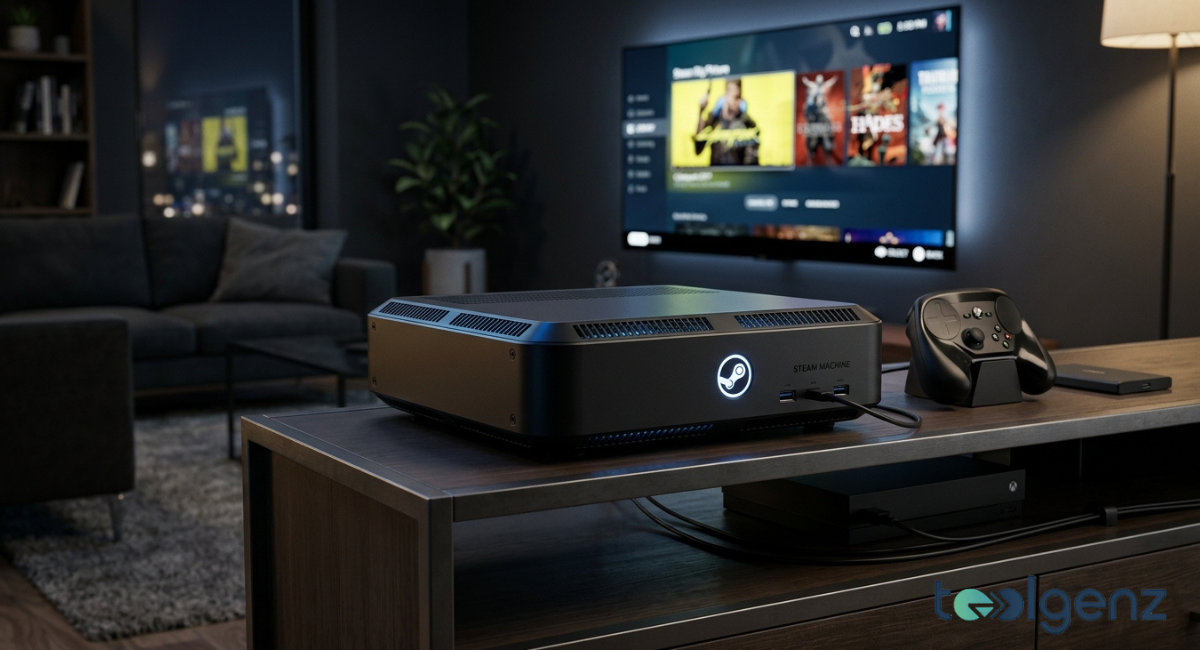
The Steam Machine was one of Valve’s boldest attempts to bring PC gaming into the living room. Introduced as a hybrid between a traditional console and a gaming PC, it aimed to give players easy access to their Steam library on a television without sacrificing the flexibility that makes PC gaming popular.
While the project never achieved mainstream success, it remains an important chapter in gaming history and helped shape some of Valve’s future hardware innovations.
What Is a Steam Machine and Why Did Valve Create It?
A Steam Machine was a gaming system built by various hardware manufacturers and powered by SteamOS, Valve’s Linux-based operating system. The idea was to create a console-like experience while preserving the openness and customization associated with PC gaming.
At the time, Sony and Microsoft dominated the console market. Valve believed many gamers wanted the convenience of a console but also wanted access to the vast Steam ecosystem.
By combining those two worlds, the company hoped to create a new category of gaming hardware.
Origins of the Project
Valve’s success with Steam made hardware expansion a logical next step. During the early 2010s, digital game distribution was growing rapidly, and Steam had become the preferred platform for millions of PC gamers.
Instead of manufacturing every device itself, Valve partnered with companies such as Alienware, Zotac, and Syber. Each manufacturer produced its own version of the Steam Machine, offering different specifications, designs, and price points.
This strategy allowed consumers to choose hardware that matched their budget, but it also created confusion because there was no single standard model.
Valve’s Vision for Living Room Gaming
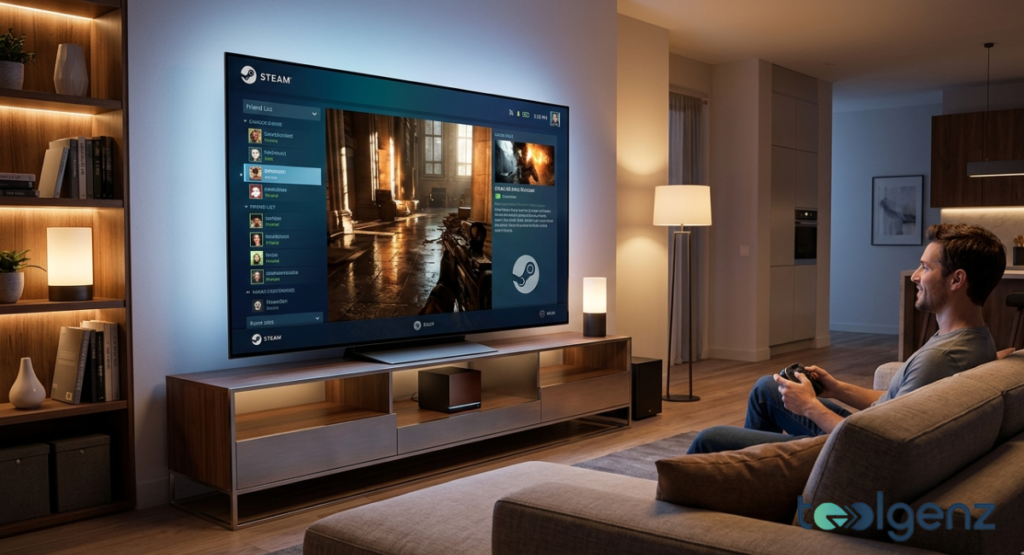
By optimizing the user interface for larger screens, players could navigate friends lists and launch games effortlessly from a couch.
Valve wanted gaming to move beyond desks and computer monitors. The company envisioned a future where players could enjoy thousands of PC games from the comfort of their couch.
The Steam Machine was designed to support this vision by combining Steam’s massive library with hardware optimized for televisions and home entertainment systems.
Valve believed players should have access to their games wherever they preferred to play.
Steam Machine Pricing
One of the biggest challenges facing the Steam Machine was pricing. Unlike traditional consoles, which launch at a fixed price, these systems varied widely depending on hardware specifications.
Typical Launch Prices
| Model Type | Estimated Price |
|---|---|
| Entry-Level | $449–$599 |
| Mid-Range | $699–$999 |
| Premium | $1,000–$1,500+ |
Entry-level models appealed to casual gamers, while premium versions targeted enthusiasts looking for stronger performance.
Although this flexibility benefited experienced users, it made the platform harder to understand compared to PlayStation or Xbox.
Design and Hardware Features
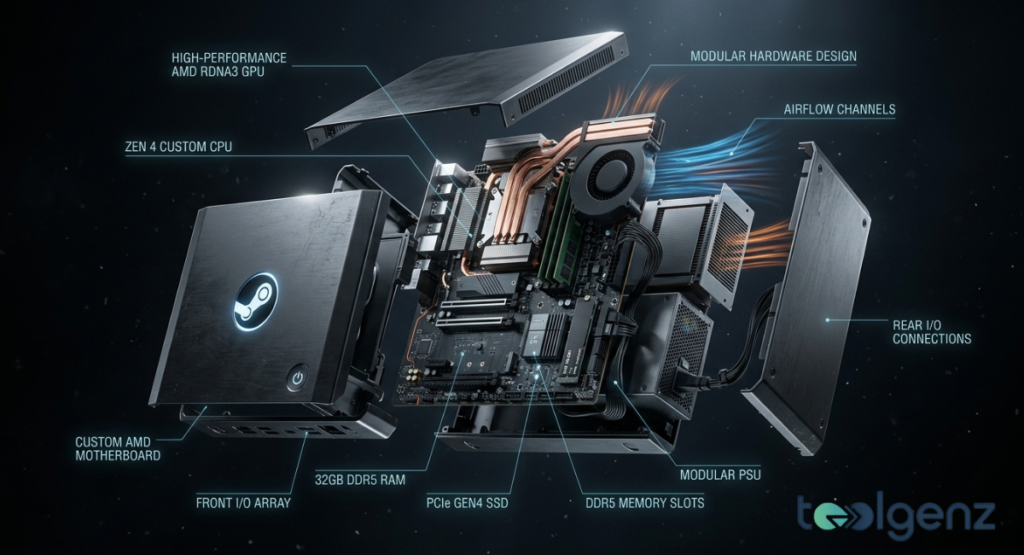
Modular design principles allowed users to upgrade individual components, mirroring traditional computer longevity.
Most systems featured sleek, compact designs that looked similar to modern consoles. However, beneath the exterior they functioned much more like PCs.
Unlike traditional consoles, many versions of the Steam Machine allowed upgrades and modifications.
Users could often replace storage drives, increase memory, or upgrade certain components depending on the manufacturer.
Common Hardware Specifications
| Component | Typical Options |
|---|---|
| CPU | Intel Core i3, i5, i7 |
| GPU | NVIDIA GeForce, AMD Radeon |
| RAM | 4GB–16GB |
| Storage | HDD or SSD |
| OS | SteamOS |
This flexibility appealed to gamers who wanted more control over their hardware than consoles could provide.
SteamOS and the Steam Controller
A major part of the Steam Machine experience was SteamOS. Built on Linux, the operating system was designed specifically for gaming and launched directly into Steam’s television-friendly interface.
Valve hoped SteamOS would encourage developers to support Linux gaming. Unfortunately, many publishers continued prioritizing Windows, limiting the number of compatible games available at launch.
Alongside SteamOS, Valve introduced the Steam Controller. Unlike traditional controllers, it featured dual trackpads and extensive customization options.
Some players appreciated its innovation, while others found the learning curve difficult. Regardless of opinion, the controller demonstrated Valve’s willingness to experiment with new ideas.
Gaming Performance
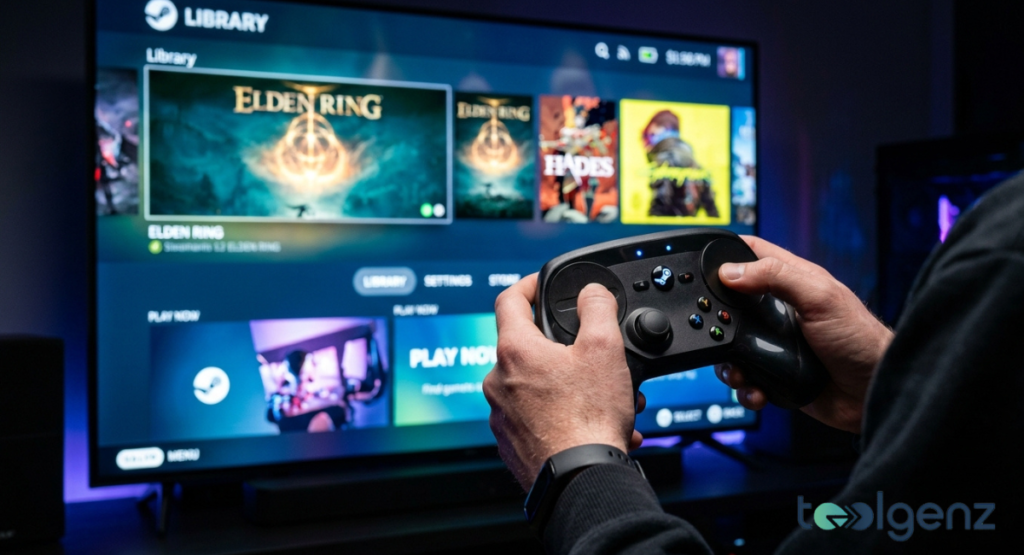
This distinct input design aimed to make complex strategy and simulation titles fully playable without a desk setup.
Performance varied significantly because different manufacturers used different hardware configurations.
Higher-end versions of the Steam Machine delivered impressive gaming experiences, often outperforming consoles of the same era.
Lower-priced models offered more modest performance and sometimes struggled with demanding titles.
Popular Valve games such as Dota 2, Team Fortress 2, and Counter-Strike generally ran well because they were optimized for the platform.
Performance Expectations
| Hardware Tier | Expected Performance |
|---|---|
| Entry Level | 720p–1080p Gaming |
| Mid-Range | Stable 1080p Gaming |
| High-End | Higher Settings and Better Frame Rates |
While performance could be excellent, the experience depended heavily on the specific hardware configuration a user purchased.
Access to the Steam Ecosystem
One of the biggest strengths of the Steam Machine was direct access to Steam’s massive game library.
Players could enjoy thousands of titles, community features, multiplayer services, mods, and regular seasonal sales.
Steam’s frequent discounts made building a large game collection affordable. For existing Steam users, the platform offered a familiar and convenient way to access games from the living room.
However, not every title supported SteamOS. Linux compatibility remained a major challenge and prevented many games from running natively.
Steam Machine vs Consoles and Gaming PCs
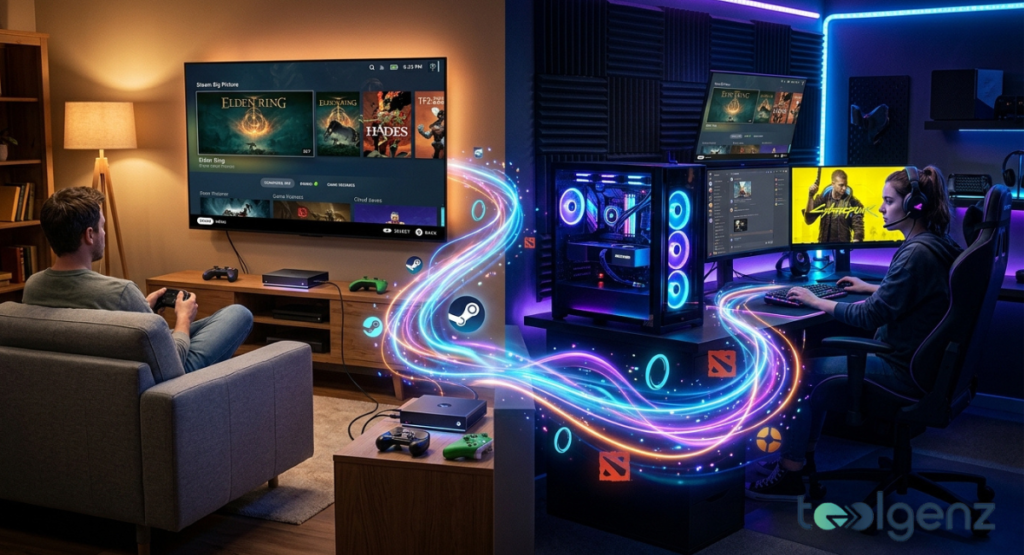
Shared cloud saves and cross-platform capabilities allowed users to seamlessly transition their progress between different environments.
The Steam Machine attempted to combine the best features of consoles and gaming PCs.
Advantages
- Access to the Steam ecosystem
- Hardware customization
- Upgrade potential
- Flexible pricing
- PC gaming freedom
Disadvantages
- Limited game compatibility
- Consumer confusion
- Higher costs than consoles
- Complex product lineup
Feature Comparison
| Feature | Steam Machine | PlayStation/Xbox | Gaming PC |
|---|---|---|---|
| Upgradeable Hardware | Yes | No | Yes |
| Ease of Use | Moderate | High | Moderate |
| Customization | High | Low | Very High |
| Compatibility | Moderate | High | Very High |
| Price Flexibility | High | Moderate | High |
For casual gamers, consoles often provided a simpler and more affordable option. Enthusiasts, however, appreciated the flexibility offered by Valve’s platform.
Was It Worth the Price?
Whether the Steam Machine was worth buying depended largely on the user.
Existing Steam users who wanted PC gaming in the living room often found value in the platform.
Hardware enthusiasts appreciated the ability to upgrade components and customize settings.
For many casual gamers, however, the benefits were not compelling enough to justify the higher cost and added complexity compared to traditional consoles.
Why the Steam Machine Struggled
Several factors contributed to the platform’s commercial failure.
Limited Game Compatibility
The biggest issue was software support. Many popular games were unavailable on SteamOS because developers focused primarily on Windows.
Consumer Confusion
The platform lacked a clear identity. Some people viewed it as a console, while others saw it as a gaming PC.
Multiple manufacturers, varying prices, and different specifications made purchasing decisions more difficult.
Strong Competition
The Steam Machine entered a market already dominated by PlayStation, Xbox, and traditional gaming PCs.
These competitors offered clearer value propositions and stronger brand recognition.
Legacy and Impact
Although the Steam Machine did not achieve widespread success, its influence can still be seen today.
The project gave Valve valuable experience in hardware development, software integration, and user experience design.
Many lessons learned during this period directly influenced the creation of the Steam Deck.
The platform also helped popularize discussions around living room PC gaming, compact gaming systems, and alternative hardware designs.
Connection to Steam Deck
Many ideas first explored through the Steam Machine eventually reappeared in the Steam Deck.
Valve refined its strategy by taking direct control of hardware design and addressing many of the earlier platform’s weaknesses.
Improved compatibility, better positioning, and a clearer target audience helped the Steam Deck become a much more successful product.
In many ways, the Steam Deck represents the evolution of concepts that Valve originally explored years earlier.
Conclusion
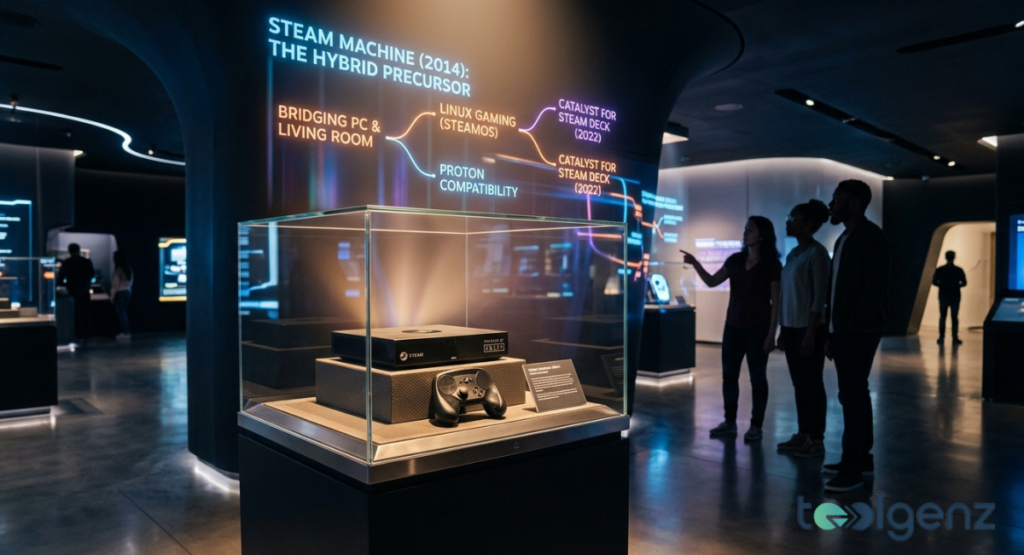
The project’s integration of Linux compatibility laid the technical groundwork for successful generations of devices that followed.
The Steam Machine remains one of the most interesting experiments in gaming history. Valve set out to merge the openness of PC gaming with the convenience of console gaming, creating a platform unlike anything else on the market.
Although it never became a commercial success, its influence continues to be felt throughout the gaming industry.
More importantly, the lessons learned from the project helped pave the way for future innovations, including the Steam Deck.
While the platform may not have transformed gaming on its own, it played an important role in shaping the future of gaming hardware and how players access their favorite games.
FAQs
How much will the Steam Machine cost?
It starts around $1,049–$1,428 depending on configuration and bundle options, based on early listings and reviews.
Is the Steam Machine worth the price?
It depends on your use. It performs like a compact PC, not a traditional console, so it’s worth it mainly for PC gamers who want couch gaming flexibility.
Is a Steam Machine just a PC?
Yes, it is essentially a PC with a console-like interface, running SteamOS and designed for TV gaming rather than a desktop setup.
Is the Steam Machine out?
Yes, Valve has officially launched it and reservations are already open in select regions with limited stock availability.
Is a Steam Deck still worth buying?
Yes, the Steam Deck is still worth it for portable gaming. It offers better value and mobility compared to the Steam Machine for most gamers.